
 Risk Free Assessment


From Vision Loss at 19 to Accessibility Advocate With Colin Shouse – Access Granted Podcast episode 30 Transcript
Mike: Welcome to Access Granted, the podcast where we explore stories of accessibility, opportunity and the people helping to build a more inclusive world.
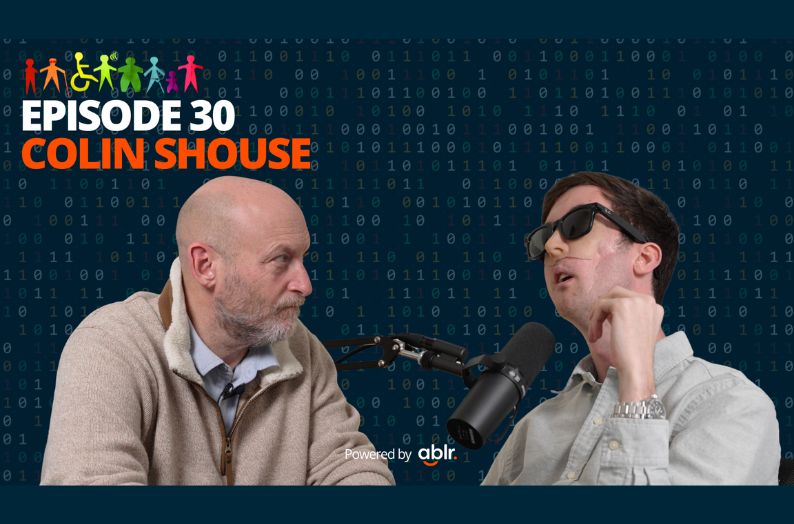
I’m your host, Mike Iannelli. Today’s episode is a little different than usual, instead of spotlighting a company or a partner organization, we’re spotlighting one of the people at the heart of Ablr’s mission. Joining me is Colin Shouse, an Ablr intern whose story is one of resilience, determination, and belief in what’s possible. After losing his sight at 19, Colin refused to let that moment define his future.
Through Ablr Works and now is part of the internal team, he’s helping create accessibility solutions for others while building a path toward his own personal goals in business and media.
Today we’ll talk about Colin’s journey to Ablr, his experience as an intern, what it’s like to learn and work in the accessibility workplace, and how he’s turning adversity into purpose. s episode of Access Granted contains sensitive subject matter and imagery. Please take care while listening.
Alright, Colin, my friend, welcome.
Colin is a recent graduate, I believe. You did graduate?
Colin: Yes.
Mike: All right. Making sure he is not lying to me over here. Graduated from our Ablr adult program. You’ve also got your CPACC, is that correct?
Colin: Yes sir.
Mike: And now you are in the internship program. So Colin, tell us all a little bit about you first, just how you got Ablr and we’ll get into the background and all that lovely stuff.
Colin: So yeah, outside of Ablr, I’m just always kicking with friends, listening to music, like to work out. Ablr’s a big part of my life as of current. So that’s really been the focus lately.
Mike: Yeah. So when we were talking earlier, so you got a, what did you say, you got a homie from Philly or one of your boys is from Philly.
Colin: Yeah, he is.
Mike: Yeah. So for those who are new to the show, your one and only is from Philly Go Birds. But I love when I meet people. So what you said earlier, what did you say about it? How you could you tell I was from Philly?
Colin: The energy. Just the energy. It’s good energy.
Mike: I don’t know if it’s good, but it is energy. That’s one thing it is so..
Colin: For sure.
Mike: So man, I’m glad you’re here. I know that there’s lots I wanna talk about. I wanna talk about the Ablr Works program. I wanna talk about how you heard about the program.
Colin: Definitely.
Mike: I wanna talk about your feelings in terms of when you decided to actually take that step, because that’s a huge deal. And as you know going through it, a lot of our candidates, there’s some anxiety around it. It’s a big commitment. Can I do it? There’s self doubt. All the things that we want to resolve in our program, you had to experience. Tell me how that felt. What was that experience like for you?
The reason why I want to ask this first is because I want to get into your background. You have a prosthesis, a facial prosthesis. And you had an incident in your life that is you were not blind before this incident, and then after this incident you lost your vision amongst other things.
We’ll talk about that, but I’m excited to hear about specifically the first time you heard the name Ablr. What was that like and how did you get yourself into this program? Found yourself in this seat today.
Colin: Definitely. So one name, Logan Passey, and he introduced the program to my mom. They used to work together and,
Mike: Oh, get out. Why did I not know that?
Colin: Yeah.
Mike: That’s fantastic.
Colin: They used to work together and he called one day, he said, “I remember your son lost his sight and I now work at a company where it’s all about accessibility and I think it’d be a great fit for him.” She mentioned it to me and there was no question I was gonna go for it. Sounded like an amazing program and now I know that it, that is to be true.
And I don’t thank him enough for being the one who honestly really started the journey and the redirection of my life. People never know the impact that just a simple reach out can have and the reach out that he had to my mom changed my life forever.
Mike: And you said you weren’t gonna start this off like this, bro. So one, I love hearing that because Logan’s a great guy and if you want to go ahead and just give him a thank you now man, go for it.
Colin: Yeah, no doubt. Logan, if you listening there, shout out to you man, ’cause he definitely changed my life forever.
Mike: I think, truthfully, that is the whole point of our program in a nutshell. We don’t even have to do a podcast ’cause it’s over. Cut. Done. But that’s the truth. So I want to hear about your story because one, I’m interested, how long since the incident that had occurred to when you joined, how many years ago did this happen?
Colin: So July 15th, 2020 is when it happened and I joined the program, let’s see, probably about two years ago.
Mike: Okay. So three years after.
Colin: About, yes sir.
Mike: So one day you’re doing your thing, chilling, relaxing, and something happens and holy cow, life altering moment.
Colin: 100%.
Mike: And then you had to change your whole life. And what a miracle though, in some ways, what a miracle that your mother knows Logan. Bizarre as life connections are but that’s incredible, right?
Colin: Absolutely.
Mike: So talk, this is tough for me too, because I wanna be straight with, the audience or listeners.
Colin: 100%.
Mike: I have a heart, I have sympathy and compassion, understanding, but I also want to hear what went down. We don’t need to know all the details, but you explain, ’cause you, again, there’s a lot of folks with visual impairments that weren’t born with them.
Colin: Definitely.
Mike: They acquire them over life’s experiences, life’s journeys, some through sickness, some through incidents, some through accidents, whatever. It happens. But yours was not that way. So how old were you when you lost your vision? And if you’re comfortable sharing, I’d love to hear the actual story and how you found yourself sitting next to me today because of that.
Colin: Definitely. So I was 19 and on July 15th, 2020, it was after midnight, probably around 12:30. And I had just moved into a house for my sophomore year of school when I was in college. So I went to big community college right in Greenville, North Carolina. I’m in the kitchen making pizza rolls as one does.
Mike: Totino’s, at least?
Colin: It was something like that, probably.
Mike: I love pizza rolls, man.
Colin: We’re just kicking it. And three people bust in the door. One with a shotgun, one with a pistol. Two came for me, one goes for him. One pistol whips him, throws him to the ground to came me, dragged me to my room. I had a safe of some money and they throw me to the ground and, they’re like, “Where is it? Where is it?”
That type of thing. And I have my hands up. I’m giving it to ’em. I’m putting it all in the bag. And fast forward a little bit, they put me face down on the ground, shotgun, pressing up against my face. They’re just like, “Where the heck’s the rest?”
Just screaming as you would imagine. I’m just sitting there, “It’s all there. It’s all there. You can search the whole house.” I wasn’t putting up any type of fight. I was in my mind praying like, let’s just get through this. And obviously a different plan happened and they pulled the trigger and yeah, so after that they rush out of the house.
My cousin’s over on the floor for 30 seconds, making sure they walk out and don’t do the same to him. He rushes over to me, puts a towel on my face, makes sure I’m all good, runs to the neighbors, gets them to call 911.
Comes back to me and by this time I’m Frankenstein walking. I’m on my feet and I’m just, “What happened? What happened?” And he said “You’ve been shot, bro. You’ve been shot.”
And puts me on the ground like, make sure I have the towel to my face. Waits for the ambulance to get there. But yeah. And that means time. He was just saying, “You’re gonna be all right.”
And I was just like, “I love you, bro.”
And he’s like, “Don’t say that. You’re gonna be all right.”
And I was like, “I love you.”
And we just kept going back and forth a few times like that, and fast forward a little bit, I get to the hospital all good, get airlifted to Chapel Hill. And then I spent 29 days there just recovering and stuff.
Mike: Wow. Telling that story. How does that affect you now? Does that trigger emotions? What does that feeling after you share that? And thank you by the way for sharing that. That’s a hard thing to share, but I appreciate that.
Colin: Yes, sir. I’ve had some time to reflect and think about it. Everything in life happens for a reason, right? So there’s a beauty and a positive thing to be taken away from it. That’s when talking about it, I try to hold onto that ’cause that’s the main important part. And, I left out a key detail, which is what I considered my best friend at the time. And my roommate actually, is the one who set it all up.
Mike: So this was intentional, this was planned. How’s that make you feel?
Colin: That’s the hardest part to wrestle with. All you can do is pray on how to wrestle with that, but yeah that’s probably the part when talking about it that was hardest to kinda level with.
Mike: So as your world is improving and thriving and getting better and you’ve come to terms and it sounds like you’ve worked through a lot of your healing. Obviously this is a traumatic situation and I don’t know if you ever do overcome all of it, but but you learn to,
find the positive, find the good, move forward. ‘Cause your brain can play tricks on you and continue to pull you back into the hole of the abyss of depression and all those things. So the fact that you’re sitting here right now is a miracle, you got shot point blank.
And in some ways that’s possibly a blessing ’cause it was four to eight inches farther back. You probably wouldn’t be here.
Colin: That’s exactly what the detectives and the cops said.
Mike: Yeah.
Colin: 100%.
Mike: And just for our listeners and people watching, Colin has a face prosthesis. I’m saying that correctly? I’m still just blown away that you stood up. One you’re alive, which is amazing. Two, you stood up and your cousin sounded like, was it was your cousin?
Colin: Yes, sir.
Mike: Just like an absolute hero. Just…
Colin: Absolutely.
Mike: Pulled it together, saved your life, kept you focused, kept you alive.
Colin: Wouldn’t be here if it wasn’t for him. Thank God.
Mike: What’s his name?
Colin: Patrick Thigpen.
Mike: Patrick Thigpen.
Colin: Yes sir.
Mike: That’s amazing. When you’re in the hospital that one of your close friends planned this.
Colin: Yep.
Mike: And you gotta have some grief feelings, so you gotta go through all that grief. So what’s the reality like when all of a sudden you open your eyes and you don’t have those anymore?
Colin: They came in the hospital room and that was one of the harder conversations is they come in and they’re like, I remember it was a team of doctors and they just say, “Due to the pressure and during surgery you had to remove both eyeballs. Unfortunately, you’ll never see you again,” and God willing anything is possible. But yeah, they say that. And
Mike: Are your folks there? Just by yourself?
Colin: Yeah, they were there, but it was during COVID, so that was a whole other thing is I couldn’t have visitors even, only one of them could come in.
Mike: So you’re alone in the hospital?
Colin: Yeah.
Mike: ‘Cause dude, that’s crazy, right? You got shot in the face with a shotgun, now you’re in a hospital, you just got told you’ve lost your vision. And you’re 19. So what does that feel like? And talk to me through that.
Colin: Truthfully, those days in the hospital, it was pretty hazy. And again I didn’t know it was my roommate and all that until months later when the detectives got to work. And so I’m still in the process of just being like, who could have done this? And just running through everyone in my life. My previous friends, previous, not friends. I’m not thinking obviously this time it could have been a friend, but, previous enemies rather, which couldn’t think of any there. So I’m like, who could this have been? And not only that, just process and like what life’s about to be like, being in the dark. It’s a different mindset, right? You can’t see things around you, but what it does force you to do is look inside and turn internal.
It was pretty difficult. Just try to take it day by day. The power of 24 hours, you can do a lot. And I tried to keep that mindset and just improve more every day. I couldn’t really adjust to the blindness. Just, even moving around is difficult. You don’t wanna trip, hit your head, do this, do that. And so there was a major adjustment in that category as well.
Mike: Have you connected with that individual?
Colin: So really, when the case was developing, the other characters were identified and it was looking definite that it was him that set it all up. Because again, he knew everyone else involved and was like previous friends with him. So the finger was pointed at him for sure. And I called him and I said, “Look, the way things are looking right now with the case, I think it’s best if we don’t talk right now.” And he gave the, “Oh, why bro, why the, are you sure? Are you sure?”
And here’s the thing, a true friend who didn’t get you shot in the face would be going crazy about how to convince you otherwise. He pretty much kept it short and was like, “All right man, if that’s what you think.” And since that day I haven’t reached out. He hasn’t either, to be honest with you. I pray about it.
Mike: Is he in jail?
Colin: So he was the only one out of the five. Three came in the house. Two were outside of the car. He actually left that morning. My brother was in town visiting and seeing the new house. He leaves town. He’s like, “My mom’s in the hospital at home. I gotta go help her with the medicine,” this and that. His mom did have previous health conditions that we were for sure of. So the story checked out. Leaves town with my brother to go back to Winston where I was living.
Mike: Leaves town with your brother?
Colin: Yes.
Mike: So your own blood brother?
Colin: Yes.
Mike: The guy, your friend?
Colin: Yes.
Mike: Leaves town who set this up and then he has the kunyaki to sit in the car with your brother?
Colin: Will take it a step, even crazier. So he heads back to Winston with my brother and again, the same morning, the morning of.
So for me, I just go about the rest of my day. He actually, when they get back to Winston, he kicks it with my brother and he’s actually in my parents’ house and ends up actually spending the night there. That night.
Knowing that…
Mike: He’s got a plan set up.
Colin: But knowing that five people are on the way to do what they’re about to do.
Mike: Yeah. Armed by the way.
Colin: Armed.
Mike: Not just crazy enough to fight, but just gonna walk in with guns.
Colin: A hundred percent. And so he ends up sleeping at my parents’ house, and my parents obviously get the call at 3:00 AM from my cousin when he gets settled himself.
Mike: So he’s in your parents’ house sleeping when they get called?
Colin: Sleeping in their basement. He on the recliner and
Mike: And he’s sleeping?
Colin: He’s sleeping.
Mike: Okay. He’s not like pacing the walls like, what have I done?
Colin: Nope. He’s just like…
Mike: Like Judas, right? Judas. Is that Judas in the Bible?
Yeah,
Colin: For sure.
Mike: Okay.
Colin: They obviously get the call at 3:30 AM.
They, my dad, breathless and they as well as my mom and…
Mike: I get to meet them today. I will when they get back, right?
Colin: For sure.
Mike: Cool.
Colin: Yeah, my mom, you definitely.
Mike: Yeah.
Colin: And they run down to the basement ’cause his car was actually blocking in the driveway. That part is irony I think. But maybe not.
Mike: No, no, this is, that’s not irony. He’s just a selfish, disgusting human being.
Colin: A hundred percent
Mike: On so many levels. Not like, “I just made a mistake. I want forgiveness. Please help me.” It’s, “I planned this thing out meticulously.”
Colin: Exactly.
Mike: Then I sit- Did he eat dinner there too?
Colin: Exactly. And here’s the thing,
Mike: Take a shower. Anything else?
Colin: They wake him up. They go, “Colin’s been shot, Colin’s been shot. You need to move your car.” Frantic, crazy. Going ballistic ’cause they’re just dealing with..
Mike: Worst possible news, you get a worst nightmare in the history of nightmares.
Colin: A hundred percent.
Mike: And this guy’s like, “What?” And he just wakes up and he’s like, “Oh wait, what? Yeah, I got a notification on my phone.” ‘Cause in a college town sometimes when like a gun, like crazy stuff happens, you’ll get a alert shooting just happened. And he is Iike, “I got an alert about it. It was on our street. And I saw that, but I didn’t think anything of it.” And…
Mike: Yeah, first thing you do is you get in your car and you’re flying back to…
Colin: Exactly.
Mike: To wherever you are to figure out that’s, yeah.
Colin: Exactly. And he hadn’t done hop in the car with ’em, doesn’t be like, “Can I come, that’s my friend, I want to know what happened.” He’s just..
Mike: Let me move my car and go back to sleep.
Colin: Lemme move my car and just keep pushing. And it’s should have known there.
Mike: Well, here’s the beauty of this and the fact that he’s still alive, moving on in life, like it’s all good. He’s got some answering to do someday. And while he’s answering and living in that guilt and shame for his entire existence in life, although based on what I’m hearing, he doesn’t sound like he’s intelligent enough to actually have those emotions.
Colin: A hundred percent.
Mike: He will feel that pain down the road, my friend. And where are you heading, my bro? Where are you going? You’re going up.
Colin: A hundred percent.
Mike: A hundred percent.
Colin: “That’s what me and my homies always say is, during the beginning when I would be a little torn up about it and I’d be like, having a down day, they’d be like, bro, we’re already miles ahead. We can’t even smell, see or, and even feel just ’cause you don’t have your sight. Just trust me we look back and for miles, we can’t even see where the people that did this to you are because they’re in a different ball game. We’re on the way up,” as you put it.
Just, ’cause I don’t have my sight, doesn’t mean I don’t have vision. Just ’cause you can’t physically see, doesn’t mean you can’t look internal and still climb.
If you lean on God and you put your best foot forward, you’ll get where you’re supposed to go.
Mike: Amen.
Colin: You’ll reach that path. That destination.
Mike: Yeah, I just say to my kids all the time, it’s like you don’t have to have the answers, just walk the path. And I believe that God as a path we get kicked off of it, we choose to walk off of it, but at the end of the day, we’re all born with one and culture comes in and we’re told what we’re supposed to feel. We’re fed what we’re supposed to eat. We’re indoctrinated with the education system and what we’re supposed to learn.
And truthfully, it’s what were we born as in the image of God to do? And so when you said the path, you know the path is like you’re on the path, bro. The past is the past, as painful as it may be, and it is. The trick to, and I think you’re achieving this, which is pretty awesome, bro.
And I wanna talk about your friends too, ’cause it sounds like you have a great group of people in your circle..
Colin: Absolutely. No doubt.
Mike: Which we all need that. And so I think looking across the table, and I’ve enjoyed working with you already in a very short period of time, but I think, what I hear is basically you got into a situation as a young man wrong or indifferent.
However, you did take that situation and it was not an optimal choice and you recognize that..
Colin: For sure.
Mike: You understood the risks of that.
Colin: Absolutely.
Mike: However, with that being said, we all screw up, we all make tons of mistakes and so who are we or who is anyone to judge? But I think it’s the path forward that defines you. And so I love the story of Logan, knowing your mom. I think that is a beautiful story and I love that you’re in the program, so..
Colin: A hundred percent.
Mike: So you go through this and not only did you lose your sight, you’ve also have this deal with the trauma. And I know in any situation there’s trauma and I’m not minimizing other people’s traumas or anything like that. I just know that your trauma specifically is that not only did you lose your sight, which is extremely traumatic, then you have to deal with not the mental side of stabs in the back and…
Colin: Variables of all…
Mike: It’s all the variables. And I don’t have all the great words today, but all the variables of what happened and all of a sudden you’re sitting here going, “Holy moly!” Another thing, I always search for, “What does that mean? What does that feeling, what does it mean? Like, how do you find God? What does that, I never get it. I never got it. It’s what? Yeah. I’m connected. I have a relationship with God.” never felt it. I went to church, did all the things, and it was just, it was empty. It was like, “What’s the purpose? What’s the point?” And it’s like almost, we lived through life, it’s like there’s purpose in the suffering. And there’s this song I listen to that always says, “Just because you’re guided by the light doesn’t mean you make it every time.” So you could still have the spirit, still have the face, still have the belief, but we’re not all gonna make it the way we want to.
So being on this path now, going through what you’ve gone through in all the pieces, how do you feel today, physically, emotionally, spiritually? Talk to me a little bit about that.
Colin: I feel great. I feel like I’m on a path or we’re, again, we’re all on a path at all times, but I feel like I’m at the point in my path where. Things are really fallen in line and doing the work with Ablr, that has had me feeling incredible purpose. Again, the friends around me every day make me feel great. There’s, like you said, there’s quite a list. Just to name a few, Ben Spade, my roommate, he’s been there since the beginning and he’s someone who helps me every day still. We bounce ideas, we plot on how to continue to grow as people, financially, but also what’s more important than that, which is again, as people just values and everything.
Buddy Ferguson, another close friend, been there since the beginning. Value everything that he is given me since the beginning as far as insights and support and all that. Just a great friend.
Max Curran, Hudson Hatfield, Cole Rowdy, my brother Charlie Shouse, a total rock has been there from the beginning. And again, the list could go on, but the people I have around me is really what helped me there from the beginning. And putting in hard work every day has just led me to continue to grow as a person. As far as how I feel , I feel good.
Don’t get me wrong, there’s some days where stuff gets a little harder and everyone’s gonna have that day no matter what situation. No matter if you have a billion bucks or zero, life is gonna life. All you can do is continue to wake up and do your best, pray, lean on our Heavenly Father, and you’ll find what you’re supposed to do. And I really feel like where I’m at now is where I’m supposed to be.
Mike: That’s a powerful story, brother. Very powerful story. And I think the part that’s beautiful about, there’s a lot of beauty in it, right? But the friends, the people, that’s incredible, man. I love to hear all those people. And if you think of anyone along the way that pops in your head as we continue..
Colin: I’ll add one more.
Mike: Yeah. Add as many as you want.
Colin: D’unay Diploy. D for short. She’s solid. She definitely holds me down.
Mike: I love to hear it, man. And I just wanna thank you for, sharing that ’cause I think it can be healing. Again, I’m just making that assumption. I was hoping or hoping it is healing. Hoping you walk out of here feeling like a different person today. It’s my prayer, my hope, although I’ve been told before, there’s no hope and I appreciate that. There’s no hope. It’s just do and you’re doing. And so I appreciate that. That’s a hard thing to share and I’m glad that you’re feeling good physically.
I wanna talk about the prosthesis too. That would be wrong not to. So how did that happen? And that’s a really solid looking prosthesis too.
Colin: I appreciate it.
Mike: So what’s that every day, like getting up in the morning I know you just for a few seconds, you had to clean your nasals, nasal passageway, is that what you said? Yeah, definitely. So how’s life changed for you from that perspective? I’m sorry, I keep saying I wanna move on, but I’m just so interested in this.
Colin: A hundred percent. So the prosthetic it’s solid. I’ll snap it off real quick. I don’t know. It just snaps on, snaps off.
Mike: Can I ask some questions about it?
Colin: Yeah. What up?
Mike: Alright, so you have, it sounds like there’s magnets?
Colin: Uhhuh.
Mike: So did you have installation, talk to me about that..
Colin: So there’s two on each side. They drilled two magnetic, I guess you’d say, like..
Mike: Bolts or something?
Colin: Yeah, little posts that are in the, what would you say, the occipital bone or whatever. Just that little bone above your eyebrow.
Mike: Yeah. I never heard, what is it called, an occipital?
Colin: Occipital? I don’t know. I don’t even really know.
Mike: Now you’re a doctor now too, bro. So… I can’t even pronounce that’s, it’s as hard as DD-. Yeah. I can’t even pronounce either one.
Colin: Yeah, cleaning’s pretty simple. When I shower, I just clean it and then every day I clean the prosthetic. I just wash it with this certain soap that doesn’t make it like smell after, it just keeps it all fresh and good. So it’s pretty simple. But..
Mike: How’s that changed your life? I know just the cane, for example, John always tells me when he accepted the fact that he needed the white cane. As hard as that was, everything changed for him. It was a tool and it helped really for him to accept his life for what it was and learned to live moving forward. So now you have a cane and then you’ve got the prosthesis. Those are good things. So how did you feel after, before and after that you’re like, “Man I’ve lost my vision. I don’t feel comfortable anymore.” All of a sudden, boom, they put a prosthesis on and it probably has some sort of connection of, “Wow, I’m not looked at differently now.” That’s gotta be something that happens too, right? All of a sudden. So how does that affect you? Do people ask you about it? Do you open up and share with them? Do you talk to them? What’s that like?
Colin: Yeah, before I had it, obviously, I don’t have eyeballs. So like when I’d walk around, it’d be like, I’m already knowing in my head, I’m turning every head there is that walks by just being like, “Whoah, that dude don’t look right.” But it’s but so having it, it adds that aesthetically social kind of I guess..
Mike: Acceptance.
Colin: Acceptance.
Mike: Or inclusion.
Colin: Exactly. It makes people feel more comfortable and it makes, I guess in turn, make me feel a little more comfortable just knowing other people are chilling. But yeah it’s been good.
Mike: I love the way you talk, bro. Chilling and yeah, man. We’ll talk about how we’re gonna improve that in your next course, so when you get in front of an executives or CEO. All right. I know you’ll be open for that. I know it.
Colin: 100%.
Mike: Absolutely. I love it. Let’s shift into the Ablr stuff, because. I know I’m talking a lot, blah, blah, blah. But I think it’s intentional, right? Because this is not just about Ablr and us at the table, but it’s about everybody, right?
We go through something dark, we go through something deep. Some people go through it once, some people live in it. Some people have multiple events. I’ve had multiple events. Each time I have one, I’m like, “I’ll never let that happen again.”
Colin: Exactly.
Mike: And then why is this happening again?
Colin: Exactly.
Mike: So clearly I haven’t learned my lesson. All right. The lesson that we’ve been given. There’s so much to say to people out that are out there that are listening, whether it’s on social media, whether they watch the whole podcast. I don’t know. I hope people see it and hear it as an opportunity to recognize that no matter how dark, no matter how deep, no matter how lost you are, that you can overcome it, but you need the source, right? Which is God, right? Let’s just be straight.
Colin: Amen.
Mike: And the story of where you were to where you are, to where you’re going. So we’ve talked about where you were. Let’s talk about where you are right now.
Colin: Definitely.
Mike: So talk a little bit about Ablr talk about, and I loved hearing that the program helped you. It is about employment, right? It really is. It’s about helping folks find jobs and feel included and feel like they belong and do the things that we all get to do every day.
But it’s deeper than that because it’s life changing. I always say this, and I do the marketing stuff and I’m always like, this is life changing and I’m, and it is life changing. It’s not just getting a program and in and out the door. And truthfully hearing this experience today, we’ve talked about some other components that we want to add into the program, which I think would be beautiful to add in the program, but it’s helped you.
Colin: Absolutely. Interning for Ablr right now is where I’m currently at. And but to rewind from the very beginning of getting into the program, you feel accepted. You feel comfortable. Every member of the staff is making you feel like you can do it, and giving you that. ‘Cause they understand that, again, some people are coming straight off a situation, maybe a tricky situation in their life where they’re adjusting to something and they might not think that they can do it. That they can come into a company and make an impact and Ablr does an amazing job at showing you that you can do that.
And from the very beginning, that’s how I felt. And then just fast forwarding through each of the milestones that the program has. You feel that exponential growth, the results that you can have for a real company, a company like Ablr, and that’s been great.
Mike: The fact that you have what you have gone through to get to this place and say, and yeah, you know what?
Logan knows your mom, that’s great, but at the end of the day, you have to be the one to make the decision. You have to be the one that’s gonna go through the program. You’re gonna have to be the one to go through the assessment. You’re the one that has to answer to our team if you’re not cutting it.
Colin: Absolutely.
Mike: Because it’s not an easy program. We’re not here just to pacify people.
Colin: Absolutely.
Mike: We’re here to produce really talented people that have been in a situation just like you or any other situation that need and deserve and want the opportunity to be awesome in the workplace. And you’re a spotting image of that.
First few days out there you made the decision to do it. How hard was that? Was it a hard decision to make?
Colin: To be honest, it wasn’t hard. It was an opportunity presented and it felt like, again, it felt like God was telling me, “Here’s your opportunity.” I had prayed about it so much, “Heavenly Father present me with an opportunity, the next step in life and I will go full steam ahead,” and this was it. So I definitely went full steam ahead. That wasn’t hard. Now the program, like you said, the program itself isn’t easy. And the first couple days, just getting into the program, I didn’t even know how to send an email out on it, on the computer, I didn’t know how to, go on Excel. I didn’t know how to, do so many things, just basic things on the computer. The company helped me do that and help me progress those skills to where. I could then…
Mike: So you get your leveling up badge then?
Colin: Exactly. Exactly. So went there, did that, and then the next milestone, it progresses. Like you said, it’s not easy, it really isn’t. But if you do apply yourself and you try your best, you listen to the amazing instruction that’s given, you’ll produce results.
Mike: Yeah. I love hearing that. And I actually love hearing that it’s not easy and truthfully, I like to get to a place where it’s hard. And it’s getting harder and I think. That’s the beauty of the program. It’s like in anything in life, we talk about inclusion.
If we were just letting everybody go through the program and cheering them on, that wouldn’t do anything. That’s not inclusion. That’s the exact opposite. That’s pacification. We’re producing people that deliver. And I’ll tell you firsthand if you weren’t delivering, I’d tell you right now right here that you weren’t.
Colin: For sure.
Mike: And Shannon will say the same thing, and John will say the same thing, and Kim will say the same thing, and Logan will say the same thing, and Angus will say the same, our mission as an organization is to mold you and prepare you and prep you for the future, but it’s also to help you get going on that future with jobs. And our job percentages are fantastic, which I’m so honored just sitting across the table.
It took me a long time dude to catch the grasp of what we were doing, the bigger picture, I’m a Co-Founder of the company.
Colin: Yes sir.
Mike: But at the same time, it was all from day one. We built this incredible visual brand and John, I’m like, “Okay, now what?” And then we got a sale and it was like, “Oh my God. And it turned into that five years later. So, I’ve been focusing so much on just keeping us moving and carrying that sales, the new business, the partnerships, the account management, all the, making sure our clients are happy, making sure our team is producing, making sure that frankly they have something to produce on. John always said to me is not in a derogatory way, like “You’re not seeing the bigger picture,” but I see the bigger picture now.
And now, not only we’re doing the accessibility work, which is incredible, right? We have to do that because we’re still not where we need to be as a country, as a world we’re not.
Colin: For sure.
Mike: And so that’s gonna keep going, but now we have this even greater purpose of helping people. And then to hear that you’re actually felt that support, felt that help, felt that encouragement, felt that challenge.
Colin: Absolutely.
Mike: And you’re graduated and now you’re sitting here today. Talk to us about the internship program because that’s something too, which I think is an incredible part of our program. We don’t just pump out people. Now you’ve got an opportunity to work in a real business.
Colin: Yeah.
Mike: To be a partner of a team and to actually get real life experience from us, who in most cases you might be working down in an industry similar. So I wanna hear about the internship. I wanna hear what you like about it. I wanna hear some of the things you’re challenging. Some of the things maybe you don’t like, some improvements, we might do.
Colin: Uhhuh.
Mike: But talk about this program ’cause you graduated, you’ve got your CPACC, I don’t wanna skip over that. Then you had to prep for that and then pass that. Which, that is not an easy way to go.
Colin: Not easy.
Mike: So talk about that and then jump into what we just discussed, if you don’t mind.
Colin: So yeah, the CPACC not easy at all to pass. Not easy to prepare for. It requires time and dedication. Did prepare, but I was like, I hope I pass and thank God I did. Got that. And then,
Mike: Thank God you did. Yes, but you prepared for it.
Colin: Definitely.
Mike: You put in the work and the time. You didn’t just pray to God that you’d passed this test.
Colin: This is true.
Mike: You committed yourself.
Colin: For sure.
Mike: You showed up, you studied, you passed. Now you’re in an internship program.
Colin: Yes, sir.
Mike: So yes. God being, thank you Lord. Yeah. But at the same time.
Colin: Not in the sense of, yeah.
Mike: We’re not walking in here and saying, Hey you, ’cause you gotta work.
Colin: You do.
Mike: And it’s hard.
Colin: You do.
Mike: And sometimes you don’t want to.
Colin: A hundred percent.
Mike: And sometimes you gotta get up and do it like we all do. But this is what you gotta do. And that’s why we wanna produce and are producing the best talent out there because of the effort of the program. But I just wanna make sure, because when we, recruiting people into the program it can be challenging because we not all people are ready.
Colin: Definitely.
Mike: And they may not be ready physically. They might, they may not be ready from the technical skills. They may not be ready emotionally or spiritually. But they will be. And so when they hear discussions like this, it’s okay not to be ready.
Colin: Yeah.
Mike: But it’s not okay to not ever be ready.
Colin: A hundred percent.
Mike: And so these types of discussions are gonna inspire people to say, “You know what? I’m gonna be ready, what’s my excuse?” Yeah. And again, I don’t know, I can see my eyes are going every day, my hearing is going, but that’s just the blessing of an old age.
And I guess my point in this is that we’re here, right? We want to help. That’s why we do the assessment. That’s why we do it. That’s why we spend so much time doing it because we wanna make sure that the people that wanna be here want to be here. And you’re a shining star for that one.
So I wanna hear about the internship, your experience about that, what you’re liking, what you’re not liking and if you have things, if you don’t, that’s great, but things we can improve upon. But what are you really taking away from it? And do you think it’s gonna be preparing you for the next step?
Colin: Definitely, yes. To the last question and to go to the others. What I like about the program, the internship specifically is, again, I touched on it a little before, but the staff, the people that are the instructors, Maria, Arielle, Bona, Kim, who’s like watching over.
Mike: We got a pretty amazing team of people.
Colin: Yeah. A hundred percent.
Mike: Don’t forget Shannon, by the way.
Colin: And Shannon, a hundred percent.
Mike: She’s the instructor.
Colin: No, for sure. But no, she’s more..
Mike: And she’ll tear you up if you don’t do your stuff.
Colin: She’s more of the like the Ablr Works one, not the internship.
Mike: Oh, I’m sorry.
Colin: No, you’re good..
Mike: Thank you for clarifying that. This guy’s already prepping for a job here, man.
Colin: But no, she is solid too. Again, to touch on her, that’s how I got into the internship is her amazing instruction.
Mike: Thank you for the clarification. I just learned something there about my own, situation. So thank you.
Colin: For sure. For sure. And to just, take the instruction from people who you can tell they care, and also that their wealth of knowledge, it definitely helps you want to produce results. It pushes you to want to if you don’t. Waking up in the morning if you’re like, “Dang today not feeling it,” you’re like, “Am I gonna let these people down?That they’re showing up and they’re giving their best.” Iron sharpens iron, and they’re very sharp. But as far as the internship day to day, it’s like you said, hard work. You show up, clock in, and from the minute you clock in, you better be ready to work.
Mike: I love hearing that. I do wanna say just a shot. I don’t know if Maria made it. She’s here coming for the next one, but either way, yeah. Maria’s been fantastic with our internship program. And when you think about a team it’s, Arielle, Kim, everyone, it just makes me very happy to hear that we’re. Because we came through a, we came through a struggle too, to get here, as a company.
Colin: Absolutely.
Mike: Lots of struggles to get here as a company and lots of ups and downs, but the same core of people, for the most part is still here. Some have moved on, which we’re so grateful that they’ve had an incredible opportunity with us and moved on, and we’re still big supporters and fans. They still come to the Christmas party, which is awesome, to be part of a company where past employees come to the Christmas party. It’s just, I don’t know. There’s something special going on at Ablr, so and I’m happy to hear this. So what are the things when the internship, and I love that you gotta be ready to work. And it’s getting harder. And that’s a big shout out to Maria and our team. Arielle had some great input, Arielle’s on our accessibility team. Leading that too. And she was just like, “We gotta do better.” And I remember Kim was like, “We gotta do better.” And then all, they’re all like, “We all have to do better.” And instead of just saying, we have to do better, we actually did better. And to be able to look at an organization, especially a small organization who’s doing a lot of stuff moving fast in a very evolving, changing world, constantly to see how they are evolving, to see how they are changing as people, to see how they’re helping the program grow.
Like it really is a mission as an organization. And I’m beyond honored to be part of it myself too. So this, I’m the, so what are you learning with the internship talked about? What do you do every day?
Colin: So day to day, wake up, clock in, let everyone in the Microsoft teams chat know this is what I’m working on for today. And as far as what that entails is it can be anything from testing pages. As you mentioned, I’m doing a couple other things with you, but in the internship it’s primarily focused on accessibility testing, digital accessibility testing. So we’ll get a page assigned and we go on a website, client’s website that might need it to be checked for accessibility. And what I’ll do is go through a page, check it for issues, try to find the ways to make it more accessible. It could be relating to someone who doesn’t have their sight, but it could be relating to someone who doesn’t have any arms and, maybe needs a alternative way to interact with their technology and the website.
So it’s finding the issues that will help these people. Be able to do that, be able to interact with it. ‘Cause there are, it can be a minor issue, but it could be a major thing that holds someone back from interacting with the website. So what the internship does is works with clients to sharpen and improve their website to the best that it can be. That it can make sure it reaches the most amount of people that it can.
Mike: Right on man. So it sounds like in a lot of ways you’re learning commitment, right? Because and responsibility. Regardless of what anyone’s been through. And listen, there’s a long period of time in my life that I couldn’t get out of bed. So this is not about disability. This is about every aspect of life. So we’re all clear on that. But you gotta show up.
Colin: Definitely.
Mike: You gotta get up, you gotta be committed. ‘Cause you can show up. Doesn’t mean you’re committed. And I was showing up for a period of time where I was just, “What am I doing? Where am I going? How can I be better?” So we all go through that brother. The technology, you’re learning technology skills that you haven’t acquired before. So now you can function in a working environment. You’re learning things like. We always say soft skills, but it’s like hard skills.
Like, how do you function in your job every day? Can you do it on your own? Do you have the tools you need? So you’re learning all those things. You’re learning how to ask for things too. Accommodations, what you need.
Colin: A hundred percent.
Mike: So that’s courage.
Colin: A hundred percent.
Mike: It’s confidence. Communication. I think the first time we met I said something the other day about, “Hey, what we do at Ablr is we document our meetings.”
Colin: Yep.
Mike: And you led that, you documented the meeting, you followed up. That’s a critical piece in all business. And frankly, it doesn’t always happen. And so you’re learning those skills, so follow through, you’re getting feedback, you’re learning and implementing feedback. You’re growing.
Colin: Yes, sir.
Mike: So you show up, you deliver, you learn, you improve, you get smarter, you get better. What employer wouldn’t like that?
Colin: Agreed.
Mike: Right.
Colin: A hundred percent.
Mike: That’s awesome to hear, man. That’s awesome.
Colin: Yes, sir.
Mike: And I’m enjoying work with you on it, man. And I, and you have you’ve inspired me bro, too, because again, I was focused so much on this other side of the business, which I am still, but my mind share has changed. And so I wanna do more of this stuff with our folks. And I don’t know if the team wants me to do more of this stuff with our folks, but I want to.
Colin: Yeah.
Mike: Because you know what it has done, it’s brought back, John I always quote John, all these things, proximity builds empathy. It’s on our website.
Colin: Uhhuh,
Mike: There was a period of time where I lost that. And I was selfish, right? Because of all my own problems that I was dealing with.
Colin: Right.
Mike: And this has motivated me to want to continue to do this. So you’ve lifted me up too today, brother. So thank you for that.
Colin: Man, likewise. Absolutely. Likewise. You’ve been such a mentor to me, like just even knowing you for not long, right? It hasn’t been too long, but in that short…
Mike: Couple weeks, right?
Colin: Yeah. In that short period of time, you’ve added a whole new gear to my drive, like what you’ve done to just push me in certain ways. We’ve talked about ways that I can maybe help out a little more. You provided that and that provides me purpose, and that’s what the company, I think is what I’m most grateful for about, again, is just to shine the light back on you, John, building this amazing thing that it, it really changes lives. It changes results for not only the people in the program, but the people. Like I mentioned earlier, the people who, anyone who uses technology are changing their life.
Mike: I agree. And I just wanna say one thing because this is just, again, we’re all learning as we grow, but John and I co-founded the business.
Colin: Right.
Mike: And it’s an amazing story how we came together and it’s another is a prayer being answered. Didn’t necessarily work out all the ways I thought it would, but frankly didn’t work out any way I thought it would. But I’m here today. But I will say this, we co-founded the company.
It was our responsibility together to find a way to work together to make something happen that we felt was gonna happen. And someday that story will be told. However, with that being said, we didn’t build the company. We all built the company.
Colin: Yeah.
Mike: Including you, including Burt and the studio. We’re all building the company together. And I always gratitude for the team, it’s again, we brought Kim on very early on in this organization and her ability to communicate clearly, to be able to organize and see bigger picture where we needed to go from so many places. I just wanna make sure that everyone knows that this organization would not be here without the people that are on this team and frankly the company, LC Industries, who frankly is challenges that onboarding process was, has been supportive and has provided complete autonomy for us to build what we thought we wanted to build.
And so this whole thing, it’s like, it’s a whole unit of people coming together to make something amazing happen and everyone’s participating. So that’s that. I wanna talk a little bit about navigating in work and life. Just briefly, just some of the tools you’re using,
some of the tech you’re using, and then I wanna talk about where do you wanna go from here with this whole evolution. And then we’re gonna shift into you owning the podcast. So you’re gonna need a couple minutes to get prepped for that. So we’re gonna go outside, do some jumping jacks.
Colin: Alright.
Mike: Get some hot caffeine. But, alright. So I wanna talk about navigation and work because we’re gonna, the reason why I wanna talk about it’s ’cause we’re gonna go through some of that in the next session. So how has it changed, obviously, your life, being blind now, it’s been five years and during COVID worst possible time, right? How have things changed like day to day, like just your life since then? I know you graduated with us, are you gonna go back to college?
Colin: It’s not off the table, but currently this whole digital accessibility path and pursuing more down this avenue is where I’m sticking right now. I’ll be applying to some jobs and seeing whatever works out there, but it’s not off the table.
Mike: Yeah, and it doesn’t have to be on the table either, frankly. That’s a whole nother conversation too. Sure. You and I could do like a whole series of shows. Let’s get into education now. Maybe we get into healthcare next. What about border security? Anything else you wanna talk about today?
Colin: Hundred percent.
Mike: I know all life changes, right? Shannon had her situation. John had his situation, Angus, went through another, a similar situation. I don’t know if you know about his story.
Colin: Yeah.
Mike: And..
Colin: Shout out to him too. I definitely, when naming people in the program earlier that he was part of the leveling up. But I was talking about doing, sending out emails and those foundational skills. That’s all Angus, so shout out to him too.
Mike: Nice. I love to hear that. Love to hear that Angus is the man, dude.
Colin: He is, he’s solid.
Mike: He’s a great dude. I’ve always enjoyed Angus and we did a podcast together too. His story is pretty cool too.
Colin: That was a great episode.
Mike: I appreciate you saying that, man. Gimme a couple quick challenges, how life has changed and we don’t spend a lot of time ’cause we’re gonna you, that’s probably gonna be a part of what we’re gonna talk about next. And then I want to, again let’s get into I know applying for jobs, but I wanna know what you want to do. Like where do you see your life going?
Colin: My internal dialogue is saying again, pursue this, but where I want to go is potentially, again, having my own podcast and starting that. I also have a clothing brand and…
Mike: Of course you do.
Colin: For sure. We started that a couple years ago and that’s a passion as well. We’ve been a little stagnant in putting that out, but that is definitely not…
Mike: Yeah, let’s talk about that next time we do a mentor session, man.
Colin: Absolutely.
Mike: There’s some opportunity to help you there too.
Colin: I’d love to, and I appreciate that. Like I said before, business is a very big passion of mine and just whether it’s owning my own or helping be a key role in one that’s already started, that’s what I’ll be doing in the next few years. Interactions with people are important. Energy exchange is very important.
Mike: Yeah, absolutely it is.
Colin: And when you meet people, you can feel that. Some people can change over time, but in business, what I’ve taken away is it’s all about relationships. It’s all about networking. It’s all about, giving someone what they’re giving you. That’s a big thing.
Mike: Then to see how far you’ve come, man, in a short period of time too, with all the other circumstances that pulled this into your story, that’s going to provide a beautiful, loving journey in the end. But at the same time, you gotta come to terms with that, and you have, and you’ve made choices in your life to say, “Hey, I’m gonna do better for myself. I’m gonna learn from my mistakes and I’m gonna take what I’ve learned, find the silver lining, apply that where I can, but I’m gonna double down on me.” And that’s what it sounds like you’ve done. You’re the same person you were before. Better, right?
Colin: I know. Yes, sir.
Mike: The last thing I want to ask you, and this is completely up to you. Okay. And this is 100% up to you, if you want to share your, take off your prosthesis and communicate and share what that is and show people. Yeah. That’s a hard thing. I’ve seen it.
Colin: I’m down with it. Yeah.
Mike: But it’s, this is not for me. This is if you want to educate and share because…
Colin: Yeah.
Mike: Sad as the world can be at times, there’s an opportunity that I think that you have that you could shape somebody’s life based on that. That’s just my own personal opinion, but that’s also…
Colin: I’m down with it. Where’s the camera at again? This way.
Mike: Yeah. And if you just, if you want to talk about it, you wanna explain it, you wanna share it, you do, or just not, and again, I’m telling you seriously, dude, you do not have to do this.
Colin: No, I’m down.
Mike: Okay. I’m just want, I just, yeah. I’m just gonna stop talking.
Colin: No, I…
Mike: Peacock.
Colin: No.
Mike: That’s my safe word.
Colin: What should I say about it though? I’m curious. Whatever you would be good for the audience to know.
Mike: I think…
Colin: Because like I could show, I don’t know if it has the eyebrows on it anymore, but, yeah.
Mike: Yep. So you had, so that was made, custom made, I’m guessing?
Colin: Uhhuh.
Mike: And so one. For those, obviously, but it’s pretty, pretty dang good, bro. Does it, did it look like, does it look like you before the incident too?
Colin: Exactly.
Mike: So do they like, do like 3D? They use AI, like how do they make it?
Colin: So what they do is they ask for the most current pictures of what you were looking like before, right? And then what they do then is, yeah, like you said, they pretty much make a silicone. I mean it’s silicone and they kinda honestly, I don’t know what goes into making it, but as you said, and I appreciate it.
Mike: It’s a 3D printer or something?
Colin: Right. And as you said…
Mike: It’s cool man.
Colin: And I appreciate that. It looks good, like my parents told me and I told my friends, keep it real with me. If it looks bad, if it looks different, be real. Let’s be real. And they were all like, “Bro, like it looks like you used to look,” and that alone is a life changing thing to hear, because when you’re at a place where you think, “Dang, I’m gonna look crazy as hell the rest of my life with this new look,” the doctors put together this amazing thing, and the color that goes into it is crazy too. To come up with skin tone, like you’d be surprised like..
Mike: Yeah, it looks great, dude.
Colin: They put purples into it, they put pink. I remember being with the dude as he was coloring it. Sometimes I’ll go in to get it recolored and he’ll be like, “All right, I’m out A little more magenta. I’m out a little more this.” And I’m like, “How the hell does purple go into my skin tone?” But it’s just, it’s crazy what these people can produce and shout out to them too, like the people who get into this thing where it changes people’s lives. It’s amazing. And yeah. Like we talked about earlier, there’s little magnets up here. And yeah, they even put little eyelashes, little eyebrows on there.
Mike: Yeah. It looked dude, with the shape, like it looks, it’s dialed. I had, I didn’t even know when I first met, I think I joined your cohort for first time I met you.
Colin: Uhhuh.
Mike: And I had no idea.
Colin: For sure.
Mike: So it’s impressive, dude. And it’s great that there are doctors out there, there are technologists out, there are people out there that are doing this thing because the way we feel often is a reflection of how the outside world views us.
Colin: For sure.
Mike: And a lot of times it’s like, we kill ourselves with our own thoughts. And that is a helpful tool that you can avoid that now. And actually it probably spews really cool conversations with people too, I would think. Again, I don’t know, but I would think it would.
Colin: Absolutely.
Mike: And how does that feel? Do you feel someone comes up to you and says something like, “Oh what happened to your face?” Because I remember, my daughter, Drew was like, I don’t even know how she was, we were in a grocery store line and something, she was like two maybe or three, I don’t know how long they started talking. She’s the cutest little kid ever. All my kids are adorable, but she looks up at this person and she says, “What happened to your face?”
Colin: A hundred percent.
Mike: She’s two or three.
Colin: I had that exact same. Hundred percent.
Mike: And I’m like, “Honey?” And she’s said. And the lady said, “No, it’s sweet. I get it all the time.” And she talked, she spent time talking to my daughter about what had happened and it was an education. And so you have an option in that place to say, “Yuck, yuck. Don’t talk to me like that. How dare you?” Versus, “This is who I am, this is my life. I’ve embraced it. I want to educate.”
Colin: Give people perspective.
Mike: Hell yeah. So talk to me about that.
Colin: And I had that exact same thing. I had the prosthetic off, but this kid came up to me, or my dad had some friends over playing pool, and they had a little kid over and he was like, “What happened to your face?” Like, “Where are your eyes?” And honestly he was pretty young. I didn’t at that time know how to go about explaining it to him.
Mike: Yeah.
Colin: But I’ve had other circumstances where, yeah, people come up and they’re like, “Dang that looks really great.” Or I was at out at a restaurant one time and this girl was like, “Dang, like your eyebrows, your eyelashes look really good.” I didn’t have my shades on.
Mike: And they’re real, they’re your eyelashes. Yeah. I don’t think they sewed them off. I think those are your real eye. I can’t tell now. But you said earlier when you took it off I think these are my eyelashes. Your eyelashes on your head, man.
Colin: For sure. For sure.
Mike: That’s cool.
Colin: Yeah. And, but yeah it’s good to give, like you mentioned earlier, the people perspective on something they might not know about. And we’re all going through something, but when you add new perspective that maybe you haven’t gone through, it can help shape your perspective on what you are going through and…
Mike: Amen, man.
Colin: That’s what I think, is important. Like you said, someone might come up and ask you a question that you could either get offended by it and go, “Don’t ask me about that.” Or again, you could go about it a different way and add that perspective to their life.
Mike: So is there anything else, Colin, that you know, before we wrap up, is there anything else that you want to share with anyone, the audience, whether, and I mentioned just a second ago, is that, are there people that you wanna thank? Are there things that have you gone through that you want to get off your chest? Because I go through, I just wanna tell someone, I wanna get off my chest. I wanna release that sort of guilt, that shame, all those negative toxic energy things. Is there anything that you need to do, walk out here today feeling ’cause I want this to shed that I want like the new on, peel the onion back and have a new onion. Know you’ve already done that. But I want Ablr and this experience to add a new layer. So whatever you need to do that. If nothing else, great. But if you do, all you, man.
Colin: I just wanna say to everyone out there that’s going through something, you’re not alone and whatever it might be. If you just wake up every day and you try to move the needle a little bit, maybe you can’t even get outta bed. But if you just make the small steps to change your life over time, you’ll have major results. And when you feel like you know it’s over this or that, don’t give up. Just continue to pray, continue to look internal. You don’t need physical sight to make an impact and make a change in your life. You look internal. You’ll find what you’re looking for.
Mike: I’m a believer. I think it’s all pretty clear you are as well, faith, God, spirit, all the things that matter because they do. When you go through things, no matter what level they are, we all find some different version of ourselves. So I’m a believer all day long, but I say that ’cause I was in church this weekend and they talk about spirituality and they talk about the importance of spiritual growth. And it’s not just showing up at church or showing up at a community event one time and feeling like, okay, that was Sunday morning at 11 o’clock I did my hour. I’m gonna go back and just be the same turd that I always has been. Spiritual growth is literally about taking many small steps,
Colin: Uhhuh.
Mike: And it’s exactly what you said, the small steps that lead to things like just if you want change, you have to change. You can’t wait for the world to change. That was a hard lesson for me to learn. I’m like, why is everything still the same? It’s ’cause I’m doing the same stuff. Man, dude I will say this sincerely, man, I just absolutely love this conversation. I appreciate your vulnerability, your insight. I think it was very educational. We’re very grateful. Ablr is very grateful for the kind words that you said about the program and any feedback that we can always get better. There’s a lot of gratitude at this table today, man. So I’m proud of you man. You just take your own advice. Sometimes it’s hard to take your own advice.
Colin: Yes sir.
Mike: So inspire others. You are on the path and it’s an honor to have you at this table today. So thanks for joining us. Thank you all for listening to the episode of Access Granted today. Colin’s story is a powerful reminder that accessibility is not just about technology, it’s about people, opportunity, and what happens when someone is given the tools and support to thrive. At Ablr, we’re believing in creating pathways to meaningful work, and Colin’s journey shows exactly why that matters. We hope this experience inspires you to think differently about inclusion, employment, and what’s possible when barriers are removed.