
 Risk Free Assessment
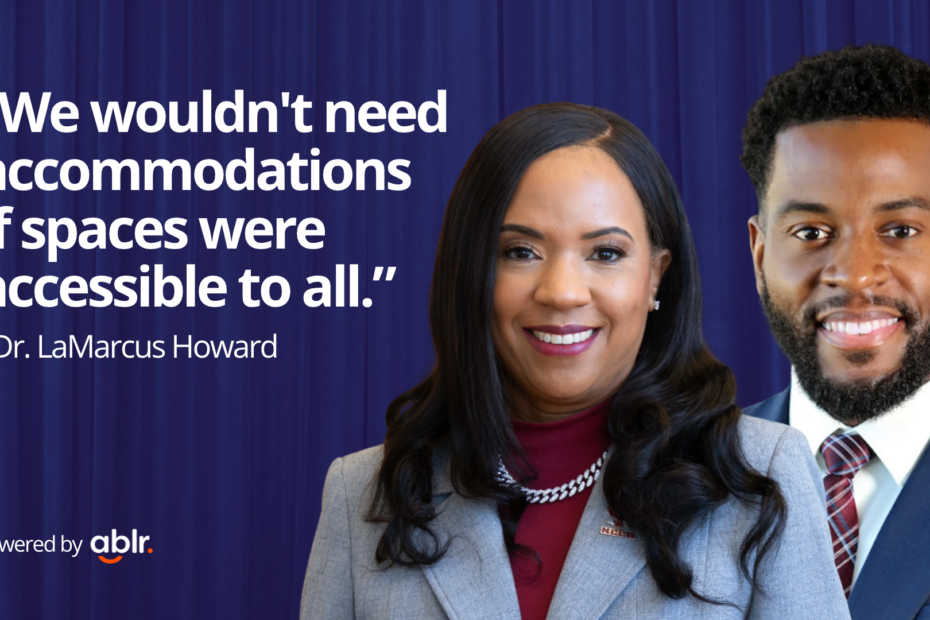
Access Granted Episode 34 Transcript
Mike: Welcome to a special live episode of Access Granted. Today we’re coming to you from North Carolina Central University’s second annual Access is for All Resource Fair, where students, educators, advocates, and organizations are coming together to celebrate accessibility and create more opportunities for students with disabilities. Throughout today’s episode, we’ll be talking with leaders and community members who are helping make accessibility a reality both on campus and beyond. Let’s jump in, y’all. Dr. Howard. Appreciate it. absolute honor to have you here. So introduce yourself, Dr. Howard.
Dr. Howard: Okay
Mike: and tell us a little about what’s going on in your world.
Dr. Howard: I’m Dr. LaMarcus Howard. I am the Assistant Vice Chancellor for Student Health and Wellness here at the illustrious North Carolina Central University.
Mike: It is illustrious.
Dr. Howard: I’ve been at the institution three years now. I’m entering my fourth year, and I tell everyone it’s been a blessing having the opportunity to work here at the institution. I oversee student health and wellness. It’s funny how my journey started in higher ed to get to where I am today, ’cause at my previous institution, I served as the Director of Disability Resource Center and Center for Adaptive Technology and Education. I always laugh because I didn’t pick that career, that career picked and chose me.
Mike: Amen, my friend.
Dr. Howard: No, for sure! And it’s been a blessing.
Mike: Absolutely.
Dr. Howard: Having a conversation or just working with a disability resource center, able-bodied, disabled individuals, it’s been a blessing and enhanced my career. I tell everyone the five years that I worked in the role as that director was the best five years of my entire professional career because it opened my experience and access to everyone on campus and off campus.
Mike: You were influenced by someone that’s very special to you. You mind talking just briefly about that?
Dr. Howard: Oh, for sure. Someone saw potential in me that I didn’t see in myself. During my time at my previous institution, I tell everyone I’m from the state of Michigan, born and raised. My previous institution is where I got my doctorate from, so I’m alumni from Eastern Michigan University, and I lived there for about eight years. And I was serving in the role as the coordinator of our student success center. Loved the work that I did, always wanted to work in student success, and I met a awesome administrator by the name of Dr. Chiara Hensley. And at that time, she served as the Assistant Vice President of Student Affairs. She scheduled a meeting. I had the opportunity to sit in in said meeting, and she read those two individuals for filth, as the students like to say, and just told them about themselves and how they should work collegiately. The work that they’re doing isn’t about them personally, it’s about the students first and foremost.
Mike: That’s it.
Dr. Howard: And once I saw her nice-nasty check professionally two individuals, I was just inspired because I’ve never seen a individual get two staff members who disagreed to be on the same page and gave them directives afterwards.
Mike: Mm-hmm.
Dr. Howard: Once she did that, I do what I always do and I invite administrators out for coffee. She allowed me the opportunity to do so. Once we did it, we created a great relationship. One time, I was in her office and she asked me the question of, “LaMarcus, would you like to interview for the Director of our Disability Resource Center because the previous director left the institution?” And I was like, “No, I never thought of it.”
Mike: Yeah.
Dr. Howard: Then I kinda questioned her, like, I was in my doc program at the time. I’m like, “I’m just cool being a, a coordinator.” And then I was like, “I don’t think I’m really qualified.” Then she asked me some supplemental questions like, “You work with diverse students every day, right?” “Yeah.” “You work with unique learners with learning differences?” Because I oversaw tutoring, supplemental instruction. I had graduate assistants working with me. I said, “Yeah.” “You collaborate with the disability resource center?” “Yes.” “You’ve worked in multicultural services?” “Yes.” “You’re a leader on campus?” “Yes” And a couple more questions, and it was so many yeses. She then ended it with, “So you’re gonna apply?” And I was like, “I guess so.” ‘Cause at first I didn’t think I was qualified, but now you saw something in me that I didn’t see in myself and you brought that out in me. I applied, interviewed, and earned the position.
Mike: And here you are..
Dr. Howard: She ended up passing away. The best supervisors I’ve ever had in my life.
Mike: Man, what an amazing thing of one human being, one interaction completely changed the entire course direction of your life.
Dr. Howard: For sure.
Mike: So as we’re here today to celebrate all this wonderful stuff, what is your sort of first recognition or understanding of LCI, what they do, and how they impacted, and what kind of support they’re providing to help bring this to life? Especially the new accessibility center over there, which by the way, is incredible, and the people that work there are incredible.
Dr. Howard: Yes.
Mike: And this is, by the way, I’m just gonna say it again, this is just a beautiful day, man.
Dr. Howard: You can’t beat this..
Mike: I’m loving this.
Dr. Howard: And you said this is your first podcast outside the studio?
Mike: Outside the studio.
Dr. Howard: We set the bar.
Mike: And this is your first podcast ever.
Dr. Howard: My first podcast ever. My man, look at us, Our first.
Mike: It’s awesome. Lots of stuff, lots of stuff.
Dr. Howard: Yes.
Mike: So tell me about LCI, what do you know about it? Because I knew nothing. I never even heard of this organization before. But yet what they’re doing and the impact they’re making is really beyond miraculous. It’s incredible.
Dr. Howard: For sure.
Mike: Talk about the story and how this all happened.
Dr. Howard: So from what I’ve known, I’ve been at the institution for three years, and prior to my arrival here as Assistant Vice Chancellor for Student Health and Wellness, North Carolina Central already had a relationship with LCI.
Mike: Yep, 2004.
Dr. Howard: Yes. However, it was more so they were providing funding for the institution to provide service. I think that was the acorn.
Mike: That was an acorn. We’re outside.
Dr. Howard: That is super fall. That is super fall.
Mike: That was loud.
Dr. Howard: Very. They provided a lot of funding, like donating funds to the institution for the disabled population here for our students.
Mike: Yep..
Dr. Howard: To provide them with access on campus. However, our goal was to utilize those funds in a more productive and strategic manner.
Mike: Mm-hmm.
Dr. Howard: So, Mr. DeKendrick Murray, who’s our Executive Director of Student Access and Success.
Mike: You’ll meet him in a little bit.
Dr. Howard: Yeah.. Worked very well with LCI in putting said funds into more so the Division of Student Affairs and with our disabled student population more intentionally. And with doing that, we provided a lot of support services for our students. It’s a blessing because here at North Carolina Central, we have a Trio program, which is Department of Education grant-funded student success and access program for students with disabilities. And not every institution in the country has that opportunity to work with such a specialized population, especially at a HBCU, a Historically Black College and University. So having that Trio program, which is very successful for the students that participate, who are retained here at the institution and graduate, we want to utilize those funds to invest in those students as well as to the campus community as well. So we’ve been able to do so tremendously for them. If I’m not mistaken, last week our students went on a tour, LCI. LCI. Which is phenomenal, but I appreciate them so much because they don’t have to do what they’re doing in investing into our campus community. Our Student Accessibility Center
Mike: Beautiful center.
Dr. Howard: is now named the LCI Student Accessibility Center, and that rebranding helped us even more for us to create our second annual access more so fair that we’re having right now. Especially, like I said, a HBCU.
Mike: Yeah.
Dr. Howard: And in the African American community the conversation of disabled, disability, especially from adolescence to adulthood, at times can be a challenging conversation, ’cause there’s a lot of misconceptions, stereotypes attached to it. So we’re breaking that cycle of educating our students and letting our students know that they can embrace their ability and disability. So that’s why I appreciate you all for being here.
Mike: Yeah.
Dr. Howard: LCI, and the tremendous work that my staff does.
Mike: They invest so much money to help organizations and school systems and people. You know, one of the things I think about oftentimes in the disability community, and specialize in the visual impairment community it’s always this feeling of belonging, right?
Dr. Howard: For sure.
Mike: Working and helping other people, it’s such a critical piece of who we are as human beings, what our job is as human beings. And when I think about Access, starting this company Ablr as part of LCI was really eye-opening to me to see how many people were not included in things like education or career focus, or anything for that matter. And I guess my question to you is how important is it for all students, regardless of disability or ability, whether you’re in a wheelchair, whether you’re vision impaired, whether you have an auditory condition situation, whether you have cognitive impairment, like, we all deserve the opportunity to experience this.
Dr. Howard: For sure.
Mike: Right? What is your position on that?
Dr. Howard: I think it’s fascinating ’cause I sit in a role of Assistant Vice Chancellor, so I do have a seat at the table, and I provide everyone grace, from faculty, staff, administrators, students, of not understanding the disability community and what access looks like. Some folks don’t know what they don’t know. So when I have a seat at the table, I provide a different perspective as to why we do things a specific way or a certain way, but also include another community that you may have never thought of from those who may have an invisible or a visible disability.
Mike: Yeah.
Dr. Howard: And when we talk about access, I think about access for all and eliminating barriers regardless of it’s a student or a community member, and always push the envelope of why and why not. At times when you think of disability, especially on a college campus, a letter of accommodation and a faculty member modifying their entire syllabus for this one student. And I think about access outside of just that one student, but all students and say a faculty member instructor being able to modify or understand what learning differences are in their classroom as well. I just love those conversations in general pushing the envelope and educating those who may not know because it provides them a different perspective of how they see the world as well.
Mike: And Ablr does a lot of different things with education. We’ve got a workforce development program, we’ve got a Pre-ETS program and helping high school students kinda determine what direction they wanna go in, right?
Dr. Howard: Yeah.
Mike: Let’s talk a little bit about accommodations because everyone’s like, “Well, what’s an accommodation?” “Oh, we’re giving you an advantage,” or whatever it is. No, it’s just access.
Dr. Howard: That’s literally it.
Mike: It’s like I need support to help me compete at a level and I deserve that.
Dr. Howard: When it comes to the accommodation process, we really wouldn’t need accommodations if faculty in the world understood what universal design was, so creating the space for all, and being accessible to all versus putting your course material in a specific way. It’s just thinking outside of the box. So that’s what we always try to do, is educate and get our faculty members to understand that there’s more ways that you could deliver your course outside of your traditional thinking that will definitely benefit not only you, but your students as well.
Mike: ‘Cause Ablr’s part of LCI, so we’re a division of LCI. We have a different directional approach in how we do our businesses.
Dr. Howard: Right.
Mike: So we’re a little bit different. But one of the things we do is accessibility, is universal design. It’s making sure that everything is designed for all people, right? And so when you see university systems, when you see hospitals, when you see medical centers, when you see e-commerce companies, when you see associations and museums saying, “Hey, we wanna be accessible, not only so people can buy tickets, but so people can enjoy the experience.”
Dr. Howard: Right.
Mike: Can be engaged in the actual experience. Because for so long, so many people didn’t even have that. And frankly, it’s still not even close to being accessible where we live. Not even close.
Dr. Howard: Not even close.
Mike: Not even close. But there are wins. Looking ahead, like, as you evolve into your career and you factor in all these things we talked about today, like, what’s next? Like, what’s next for NCCU? What’s next for Dr. Howard?
Dr. Howard: First, the beauty in this institution is that we’re growing. This is the largest class of students that we’ve ever had, and we’re growing. But what comes with that is more resources and services to meet the demands of our students, and our chancellor understands that. LCI understands that. And we’re gonna continue to invest into our students, faculty, staff, and administration, and providing access for our students. They all understand what access looks like, because access and student success goes hand in hand.
Mike: Yes, it does.
Dr. Howard: We wanna provide students with opportunities to learn, grow, also graduate too. So they really go hand in hand, and those are two priorities that our administrations care about tremendously.
Mike: We need everybody..
Dr. Howard: All hands on deck.
Mike: on deck to get educated, to get smart, to have awareness, to change together. All of us deserve that opportunity. Dr. Howard.
Dr. Howard: Yeah.
Mike: Honored, man.
Dr. Howard: Oh, I appreciate it.
Mike: Thank you for being here, man!
Dr. Howard: Appreciate it!
Mike: For the audience, for everyone, can you introduce yourself?
Karrie Dixon: I am Karrie Dixon. I’m the 13th chancellor at North Carolina Central University.
Mike: What got you into this industry, education, like what spurred that for you?
Karrie Dixon: We are very grateful for the partnership, the sponsorship, everything that LCI has done to bring us to the level in which we are with offering accessibility opportunities to our students. And accessibility is critical to our success. We wanna make sure that we are providing opportunity for all students to navigate campus, to be successful from the standpoint of their student success, getting them from freshman year to graduation, off to careers. And so fairs like this really help our students understand that we value..
Mike: Pretty exciting.
Karrie Dixon: accessibility, and we want them, by all means, to take advantage of all the services that are being provided at North Carolina Central University.
Mike: The LCI Accessibility Center is beautiful. We had a chance to do a tour. It’s so beautiful, but it provides value to all students, right?
Karrie Dixon: Exactly.
Mike: So from the golf cart we saw earlier, from the accessibility support services with the technology. Like talk about what that means to the university system, because it does provide an opportunity for all students to have an opportunity to be and engage in an experience like this, which is actually amazing. I’m just so grateful to be on a college campus again. But this feels amazing.
Karrie Dixon: Yes, definitely. And, you know, it has to be a part of the culture. So this is not a one-time thing. This is something that making sure that our campus is accessible, making sure all students feel valued and welcomed and able to navigate the campus is something that we make sure to put at the forefront of who we are as we think about student success. So it has to be integrated into the culture for everyone to buy in and understand the importance of accessibility on our campus.
Mike: So you see the value in that, and we started off, I kinda jumped in, but like, what inspired you as a young professor, as a young lady growing up, saying, “I wanna be in education”? Now you’re a chancellor, right?
Karrie Dixon: Mm-hmm.
Mike: That’s an amazing role.
Karrie Dixon: Mm-hmm.
Mike: But what amazing responsibility comes along with it.
Karrie Dixon: So I would start by saying it actually became very important to me early in my career. I served as Assistant Vice Provost for student diversity at North Carolina State University early in my career, my first job into administration. Coming from the classroom, going into administration at NC State. And being that was the first time the university had a position like mine, it was a new position, and it was focused on student diversity back then. Part of that was disability services, accessibility. So I was kinda thrown into the mix of how do we become ADA compliant across the entire campus? How do we tell the story of helping our students with disabilities to navigate the college campus, working with, you know, the offices where students felt comfortable disclosing their disability or asking for accommodations. We went around campus, and we had to put on the glasses that give you the illusion of being blind
Mike: Yeah.
Karrie Dixon: And how you navigated campus..
Mike: It’s not easy, is it?
Karrie Dixon: It is not easy. But it also gave us all an appreciation for the fact that we have to make sure that our students are comfortable and that they’re able to navigate easily, just like all students.
Mike: Mm-hmm.
Karrie Dixon: And so that is where I really had that pivotal moment of valuing how important it is to have accessibility, accommodations, ADA compliance, all of that, and what it means for a campus to adopt that into the culture..
Mike: Yeah …
Karrie Dixon: of what we do and who we are.
Mike: And it’s really an honor because not all campuses are leading this way.
Karrie Dixon: That’s right.
Mike: Not all organizations are leading this way. How do you roll in the physical side to the digital side?
Karrie Dixon: That’s also a very important piece of the student experience..
Mike: Absolutely.
Karrie Dixon: Is what happens in the classroom. And providing counsel to our students with disabilities or who are in need of accommodations, giving them the courage to talk to their professors, to go to the disability services office, to bring to the forefront what it is that they need help with. If that’s taking longer time for a test or exams, you know, what does that mean to them? But what I found is sometimes they don’t feel like they can have those conversations and disclose. And unlike high school, you know, high school they pretty much knew what to do, and it was part of their plan that they had in place with their parents being the advocates. When you come to college, you become your own advocate.
Mike: Yes, you do.
Karrie Dixon: And you have to be strong
Mike: And to have the support.
Karrie Dixon: and have courage to do that. And so having those conversations with incoming students to say, “Hey, if you have a disability, if you need an accommodation, know that you can talk to someone about that.” And telling parents, you know, when students come to college, 18 years old, we treat them as adults. We have to have permission to talk to the parent, especially when it comes to disabilities and accommodations, but in general, across the entire student body. So having that in place and encouraging them to be able to disclose and to come forward with their needs allows us to be able to respond and help them be successful.
Mike: And Chancellor, I know you have to wrap up here in a minute. Yes. I’m so grateful for your time today. It was such an honor to meet you.
Karrie Dixon: Thank you.
Mike: I’ll leave you with sort of a thought of, how amazing does it feel to know that there are kids coming to school here, not just to get an education, but feel like they can belong here?
Karrie Dixon: Yeah.
Mike: And especially for folks with disabilities, because they grew up in an environment that wasn’t necessarily the most welcoming.
Karrie Dixon: Right.
Mike: And now they come into a university that you run today..
Karrie Dixon: Right.
Mike: And they feel that. How does that make you feel, that you’re changing the lives of people?
Karrie Dixon: It makes me feel great. It makes me feel great, and that’s why I’m here today, to show them, to show the campus, the leadership here believes in helping all students, making sure all students have access to accessibility services, disability services, counseling center, all the services that we provide. It’s meaningful when they actually see you showing up and being a part of this.
Mike: You gotta show up. You gotta show up.
Karrie Dixon: Yes.
Mike: Thank you so much for being here. So you’re the Executive Director of the Student Access and Success.
Dekendrick Murray: Yes.
Mike: And then you run this LCI Student Accessibility Center, which this is why we’re here to talk about all this stuff. This is why we had this great event today.
Dekendrick Murray: It is.
Mike: How do you all feel right now about that?
Dekendrick Murray: You probably learned today and even before, the students with accessibility needs on our campus has increased. When I first got here we had about 375, and now under Viv’s leadership we’re at 1,013 students.
Mike: Wooo!
Dekendrick Murray: Right?
Mike: So tell me, tell everyone what you all do.
Dekendrick Murray: So, I serve as our Executive Director for Student Access and Success. And so in my day-to-day, I basically support our various units that support students who are first-gen, from limited income households, and/or who live with a documented disability. Before I actually assumed this role, I was actually the director for our Student Accessibility Services department at that time.
Mike: Upward mobility.
Dekendrick Murray: Yeah, yeah, yeah.
Mike: That’s what we preach all the time at LCI.
Dekendrick Murray: Yes, and so we’ve grown over the past five years. When I first got here, our department, like I said, 375 students, maybe two full-time staff. To now our unit has grown. We are five different areas in one. And literally, you know, our work is really just changing outcomes for students. I get a chance to work with an amazing director for our LCI Student Accessibility Center, an amazing leadership team, and our goal is really just to increase first-generation disability student and low-income student success.
Mike: Wow.
Dekendrick Murray: And so we do that through services, workshops. You know, we provide a mirage of different services. We call ourselves like a one-stop shop. But I have to give this one credit, you know. This is Viv’s baby. Two years ago she said, “Hey, Murray..
Mike: Bravo, Viv.
Dekendrick Murray: I wanna start a fair.” Did some awesome things like this when she was in Texas, and she wanted to kinda continue to see some of those things come to life. And she’s really taken this thing and ran with it.
Mike: Tell us all-
Viviane Ackall: Okay
Mike: Your name, what you do.
Viviane Ackall: I’m the director for the LCI Student Accessibility Center. We have a staff of four as a total. We work with students with a disability to make sure they have access, that all material is accessible to them, that the professors know how to work with them, that they have the same opportunities that any other student on campus have. But we also work with the faculty to make sure that they understand what the student needs. So some accommodations don’t work for that specific class, so we need to make an alternative accommodation. So if I approve a student for extended time on testing, but there’s no testing on the class, it has a paper that’s due at a certain time we need to change the accommodation to fit that specific class and what’s the requirement for the class. Now, our students must meet all the requirement for the class.
Mike: Mm-hmm.
Viviane Ackall: There’s no like alternative curriculum. There’s no, like, it’s easier for them.
Mike: Which is the way it should be.
Viviane Ackall: Yeah.
Mike: That’s inclusion.
Viviane Ackall: When they graduate from Center they got that knowledge just like any other student here. But we give them the access to get that knowledge. And we also work with the college per se to make sure we are in compliance with the laws, the regulations, and everything that needs to be in compliance.
Mike: When we were talking in the Center, it was like the tech is dialed in. The people are amazing. The facility’s beautiful. The signage is amazing. How’s that changed things for y’all?
Viviane Ackall: So from the most simple things, like having accessible furniture. So in the past we had a student that was in a wheelchair that when she worked for us as a student worker, she was hidden behind the table. Simple steps like making sure everything is accessible, a person in a wheelchair, a blind person have free mobility within the department, being able to help with paying a salary of one of our staff. So we go from doing events like this, like today, being able to assist the students that have a specific need for a technology, a Livescribe, or a specific keyboard. We have now the means to provide that to the student, which before with just state funds was very limited.
Mike: So it helps you. It’s really in theory it’s helping you scale your mission.
Viviane Ackall: Yep.
Dekendrick Murray: Definitely.
Mike: And what you all are doing and LCI’s support, it’s allowing that to happen.
Viviane Ackall: Even growing the staff from two people-
Dekendrick Murray: Mm-hmm
Viviane Ackall: to four and now five, like, it frees my time to go to faculty meeting and talk one to one on every single department and explain to them what we do. I don’t know if you remember the time where people were afraid of students with a disability.
Dekendrick Murray: Yeah.
Viviane Ackall: We are showing that student with a disability is somebody that wants to improve the campus just like any other student.
Mike: People wanted to be involved. Well, you know, the dancing was fun. I tried. I did some of the dances. There’s the shuffle. Yeah, that’s, that’s one of my favorites. But I couldn’t do the other one, but my point is everybody has a soft heart here. Like, I’ve never felt more welcome in an environment.
Dekendrick Murray: Yeah.
Mike: And everyone cares. And so what y’all are doing is leading something which is really inclusion for all people, which is what we’re all going for, right? We started Ablr six years ago. Now, LCI’s been in business over 80 years. But as Ablr, we couldn’t get a human being to talk to us about accessibility. Not a priority. It’s not really our focus. I say this because it is such an honor.
Dekendrick Murray: Yeah.
Mike: We’re doing it.
Dekendrick Murray: Yeah.
Mike: All the people that are trying to change the game and remove the barriers, right? And create opportunities for people with disabilities, it’s like happening.
Dekendrick Murray: Yeah. Yeah.
Mike: Like, we’re getting to be part of it and watch it. It’s pretty exciting. It really is.
Dekendrick Murray: It’s super exciting.
Viviane Ackall: When I applied for this job, my question during the application, because this is something I tell everybody, when you go for an interview, you are being interviewed, but you should also interview the place.
Mike: Amen.
Viviane Ackall: Because you need to know and like the place where you’re gonna go, right? So my question there was, how do you see students with disability?
Dekendrick Murray: Mm-hmm.
Viviane Ackall: Because I am tired of working on a place where we are the least department to anybody to worry about.
Mike: Well, the fact that the chancellor came out today if that doesn’t say, “We support you from the top down” I don’t know what does. Like, I feel inspired.
Viviane Ackall: On the day that she came here for the first time, everybody went to meet her. And I shook her hand for two minutes, Murray and I, and I said, “We are with student disability I wanna talk to you.”
Dekendrick Murray: Yep. Very first time meeting her.
Mike: Three years in and she’s making such a radical change to the university system and frankly, all university systems. Because the beauty of this, y’all are leading the way. You really are. Tell me how you’re feeling right now.
Dekendrick Murray: And I say this genuinely, like, if I didn’t get paid for what I do, I would still do what I do. I actually like it. I like my team, right? I like working with our students.
Mike: Yep.
Dekendrick Murray: And, you know, I came from a single-parent home. My mom raised me, my two sisters, three cousins. Three-bedroom trailer, $28,000, right? So that’s what I grew up in.
Mike: Humble beginnings.
Dekendrick Murray: That’s what I came from. Humble beginnings. And one of the things for me was that I wanted to pursue college, so I ended up getting the full ride scholarship to the University of Florida. Go Gators! And then from there, I decided-
Mike: Go for you, man..
Dekendrick Murray: That I wanted to go back and empower students to do some of the same things. So I wanted to see other students, you know, make it out and be able to kind of live a different lived experience. And so a lot of my work has really centered around changing the social mobility for our students, changing the thoughts behind what they think of themselves or think of others. And I really get a chance to do that a lot by working with our team, supporting them in their ventures. I try to be as supportive as I can. You know, if they’re like, “Hey, Murray, I’m thinking this,” I’m like, “Okay, cool.” Every now and then I’m like, “Oh, maybe we should try this instead.” I’ve been here at Central five and a half years now, and just kinda seen our growth in our department, growth in our institution. The radical candor that we even have within our department.
Mike: Great.
Dekendrick Murray: Where everyone is, like, honest with each other, but honest with each other so that we can support our students the best way that we can, and support our staff the best way that we can too because they’re obviously serving our students. And so my day-to-day, it really looks like supporting my team. I tell my wife all the time that I spend about six hours a day in relationship management.
Mike: A great job.
Dekendrick Murray: And so it’s literally, “Okay, hey, you have this question. You need this help. You have this fire. Okay, let me help you put that out.”
Mike: How does it feel for both of you, though, I mean, to do something that really matters?
Viviane Ackall: I have worked with students with disability my whole life, in a college setting for about 12 years now. In the past, what I had to do is I work in my office, I give students accommodations, I work with professors, make sure everything is under compliance. Here at Central, working under Murray and his team, we have the support that the majority of other college don’t have. So our students, they get tutors, they get mentors, they get one-to-one support, they get advocates, they go into field trips.
Dekendrick Murray: You know, we go beyond the typical model of an accessibility office and just providing accommodations.
Mike: Mm-hmm.
Dekendrick Murray: We’re providing the holistic development of the student.
Mike: So accessibility, universal design, usable experiences.
Viviane Ackall: Access is for all.
Mike: By the way, “Accessibility for All” is Ablr’s tagline.
Viviane Ackall: Ohh.
Dekendrick Murray: I love that.
Mike: Always was.
Dekendrick Murray: And I was gonna say, you know something that’s really interesting too, so I remember this was probably 2021 or ’22, there was a parent, she said that they had went to 18 different schools, and she said out of all those 18 different schools, Central was the only place that felt like home.
Viviane Ackall: Aw.
Mike: Wow.
Dekendrick Murray: And so she sent her son here. He graduates this fall. Literally the last four years, he’s utilized our accommodations, he’s utilized our support, he’s lived in our housing community that we have for students.
Viviane Ackall: Yeah.
Dekendrick Murray: This kinda speaks to the work and the model in which we adhere to, you know? It’s access for every Eagle for us, and so we’re gonna do our due diligence to support our students.
Mike: This has been just such an absolutely beautiful day. Y’all are doing such incredible work. I love that LCI is supporting this mission. They support our mission.
Dekendrick Murray: Definitely.
Mike: How do you feel right now?
Dekendrick Murray: Yeah. This was, like, the icing on top. I’m super-duper excited, you know. I’m gonna go home, celebrate with my wife, you know, we just prepare for the next season, but one additional new team member for you.
Mike: I know you gotta go. Yes. We all gotta go, but I wanna just say thank you to everybody who was here today. Y’all did an amazing job.
Dekendrick Murray: Thank you.
Mike: So appreciate all the great work you’re doing. Obviously working with LCI and changing the game, outcomes are better. Everyone wins. Today wasn’t just about resources, it was about relationships. It’s encouraging to see students, educators, employers, and community organizations all working together toward the same goal. Creating campuses where every student has the opportunity to succeed. Thank you to North Carolina Central University, the Student Accessibility Center, LCI, and every organization that participated. We’ll see you next time on Access Granted.