
 Risk Free Assessment

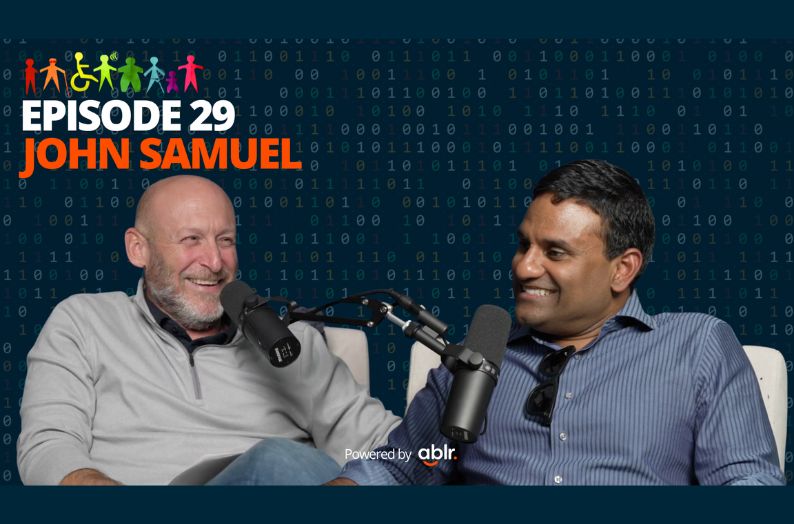
Celebrating Ablr’s 5 Year Journey: Breaking Barriers, Building Futures – Access Granted Podcast Episode 29 Transcript
Mike: Alright, so welcome man. I gotta turn the voice on, right? But we’re here today for a couple reasons, one at the Burt’s Studio, but we’re here to talk about Ablr. And Ablr has just a few days ago, has celebrated our fifth anniversary. So five years of incredible work, an incredible journey. We’ve had our ups, we’ve had our downs, we’ve had some challenges, we’ve had some tough times, some good times, some laughs. We’ve met so many amazing people. We’ve acquired so many amazing clients. And so John, we’re here just to talk a little bit about that, reflect on those five years. And, I still remember that.
Just I’ll start off with, I still remember that day after that, famous meeting where we sat in that car together and we’re like, “Dude, it’s just you and I, bro.” And it’s been an interesting run. So just for my sake and for everyone, listening’s sake, just. Talk to me a little bit about these last five years, like the biggest milestone in terms of what we’ve, where we are today versus where we were.
And we joke all the time about just, man, we just need to get our first 10, with first 10… and then, boom! We have this wonderful business that is helping people every single day, helping businesses, helping people, helping families. John’s our CEO, and he’s had this vision for Ablr, probably for eight plus, nine plus years. And so to see it come to fruition, John, how does that make you feel?
John: No thank you, Mike. No, it’s been amazing, right? It’s, the last five years, like you said, it has had ups and downs and it’s been, just really transformative, I think from a professional perspective and a personal one.
I think when we came into Ablr, I was also just learning to be blind. I was learning how to really just embrace my disability.
And at the same time, we’re launching a business. And I think one of the very challenging things is, when I started LCI Tech, it was just my perspective. And when we created Ablr, all of a sudden you have a partnership, right?
You and I together. And that was really something you, it’s hard to plan for. How do you go from saying “My thought is: this is what we’re gonna do” to then having a partnership, communicating that together, and finding that kind of cohesiveness together. And that, that took us some time.
Mike: Yeah, it did. And it still does.
John: And it does. And I think that’s like any partnership, even a marriage, right? It’s a continuous learning process. We’re continuously growing together and we’re gonna have disagreements.
But I think that what helped us was the underlying mission that I think we both were able to agree on. That we’re removing barriers for people with disabilities in all aspects of life. And I think that has been the most consistent thing for you and I, which I think has been amazing. So, I don’t know about you.
Mike: I still go back to, we still talk about the story today in all of our calls with clients. Yeah. And I haven’t, it’s funny, I don’t talk about it as much as I used to, which is, I probably should revert back to it, but I just still remember the first time I met you at LCI and you came out and I remember thinking.
This guy’s not blind. He’s looking right at me. I’m like, is he what? Do I touch him or do I do? I had no etiquette. I didn’t even know what I was walking into. The individuals that sent me there didn’t give any sort of ” this is what this company does.”
John: Yeah.
Mike: And so for those who don’t know, LCI is the largest employer of the blind in the US located in Durham. John started LCI Tech, under the umbrella of LCI. I was with an advertising agency, Walk West. Great firm, great people. And we met through this serendipitous event at LCI through a tour, and what a transformative day that was. I remember walking through and thinking, “wow,” like I was completely blown away how uniform that business ran. You walk into an organization who’s creating products for people in the US government and they’re visually impaired, or they’re blind and they have low vision, and it’s a well-oiled machine.
It’s really impressive. And then to hear your screen reader for the first time, I knew at that moment, like, there was something here. I figured, you know what? Johnny Sams is a pretty smart guy. Let me jump on his tail here and follow him to the Promise Land, bro.
But I will say, John, you’ve always had. I appreciate your position on the vision and the mission and, when we go back to our early days on what we thought the business could be and what you wanted it to be, now that it’s actually going, that it’s, we’re actually, I say manifesting it, but visualizing what we want the outcome to be.
How exciting is that? ‘Cause you were pretty dialed in on like how we were gonna get our business. What were our lines of business going to be? When was accessibility gonna evolve into workforce development and training? And you really were a visionary in this, from day one. And all of it’s coming to fruition, bro. So it’s exciting. It really is exciting as hell.
But, what does that feel like to, ’cause we don’t have a lot of time to go back and celebrate the wins, right? Because we’re still busting it every day, building every day, learning every day, growing every day, but having a moment in time to reflect and talk about what an honor it’s been and what a journey it’s been, and what we have done, John, is no easy feat, bro.
John: Yeah.
Mike: And what you have visualized for this business is no easy feat. So how good does it feel that we’re on the right path?
John: No, that’s very kind of you to say. I think that it brings me joy. You can have a vision and you can have an idea, but to actually execute on it is the difficult part.
I think everybody has ideas. Anyone can have an idea. Anyone can have, oh, “I think this is what’ll happen.”
How do you take that vision and bring it to life? And I think that where I struggled, I’ve talked about this before, bringing in clients and then closing them and then delivering them. Once we are able to bring in those clients like you were able to bring in these clients and close those deals.
And then having Kim Casey on our team being able to execute on it. That was what was missing. So it really was, until I could, y’all completed this kind of idea. You completed the vision.
Y’all came in and seamlessly were the missing pieces to that. And that’s what makes me really happy.
And when I think about the beginning, we were so driven by numbers. You talked about the first 10 clients. That was what we were being driven by our board at that time. Yeah.
Mike: Stay alive, right? Yeah.
John: Yeah. It was like. Grow or die. And it’s get your first 10. Start with your first 10, then get to your next, next 10.
And then it was like internally we were like, oh, when you get to that million dollar revenue target. We need to get to a million dollars. And then when we blew past it, it was like, “Oh wow!”
And I think that was something that to me was, I felt joy once we stopped looking at the numbers of how much dollars or clients to then when we started seeing how many people have we started helping adjust.
Mike: Yeah.
John: That was something that really to me was a shift. What was driving me in the beginning was like, was employment. And accessibility was, we needed to make organizations and products more accessible because you’re not setting people up for success in employment if they’re not accessible.
Mike: It’s not accessible.
John: Yep. And to go from that side of the business, thinking about just the sheer numbers to then focusing on the people, was really for me, the game changing piece. But, we still need those dollars and… The revenue ’cause I mean it’s, we always talk about margin equals mission, right?
Mike: Yep. Yeah. You have to have it. And especially with, I always tell our clients, we, our goal in terms of profitability is for employment.
John: That’s right.
Mike: We’re taking what we earn and we’re reinvesting it to help people find meaningful careers and.
John: That’s right.
Mike: That’s a great mission and it’s working. And so there’s two questions. One was like, is there anything today that gives you goosebumps? But I, before I get into that, it’s let’s talk about two things. Kim, right? You mentioned Kim, and Kim has been just a machine. Probably, what, 90 days into what we, I don’t even know where she came from, dude. But, she’s been an absolute blessing. And I always say to our clients, it’s easy, like you said, it’s oh, I have the vision. That’s great. I can do the vision, but I need to be able to execute.
And then you start to execute the vision and the brand value.
That’s what gives me goosebumps when I get a call from someone from like another country or another state outta nowhere, like another e-commerce, these huge brands, like “We heard about Ablr.”
I’m like…
John: Yeah.
Mike: Like I didn’t know if we would get there. What are these huge brands like Chewy and Wayfair and Lenovo and Manscaped, and these huge, massive companies that actually want to make a change and they want to drive a change and Verizon, these big companies. And I get goosebumps when I look back and think, man, it was so hard just to get to the first and then get to the 10 and then build upon it.
But now looking back. The execution of the work we do is amazing, and that’s because of Kim and team. I always say like we, you have the vision, I can bring the brand to light. People love what we do. They’re excited about what we do, but they always come back because of what Kim and Arielle and Maria and the entire accessibility team produces because they’re loyal, they’re committed, they’re intelligent, they’re smart. They deliver on time. They’re honest.
John: Yeah.
Mike: And that’s what people want. They wanna work with great people. And the fact that we have been able to do that as an entire unit, it’s absolutely an honor. And I’m so grateful for Kim and team and how we’ve evolved into an organization that people trust.
John: Yeah, no, for sure. I think the thing about our accessibility team is I think they’re so customer centric. They’re so focused on giving good value, delivering real value to our clients. It’s not just a checkbox, accessibility. Just, “Okay, here’s the compliance, here’s your report.”
But they really are focused on making sure that our clients are learning, that our clients are understanding the why behind “Why is this important?” “Why are you doing this?”
Because I think if you talk about goosebumps, what gives me goosebumps is how many clients come to us because they needed compliance requirements. And then how many of them, our retention rate is so high because our clients stay with us. One, because of the good service that we deliver, but I think our team is also educating them and showing them “This is why it’s important.” And then something clicks with our clients and it’s like the a-ha moment. That’s a, They’re like, “I get it.”
Mike: I got little goosebumps right now, man. But it’s so true because…
John:Yes.
Mike: You nailed it. It’s, there’s a lot of other organizations in this space that are much bigger. They have thousands of sales teams.
John:Yeah.
Mike: And marketing teams and private equity money, and budgets, and they’re out there everywhere. But when you get organic calls from businesses because they heard what an experience it was to work with you. So not only did we build a business and a brand, but we built an outcome for people. And you’re right, they come back, they come in for this compliance, I have to do this or this, and then they walk away saying, wow, I had no, like I did. I had no,
John: They don’t walk away. They stayed just like you stayed. That’s right.
Mike: They walk away from the project going, “I had no idea.”
John: Yeah.
Mike: That this should be happening across every part of the ecosystem. And that’s the education piece. That’s where Kim and team come in and say, “This is why.” “This is the impact.”
And they love working with the team because they get to learn. And a lot of times in corporate America, you do your job every day. You don’t, maybe you just don’t learn something new every day. But now people are learning. It’s magnetic.
John: Yeah.
Mike: And you look at the roster, and yeah. I’m still tickled with it, man.
I’m still blown away. And the number of verticals we work with. Big and small. We’ve helped mom and pops. John, you’ve been all over the scene within the communities and the awards and the presentations. And the speaking engagements. Talk about that.
‘Cause I remember when we first started, you were out and about, and now it’s like you’ve created this own personal brand of Johnny Sams, right?
John: Yeah.
Mike: And so you, you got the book now, right? And then you’re doing the speaking engagements. We got a podcast now.
John: Yeah.
Mike: You were on a TED Talk. So many beautiful things have been born out of Ablr.
John: No, for sure. I think when you talk about branding and the Ablr brand, when I first joined LCI to start thinking about this, talk about how I wanted to ride the coattails of the LCI brand. I thought, “LCI has been around for 80 plus years. They have this pull. They’re gonna be able to pull in people.”
And I remember talking to marketing organization back then and they said, no, you are the one that’s gonna be driving the attention. You’re the one getting the eyeballs you need to get out there. And I didn’t understand it at that point. And I started getting out there. And I remember the first award that I got, I think it was like 40 under 40.
And, at that time I was still coming to grips with my vision loss. I was still learning to learn as someone who’s blind. And I could see it, that award for the work that I had done when I was in Africa. Yeah, for sure. One hundred percent deserved it. I could say that, right? In, in confidence.
But the work that I had started to do here at LCI and then, you know, at LCI before Ablr—
I felt like an imposter syndrome, and I didn’t understand why am I getting this award? ‘Cause I haven’t been able to do anything right now. Haven’t been able to, to really accomplish anything. And I think that was really difficult for me personally to deal with was:
“Why are they giving me this recognition?” “Why are they giving me a platform?”
‘Cause I haven’t done anything yet. Am I getting it just because of this kind of talking about like how I, what I want to do. And it goes back to like people, anybody can say that what they wanna do. The hard work is execution. The hard work is delivering on that.
And so as time went on, and as we actually created Ablr, I didn’t understand the power of the brand of the company until folks that I was trying to knock on doors, when I said, “oh, I’m part of LCI Tech,” they wouldn’t open the door.
I said “I’m part of Ablr.” “Oh yeah. Oh we’ve heard of Ablr.” I’m like we just started like last week, so I don’t know how you know about Ablr, but okay, let’s do this.
I didn’t understand the power of a brand, right?
And that really elevated things. It took us to another level and that I think that helped me, also with my own personal brand, right?
It helped me. They went hand in hand and I appreciate you for sharing that and showing me how branding is important from a business side and also from a personal side. And again, I don’t know if it’s a, I’m just grateful for all the good people who’ve helped us along the way, because you don’t have a brand without those people.
Mike: So many great companies, so many great people. We always have this little way of we do things, like the “Hello froms” or the friendly follow-ups from, but it’s I think one of the things I love the most about it is the sincerity of who the people are.
Because when you’re in business and you’re in an agency environment or you’re in a marketing environment, it’s always what have you done for me lately? Get it done. But you’re not part of a community. And majority of our team has really been here from the beginning.
John: Yeah.
Mike: And so we’ve all done this together, but we’ve all evolved as people. We’ve all, our clients have evolved as people. We’re still friends with our clients. I always say to folks, “Hey, we’ve got a list of two or three hundred clients who’d be happy to talk to you about what we do.” And to get to a place where like clients literally enjoy the team. They like working with us.
John: Yeah.
Mike: They enjoy working with us. They learn by working with us. It’s weird when you think about it though, but it’s so cool. Because we never sit down and talk about it ’cause it’s like we gotta keep rolling. You know what I mean?
John: Yeah.
Mike: So one of the things I’m interested in, this is a funny question, but, was there ever a moment that you thought: “I don’t know if we’re gonna make it, man.”
John: Oh, a hundred percent. There’s so many points.
Mike: So what got you through that? Yeah, I’d like to hear any story that you can…
John: We can talk about, yeah, probably like 10 months in, like we were having our first like the big meeting.
Yeah. The vision, traction, like planning out our next one year, three year, five year plan.
And we had a two day onsite meeting with folks on the team at that time. I think there was what, six of us in the meeting?
Mike: There was six of us in the meeting.
John: There was six of us in the meeting.
Mike: Yep. Kim was remote. No, Kim? No. Kim was remote. No, Kim was remote.
John: Yep. And then there was five of us in the office in the building, like in the conference room. And I remember after day one, nothing was accomplished and it felt just very chaotic. Day two. Similar situation, there was tears involved.
There was a lot of crying. There was like anger, and I remember at the end.
Mike: Every emotion.
John: Every emotion. And I don’t know if there was laughter. I don’t think there was any laughter.
Mike: There wasn’t any laughter.
John: I don’t know if there was any smiling in this whole meeting. Oh no, it. And I think that was one of the places where it questioned me also.
Mike: Every negative emotion.
John: Lots of negative emotion, lot of just like doubt. And it was really difficult.
Mike: Lot of doubt. Yep.
John: And I remember the last part of it was, “Let’s just come up with our core values” at the end. Let’s at least accomplish something. Let’s get something done that we had planned.
Mike: Love it.
John: And that’s when we came up with the Growth mindset, Relationships, Initiative, and Trust, which it spells GRIT. Which is…
Mike: Yeah, which is great.
John: Yeah.
Mike: Which I remember that too ’cause we said GRIT and they’re like, “no,” people are like “nah.” I’m like yeah. That’s GRIT. Okay.
John: I think we changed one of the letters, right? I think the R we might have forced was partnerships into, yeah, relationships.
Mike: But it worked and we still, so keep going, ’cause we still, that was one of the, that’s the best thing that came outta that meeting.
John: That was the best thing. That was the only thing that came out. That was the best thing, greatest thing that came outta it. And then that’s when we went to the dinner afterwards. And we were sitting at this restaurant outside, and that’s when you and I were in the car together and yeah, I turned to you, I said, “I think at the end of this, it’s just gonna be you and me, man.”
And that really was a…
Mike: I think I laughed. I think I laughed when you said that ’cause I.
John: Oh, 100%. You laughed. It was just like. It was like, okay, here we go.
Maybe it’s just gonna be you and I. But what happened was 50% of those folks on the team, we realized, they didn’t necessarily have those core values that we really needed.
And that’s what kind of reshifted our focus to really focus on our core values of GRIT.
I think that was one of the most pivotal moments. That was one of the moments I didn’t think we were gonna make it. And after that, when we left with the GRIT, and we restructured the team, and from there it just, we started seeing some success.
That was probably the first time I didn’t think we were gonna make it. And then I think that there was other moments further down the road, to be honest, earlier this year.
Mike: Yeah.
John: And I think that…
Mike: I was struggling.
John: No, but.
Mike: And I was bringing, yeah, I was bringing everything down around me.
John: But it’s not just, you can’t, when you talk about a partnership, it’s not just a one-sided way.
Mike: Yeah, true. Very true.
John: When we did that exercise of stop, start, continue, I, I don’t know the right order of it.
Mike: Yeah. I think that’s, I think that’s the right order.
John: I think so. Yeah. Yeah. And it was like we’re going through marriage counseling, you and I.
Mike: Yeah. Explain that a little bit because, and I’m an open book. So I mean I, yeah, I think most of the world was probably aware of, I wasn’t really my myself for quite a bit of time.
And Marissa, who is our Chief People Officer at LCI suggested this start, stop and, hold, continue. But talk to me, explain that because it, I, at first I was like, “Oh man, this is gonna be tough,” right? This is gonna be tough. ‘Cause there’s a lot of stuff to confront ’cause.
John: Yeah.
Mike: But it was a, it was an awesome exercise.
John: Yeah.
Mike: And I think that was like the starting point of the rebuild. I feel.
John: For sure.
Mike: And we always are moving, always learning and growing together. And we’ve been through a lot of ups and downs together, and I’m so grateful for those. But what did you get out of that like that whole exercise?
John: Yeah. So for folks who don’t know what the start, stop, continue model is, it’s what are the activities or things that you would like partner or whoever you’re having this exercise with to start doing, what are the things you want them to stop doing?
What are the things you want them to continue doing?
And when we went through that exercise…
Mike: It sounds simple, but it’s not.
John: But I think one of the, what it did was it, first it brought us into the room together. And I think that was something that, where I take a lot of responsibility is that we weren’t, I wasn’t making time for you.
I wasn’t, you and I didn’t have that time together to actually just talk. And that’s what this exercise did. It helped us slow down, talk and share. And I think when you talk about core values, we had to grow together, we had to improve our relationship, and then we had to build that trust back up, right?
And the initiative for us to step back from the business and say, look for the business, we have to do that. And I think that it’s easy as co-founders or leaders of an organization to sometimes say,
“Oh, we’ll fix it later,” that we have other pressing matters. We need to work on that deal.
We need to work on this project, etc., right? There’s so many other things that you can prioritize versus prioritizing the relationships within the organization and opening, building that communication. And I think that exercise helped you and I to really get back on the same page.
Mike: And I built that wall, I did. And, but it took the wall down. It allowed us to just be honest. And it was painful. I think we’ve shed some tears.
John: Lots of tears.
Mike: Tears along the way, man.
John: Yeah. We’ve shed tears every year.
Mike: Yeah. If you can cry with somebody, together man.
Lots of tears. Lots of tears. Blood, sweat and tears. But that’s a true statement. And you’ve gone through some stuff and down you’ve some of your health challenges. I’ve had some mental health challenges, personal challenges, and as has the team.
John: Yeah.
Mike: And it’s funny ’cause we like, we. Just to mention Kim, like just to, we were talking about her the other day. We talk about her all the time. But like her kids now, like her daughter’s in the business and her, we’ve seen our kids grow and we have our birthday celebrations and we have our Friday happy hour kind of music and then our Monday mullet meetings, and we have our own little fun cultural things that keep us going.
John: Yeah.
Mike: What are some of the favorite ones that we do now? It’s just cute because I say it’s cute, but I don’t know, like one of the things I always dreamed of is no matter how big we go, who knows what’s gonna happen. No one can control the future.
John: Yeah.
Mike: But our mission is good and our people are good and we, I think we have good energy on our side. And then with that being said, second question, what have we done that you like, but what’s something new we might wanna do?
John: “The Friday mullet meeting” for folks who don’t know what that is. It’s a meeting where we go through the business, we go through our normal morning standup, kind of huddle, share what we’re doing, and then on the back end we play music.
And we have a little dance party, so it’s like business up front, party in the back. So that’s our Friday mullet meeting. And with people working remote, it’s a great way for us to, cut loose a little bit, let go a little bit, let go a little bit and go into the weekend.
And then on Monday we start our day off going through what we did over the weekend, right?
Mike: Yeah.
John: And we share what we did on the weekend, and then we give our GRIT award, like who on the team represented our core values in the week before? And who do you wanna give a little bit of love and a shout out to you and just acknowledgement.
Mike: Yep. And that’s every Monday.
John: That’s every Monday we do.
Mike: And it has been for…
John: Years now.
Mike: Yeah. Four years, five, yeah.
John: Yeah. ‘Cause it was important. ‘Cause I think it…
Mike: It’s like a day of gratitude.
John: Everyone on the team is showing up and showing out every single day. And it’s tough when you’re starting up a business and and especially when your mission is about removing barriers for people. It’s very difficult. Because those barriers, if it was easy to break down barriers… they wouldn’t be there. And so that’s something I really, I really appreciate and love about one of the activities we do as a team. And then the third one I think gives me a lot of joy is our graduations.
Mike: Yeah.
John: They’re one, it’s like the candidates who’ve been working hard in their program and it’s a way to celebrate them and their hard work. When these individuals, these candidates go through our program, they’re not doing it alone. They’re doing with the love and the support of their family.
Mike: Agreed.
John:And friends. So having them join and take part in it, it’s great.
Mike: It’s a great, it’s a great day.
John: Yes, it is.
Mike: It really is. It’s a day of… that ‘s the day where you get to see the hard work of the team and what everybody’s done and see it on the joy of the candidates faces that they’ve accomplished something. And it’s not easy to get through what we have created.
John: That’s correct.
Mike: And I agree with you. I love when the families are there and the kids are there and the parents are there.
John: Yeah.
Mike: And they’re so proud of the effort and the work and it’s like a big family. It’s it’s a great big family of alumni and people that care. There’s a shared mission and a lot of it boils down to just what is right.
John: Yeah.
Mike: But it’s cool. And I love the graduation. I’m bummed I’m gonna miss this one. Yeah. Actually, it’s the first one. I’m not happy about that.
John: I know. Because I mean that’s part of it, right? It brings all the team together, usually. And then we all, people are volunteering. You know? Serving.
Mike: Pouring drinks, got the boys running around with the lemonade.
John: Nicole, my whole family, Nicole’s there. She’s serving, the boys are running around acting like waiters. They think, they wanna get little tuxedos now to be actual waiters.
Mike: We have to get…
John: And it’s something that they get so excited about. I always hear, “Daddy, what time is graduation?” It’s, they’re just so excited about it. Mike Iannelli!
It’s like the boys are so excited about the business and I think it’s their opportunity to actually feel, ’cause they think they’re part of the team.
Mike: They are part of the team.
John: They’re part of the team. And graduation’s the time that they get to, show up as well. So I think that’s, there’s a kind of a personal component of the graduation that we get to see. It I think it’s a, it really is a family affair and that’s, our team, our candidates.
Mike: And i’d love to get, I know my parents have been part of it, they’ve come to a bunch of events. I would love to find a way to, knock on wood, or pray to God that I can have my kids start to participate in some of these things.
‘Cause they’re they’re teenagers now and they’re doing their own things and going to school and all. But I, I think it’d be great. That’s one of the bucket list things.
John: Yeah.
Mike: That’s one of my bucket list things is to have them participate and show up for the graduation or come to one of our events for GAAD or an NDEAM event, or just be part of the experience.
‘Cause it, it’s humbling.
It’s humbling.
John: Yeah.
Mike: And this has been a humbling five years, in so many ways. But it’s a good kind of humbling. You get your head around what actually really matters, in life. And it’s not chasing all the material things and all the things we want, but it’s really about the people that you meet, the effort that you put in, the relationships that you create, what you’re actually giving back.
Like what is your character and how you’re, like, at the end of the day when you retire or end whatever, you gotta be able to look back at yourself and say, “Did I leave this place better than when I arrived?”
John: Yeah.
Mike: And I think that’s the part that I’m more, I’m very grateful for because it’s a choice. We made a choice to do something like this and…
John: Yeah.
Mike: And we’re doing it. And you, we talked about the graduation. How many folks right now? 75%, 74% of our, yeah, candidates are getting jobs. That’s compared to the 20, was it 23% unemployment rate for…
John:: 25 to 30, Yeah,
John: so 25 to 30. And so we’re double our employment rate. So our program is actually working.
John: Yeah.
Mike: Which is beautiful. So we’re helping people out. They’re getting mentorships or they’re getting education and they’re getting jobs and their whole lives are changing because of the program. And that was the whole point in the beginning.
John: Yeah, for sure.
Mike: And so what’s that feel like to see the mission? Like you gotta be pretty stoked.
John: Oh yeah, man.
Mike: I know it’s still early. We’re, it’s, we’re early. I think we’re still early. But it’s pretty awesome. It really is, to see Ulta Beauty, write a letter saying:
“Kerstin’s amazing and she’s growing and learning, and she’s part of the team.”
We’re helping organizations onboard folks. We’re helping train them. We’re helping them with, yeah, we’re changing. I always say it’s like transforming from the inside out.
And I say that to a lot of people because, in the disability community, it’s often this, it’s mis, it’s misunderstood, right? If you’re not in it, you don’t understand it kind of thing. That’s like in any community, right? But when you’re in it. And you realize that it’s not just a person here or there.
There are millions of folks, millions of folks. So we went to dis one of, I think one of the, I’m jumping around a little bit, but one of the things I remember the most is Disability:IN. We went to that conference and it was the most.
John: Which conference?
Mike: Incredible.
John: Which one did you like? You went to Dallas, Orlando.
Mike: I liked the one we went to first in Dallas.
John: Oh yeah.
Mike: That’s where we met Advanced Auto Parts, Eric, right?
John: Yeah.
Mike: That one was, I like both of them, but that one was incredible because I never knew every type of human being that exists on planet earth is at that event.
And to see not only everyone that’s different than you, but the tools, the tech, the support systems, the work that they’re doing, how they’re living their lives. It’s very humbling. And for someone like me, growing up with an ego that I had my whole life, to be humbled is a blessing.
Because, I don’t know, I think we all need to be humbled truthfully, but it’s been this, Disability:IN was so much fun. For those of you that don’t know, Disability:IN is a, it’s a global conference, right? Is it just national or global?
John: They do I think people from all over the world.
Mike: All over the world. And it’s a cool event. Talk about the event, John, ’cause I don’t know near as much as you, but I did meet and then the other one was Ted Kennedy, Jr. Was that the second year?
John: That’s when you chase him down…
Mike: I chased him out of the bathroom.
John: Bathroom? Yes. You did.
Mike: I have a picture of outside of the bathroom we were talking.
John: Yeah. It’s a, Disability:IN is an advocacy organization, we have our dear friend Jeff Wissel over there.
Mike: Yeah. And Jeff’s been fantastic too.
John: Jeff been a wonderful ally for us. And that conference, we’ve met a lot of great organizations there.
Mike: Great people.
John: And again, that’s the thing I think, we talked about Eric. And we have memories with them, right? And it’s like…
Mike: The boat. Remember the boat?
John: Yeah. Yeah.
Mike: Oh, the boat races. Yeah. Yeah.
John: No, we went, that was, yeah, we did the boat. We did dragon boat. With the dragon boat. Boat. And that goes back to it, those experiences that people have included us and invited us to be part of. I think about NC Tech, the platform that they’ve given, Tracy has given us there, right?
Mike: Andrea, Tracy, the whole team.
John: Andrea, Tracy, Brooks, I mean, just so supportive. Tracy just, I often say, we talked about the, my personal brand at the beginning, she was the first person to give me like an opportunity, a platform to be a keynote speaker. And that became, that was because of Sharon Delaney McCloud.
Mike: There’s another advocate.
John: These unsung heroes. Yes.
Mike: Sharon did our first video, remember that?
John: Sharon did so much for us. Yeah. Sharon.
Mike: Yeah. But remember the first video she, I remember going to shoot that video and she did it with one take.
John: One take, yeah.
Mike: And it was a five minute long video. One take.
John: That. She’s a pro.
Mike: She’s unbelievable.
John: Those are the unsung heroes, and that’s one of thing I always wanna make sure it’s like the origins of Ablr and the business isn’t just you and I, or even you and I and Kim.
Mike: Yep.
John: There’s so many more people.
Mike: So many more, so many more people.
John: Yeah. Like Sharon was such a big part of that that, to help us even just get, those articles getting us out there. Helping to build relationships, get us, our name out there, just so grateful.
I talk about, the origins of our accessibility practice and Vahn Vu, you know, who I call the godmother of our accessibility program. You know this young person who, joined the team ’cause she had graduated from college and didn’t have a job for five years. And was doing unpaid internships for big, major corporations.
And then, she may no longer be with our team, but she had upper mobility.
She achieved the mission. There’s people like that. There’s so many stories that I can, and so many people and so many I, and that’s why I’m worried about, ’cause there’s so many people who helped us along the way. That I, I can’t say all their names during this conversation. They’re in my heart.
Mike: They know. They know. They know who they are too.
John: Yeah, they do. And it’s really something special.
Mike: Which it, it really is. I even going back to the climbing, we’ve done the climbing events, we’ve done the Drip My Cane events.
John: Yeah.
Mike: The first cane event down at.. I forget. Oh, the, at the Whiskey Kitchen.
John: Yeah. Whiskey kitchen.
Mike: Is that right?
John: Yep.
Mike: Yeah. But all these events, and and you’re right. It was, there were so many people that were like, “What are you guys doing?”
“This is great. I wanna be part of it. How can I help?”
John: I can even talk about the relationships with Lindsay and Michael from 321 Coffee.
Mike: Yep. That’s another one.
John: That relationship that, that friendship and that personal and professional relationship, which helped us meet Ada from Lenovo.
Mike: Lenovo. Yeah. We did the roasting day that one day
John: It was 321 that kind of helped us get introduced to Ada, which helped us build a really great relationship with Lenovo and all the folks over there.
Mike: Amazing relationship. All of them. Fantastic group of people over there.
John: And if it wasn’t for 321 Coffee we wouldn’t have met Burt’s Studio.
Mike: That’s true.
John: We wouldn’t be here.
Mike: That’s true.
John: And that’s one of the things it’s like without Burt’s, our messaging wouldn’t be out there. They’ve helped tap into their story.
Mike: Jeb’s watching this too. Jeb, how do you feel right now?
John: No, but I will say it’s true, yeah..
I think storytelling has been a big part of our…
Mike: Absolutely.
John: … our business and our brand and we can’t do it without Burt’s Studios and that team.
Mike: No I agree. But they’ve done a great job. And often with working with an organization that is, it’s crazy sometimes. It’s a startup mentality still. We haven’t accompli… the end game is in front of us, not the end game, but the beginning game, I guess you could say it.
But we’ve accomplished so much, and the team and everyone involved and everyone’s help should be so proud of the work and so proud of the mission and what we’re doing.
I do believe that, I feel like we are getting ready to break through another ceiling, and Ablr’s gonna evolve into this next-level organization in the next period of in, in the foreseeable future. And that, that I’m excited about. John, with that being said talk about just in.
Talk about some of the things we are ex you’re excited about for the future ’cause the business is evolving, the industry’s evolving.
AI’s here.
There’s so many continual challenges, but that’s so fulfilling in a lot of ways too ’cause you, when you’re, at the end of the day from work, you’re like I feel like I did something
John: Yeah.
Mike: …productive. But what do you see on the horizon for Ablr? Looking at, okay, coming back here and sitting here in, in five more years, in 10 years saying, what do we do? What are you thinking, bro? No pressure.
John: No pressure. I think we’ve let the genie out of the bottle with AI.
And so it’s important for us to embrace AI and see how it can be a tool to help augment the disabilities in the workplace. And that’s something that I’m excited to explore and to build on. And I think that there’s a real opportunity to help to leverage AI, to help people with disabilities really break down barriers.
And I think that’s gonna be something we’re gonna explore and figure out different ways how it’s gonna help us achieve our mission. So I think there’s a lot to unpack there and to look into over the next several months, coming up right away, and also over the long term, this is gonna be a big piece.
And then, we’re also looking into apprenticeships. One of the secret sauces of our workforce development program has been the fact that we are able to offer a six month paid internship. And I realized that, those paid internships are like a long-term interview.
If we can figure out a way to align our goals with those of the government, a lot of, there’s a lot of government interest in apprenticeships. How can we align what we’re doing with what they’re doing and be able to create opportunities for people with disabilities? And I think that’s been one of our secret sauces.
What we’ve been able to do well is connect dots. We see that lots of people are working in silos. We’ve been able to figure out how do we fit in to connect those, make those connections. And that’s one of the things, apprenticeships.
Mike: Yeah. So if you, so I, I love that. My, I just love that we have three specific areas of business. And I do think, I, this is one of the questions, I, it’s just if we could send a message to ourselves…
From five years from now, talk to ourselves in the future, what would be a piece of advice you would give yourself or me? Either way, “Hey, don’t boil the ocean,” kind of thing.
John: Oh yeah.
Mike: I think it’s, what is it? Niches is rich,
John: riches are the niches and you don’t boil the ocean. The advice that I had for going back five years because I don’t know if I can give myself advice in five years.
Mike: Yeah.
John: But the advice I’d give to us five years ago was: don’t give up. Have a plan, execute on it, but be flexible and adaptable to pivot when needed.
Mike: Well said.
John: And I think that piece of advice there will serve us well as we look towards the next five years. Because I think that what we’ve been able to do is be adaptable, keep our eyes open.
Keep an open mind. And then execute on it.
Mike: I think it’s like the evolve or die. It’s like never true, not, you can’t just sit in the same place doing the same thing.
John: Exactly.
Again, going with the vision. The vision may have one piece, but did it look exactly the way that we had planned it? Yeah, probably not, right?
Mike: No but, it’s not exactly, but.
John: Not exactly. But it, the essence was there.
Mike: Yes. Absolutely.
John: And again… I think same kind of concept as we look over the next, we talk about some of those things. I talk about how AI is gonna be impacting the accessibility space and how we’re gonna be that human in the loop.
We want to focus on that, that human element. Really continue to focus on usability, not just compliance.
Mike: Yeah. Oh, absolutely.
John: That’s always been the thing that made us unique in terms of our differentiator about why organizations chose us for accessibility. You can go to a lot of places for compliance, but you come to us because you wanna make sure that’s actually usable for your customers.
And so when we, and the same thing, when we offer paid internships or apprenticeships, we are focused on our customer on the workforce development program, our candidates. What’s best for them. And I think if we continue to focus on what’s best for our customers in terms of businesses and people, if we stay true to that, I don’t think we have to worry about anything over the next five years.
Mike: I would say the one thing I look at too is like this whole, like sometimes people think we’re, our business name is Ablr 360. And we’re actually Ablr, but our URL is Ablr360.
John: Yeah.
Mike: But the beauty of it is the 360 actually means something. Because when you start to think about the education component, the accessibility, usability component, the training component inside organizations, the staffing component, they all work together. And the full story of what Ablr 360, Ablr can provide, is transformative to a business in any business.
And that, and I think that’s the beauty of it. It’s like when I, we came into it was like accessibility, accessibility.
It’s taken me a long time, slow learner bro, but it takes me a long time to see the bigger picture. ‘Cause I get into the, get my head focused. But now that you take a step back and look at it and you’re like, wow, this is really something unique and it’s not just accessibility for stockholders. It’s not just, x, y, and z.
It’s like we’re doing something that brings all three of these critical components together to transform organizations from the inside out for the betterment of their employees, their clients, and their team.
And that to me, when people get that…
John: Yeah.
Mike: That’s the goosebump to me, that’s like, they get it.
John: Yeah, for sure.
Mike: And so John, I’m glad we had a chat today. Congrats man on five years. Congrats to the entire team. Congratulations. We still need to drink outta that million dollar mug, but I’m very grateful every day for this relationship, man. You’ve been an incredible friend, an incredible partner.
I’m just so grateful for this ride. So I’m hopeful that we’ll continue to build personally and professionally together. But thanks man. It’s been a lot of fun so far.
John: Oh, likewise. Thank you.
Mike: Alright, brother. Appreciate it.