
 Risk Free Assessment



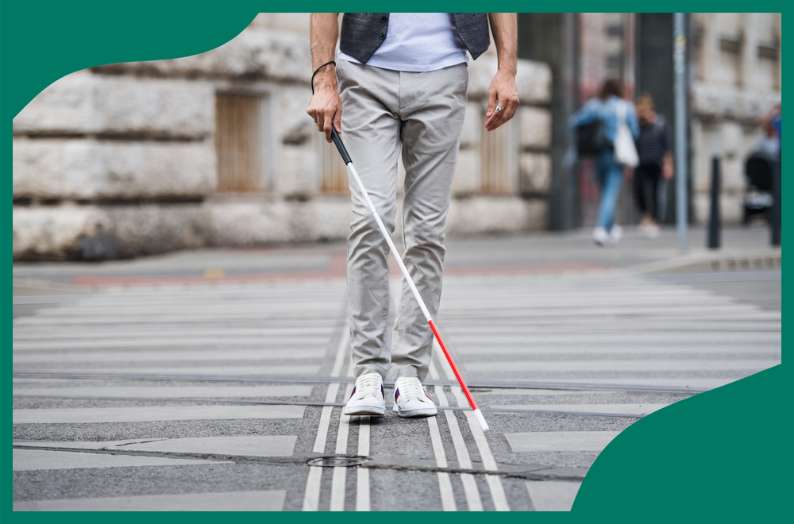
If you’re new to using a white cane, you might feel a little out of place. Maybe using a cane feels like it draws attention to you. Suddenly, it may feel like people are treating you differently, questioning if you really need your cane. Or maybe you’re struggling with imposter syndrome, wondering whether you’re “blind enough” to use a cane at all.
If any of these scenarios sound familiar, you’re in good company. Many people feel unsure when they first start using a white cane, especially when it’s not always apparent that you can’t see well or are undergoing sight loss. A cane changes how you move through the world, but it also changes how the world reacts to you. It allows you to walk with more awareness and navigate spaces with greater confidence and intention, while also making your sight loss more visible to others. The shift in perception, both yours and others’, can be a difficult adjustment.
Before we get into techniques or tips, it’s important to acknowledge that using a cane isn’t just a physical skill. It’s also a mental shift. For many of us, the hardest part of learning how to use a cane is accepting what it represents. The freedom, independence, and empowerment that can come with a cane may feel overwhelming at first, particularly if you haven’t experienced those feelings in a while. It also means recognizing the cane as a tool you use to stay safe and comfortable, not something you need to explain or justify to others.
What matters most is that you deserve tools to help you move confidently and safely, no matter how often you use them.
How Does a White Cane Help?
Using a cane doesn’t determine how much sight you have or have not lost. It’s a tool that supports you in your everyday activities, allowing you to navigate the world more freely and independently. A cane can help you:
- avoid tripping over curbs, cracks, steps, or unexpected obstacles
- look ahead instead of staring at the ground
- reduce eye strain and fatigue, especially in bright light or dim environments
- navigate unpredictable situations like crowded hallways, busy sidewalks, or unfamiliar indoor spaces
- communicate to others that you might need extra space or patience
One of the biggest benefits of using a white cane is the mental clarity from knowing you don’t have to work as hard to stay safe. When you begin to trust the cane and incorporate it into your daily life, you may find that you walk faster, feel more relaxed, and gain a greater sense of independence. Oftentimes, confidence builds naturally once your cane is integrated into your life, not just practiced with your Orientation and Mobility Instructor.
When and How to Use Your White Cane
There’s no one “right way” to use a cane. Your needs may change from day to day, or even from place to place. Some people use a cane full-time. Others use it only at night, in crowded buildings, on unfamiliar routes, or when they’re tired. People even often carry it folded in their pocket or bag just in case. You’re allowed to adjust how and when you use your cane based on what makes you feel the safest and most comfortable.
Giving yourself permission to use a white cane without needing to justify it to yourself or anyone else often makes the biggest difference in how comfortable and consistent cane use feels. Without that internal permission, using a cane can still feel difficult even after good instruction, but with the proper internal permission, the cane becomes a natural support you reach for as needed.
Techniques to Make Navigating the World with a White Cane Easier:
- Hold your white cane slightly in front of you, positioned to the side of your dominant hand at about hip height. This allows you to detect changes in terrain before your feet reach them.
- Use a gentle, steady sweep from side to side.
- Try different cane tips (marshmallow tip, rolling ball tip, pencil tip, etc) until one feels natural.
- Let your cane handle the details while you keep your head up.
Practical daily tips:
- Wipe the tip of your cane if it feels dirty (think of it like cleaning the bottom of your shoes).
- If you’ll be walking on terrain outside your norm, like sand, snow, or grass, consider switching to a cane tip that’s better suited for those surfaces.
- Choose one place at home to store your cane so you always know where it is.
Small habits like these can make using a cane feel more natural over time.
Getting Comfortable With How The Community Responds To Your White Cane
One of the hardest parts about using a cane can be the initial reactions you get from your community and the people around you. People may offer help more often, ask questions you weren’t expecting, or make assumptions about your abilities. And yes, their behavior may shift simply because the cane makes your sight loss more visible.
These moments can feel easier to navigate once you’ve made peace with using a cane. You don’t owe anyone an explanation and you get to decide how much energy you spend managing other people’s comfort.
Here are a few ways to navigate those moments with confidence:
- If someone offers help and you don’t need it, try: “Thanks, I’m okay. I’ll let you know if I need anything.”
- If someone asks a question you don’t feel like answering: “I don’t mind sharing sometimes, but I’m not up for it right now.”
- If help is forced on you, be firm but calm: “Please don’t guide me. I prefer to move on my own.”
People usually mean well, even if they don’t always get it right. Over time, you’ll find your own rhythm for handling these uncomfortable interactions.
Choose What Works for You
Sight loss exists on a spectrum and so does cane use. You don’t have to match a stereotype or justify your needs to anyone, including yourself. Using a cane will never be a statement about what you can and can’t do. You may know this, but you also need to believe what you want. Using a cane is a decision to protect your safety, conserve your energy, and move through the world with more ease.
As a community, we’ve all had our own “first cane moment,” and we know the mix of hesitation, relief, and emotion that can come with it.. You’re not navigating this alone, and you deserve tools that support both your independence and your peace of mind. Follow along on our blog for more helpful tips, advice, resources, and stories that educate, inspire, and empower.