
 Risk Free Assessment



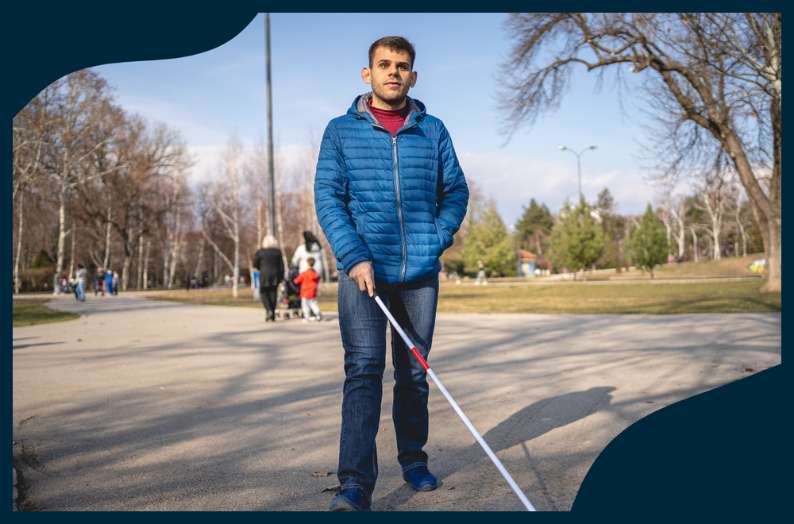
If someone has ever used your blindness against you, then you’re well aware of how it can chip away at your sense of safety and lead you to constantly question people’s intentions.
Sometimes it starts with things that seem small. A person asks to take a picture of you or your guide dog, and even after you say no, they pull out their phone and take the photo anyway. Someone overcharges you, thinking you won’t catch it. A classmate points you toward the wrong room and laughs. Over time, experiences like these begin to erode trust.
In more serious situations, the behavior crosses into something clearly harmful. A person guides you carelessly and you get hurt. A so-called friend moves objects or plays pranks that depend entirely on you not being able to see what’s happening. Someone ignores your accommodation pass at school or work and refuses to make the necessary adjustments. In the worst case scenario, people intentionally isolate or threaten you because they believe blindness makes you more vulnerable.
If this has happened to you, we are so sorry you have had to endure these situations. Trust issues don’t appear out of nowhere. They develop when your safety or dignity has been compromised.
Trust Can Become Difficult
Blindness often requires a level of reliance and trust in others in your community, whether that means accepting directions, receiving guidance in a crowded space, or trusting that someone is reading information accurately. When someone takes advantage of that reliance, it feels rude, but it can also feel destabilizing.
You may question whether help is genuine, hesitate before accepting guidance, or decide not to disclose your sight loss in certain situations because you’re worried about discrimination and stereotypes. As you navigate these experiences, it’s important to remember that caution is not weakness. It is your response to lived experiences.
At the same time, living in constant suspicion can be exhausting. If you are struggling with trusting people, we want to help you rebuild trust in a way that still protects you. The goal is to strengthen your ability to identify who is safe and who is not.
Practical Ways to Protect Yourself
While you cannot control other people’s behavior, you can strengthen your own safety strategies.
First, using the right tools is a great way to reduce situations where someone has an opportunity to take advantage of you. Whether it’s a mobility aid like a white cane or an assistive app on your phone, these tools help you verify information independently.
Second, set boundaries right away when appropriate. If someone does something out of your comfort zone in relation to your vision loss, such as making a joke or touching you without permission, say something immediately. When you draw attention to inappropriate behavior, the behavior is more likely to stop.
Third, document repeated situations. If a teacher refuses accommodations, a boss fails to follow through on adjustments, or someone places you in an unsafe situation, keep a record. Schools and workplaces are legally required to provide reasonable accommodations, and you have the right to escalate concerns through disability services or HR.
Finally, there are preparation strategies you can use to help improve confidence. This may include having trusted people you can call if you feel unsafe and sharing your location when traveling or meeting new people.
Holding Both Truths
After being wronged, it can be hard to believe that most people have good intentions. Some interactions may feel awkward rather than malicious. A person who over-assists might simply lack understanding. Discernment comes with time. Not everyone deserves your full trust immediately, but not everyone intends harm either.
Many blind adults find that as they strengthen their mobility skills, self-advocacy, and assistive technology use, their confidence grows. With that confidence often comes a clearer sense of who is trustworthy and who is not.
Safety and Respect
Your blindness is not an invitation for someone to test you, mock you, manipulate you, or control you. It does not make you naïve or easy to deceive. And it absolutely does not make you responsible for someone else’s bad behavior.
A trustworthy person respects your autonomy. They ask before helping and accept your answer. They guide you clearly and communicate about stairs, doors, and obstacles. They never joke about moving your belongings or testing your awareness. They understand that once trust is broken, rebuilding it takes time.
If you have been hurt, it is reasonable to feel guarded. Rebuilding trust takes time, especially if the harm came from someone close to you.
Remember, you are allowed to remove people from your life who treat you poorly. You deserve to feel safe in your friendships, in your school, in your workplace, and in your community. Healthy relationships are built on respect, not vulnerability.
If this topic resonates with you, know that you are not alone. Rebuilding trust is possible. Follow along on our blog for more helpful tips, advice, resources, and stories that educate, inspire, and empower.