
 Risk Free Assessment

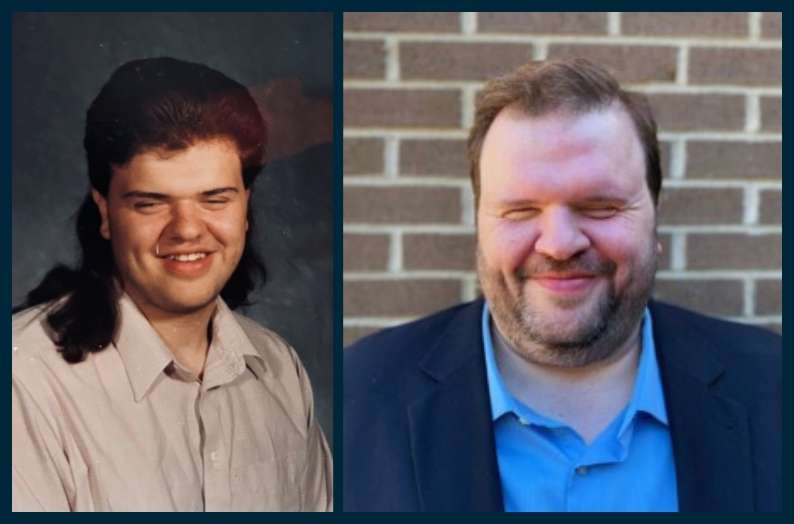
Some stories do not follow a traditional storyline that we grew up with. What I have found working here at Ablr is that most stories pause, restart, excel, have setbacks, but more importantly they grow stronger. Jeff Palmer’s story is one of those.
When I spoke with Jeff, we talked about more than careers or accessibility standards. We talked about his childhood, our love for football, frustration, pride, fear, and the long process of learning to accept yourself in a world that does not always know what to do with someone who identifies with a disability.
This is a story about what happens when someone refuses to be defined by other people’s expectations.
Growing Up in a Small Town with Big Support
Jeff grew up Paden City, a small town in West Virginia, small enough to have one traffic light and the kind of community where everyone knows everyone.
He was born with Aniridia, a condition that affects eye development and causes significant vision loss. But growing up, disability was never treated as a limitation in his household.
“My hero is my mom,” Jeff said. “She never treated me like I had a disability. She treated me just like my brother.”
In fact, Jeff’s mom called him “bumper” because he would crawl/walk into things and bounce right off and go another direction. She knew the importance of letting him keep going and learning from difficult situations. She truly loved and believed in him. That approach mattered. It shaped how Jeff saw himself long before he had the language to describe his vision loss.
“She didn’t lower expectations,” he said. “She expected me to always try.”
Loving Football Before Playing It
Football entered Jeff’s life early, not on the field but through sound and TV.
“I grew up listening and watching football with my grandfather,” Jeff said. “We’d listen on the radio. I’d watch replays on a black-and-white TV. I was and still am a huge West Virginia fan to this day!”
Football became connection, routine, and belonging.
But as Jeff’s vision declined during middle school, something changed.
“I didn’t want to accept that I was losing my vision,” Jeff said. “I didn’t want to be different.”
That resistance showed up in small but meaningful ways.
“I would hide my cane,” he said. “I’d lose it on purpose. I just wanted to be normal.”
Jeff would purposely throw his cane away in the bushes and hide it anywhere he could. He wanted what he perceived as normal, and the cane did not fit that mold.
One Teacher Who Changed Everything
A turning point came through a teacher named James Joyce.
“He wanted me integrated,” Jeff said. “He didn’t want me separated from everyone else.”
James pushed Jeff toward inclusion, even when it was uncomfortable. He encouraged Jeff to try new things and challenged the idea that disability meant sitting on the sidelines. He would hold events that included the entire school. One of these events was an arm-wrestling contest which Jeff fondly remembers participating in. These events helped Jeff feel part of the school and community.
That encouragement led to a bold idea.
“I thought, why not football?” Jeff said. “I loved it so much. I just thought, what if I tried? What could happen?”
Asking for a Chance
Jeff did not wait for permission.
“I went to the high school coach myself,” he said. “I said, ‘What if we just gave it one little chance?’”
The coach hesitated. He worried about safety and liability. He did not know what this would look like.
But he said yes.
“And that changed everything,” Jeff said.
The first practice was overwhelming.
Jeff even ran the wrong way when warmups started!
“I didn’t know the drills,” Jeff said. “I couldn’t see what everyone else was doing. The other players had to explain things to me as we went.”
Something unexpected happened.
“By the second practice, everybody accepted me,” he said. “I tried hard. I just didn’t know what I was doing.”
Effort mattered. Attitude mattered. And change started to take shape
Finding His Place on the Line
Jeff played defensive tackle, lining up directly over the ball so he could get close to the ball and see the snap and react.
“My coach told me, ‘Hit whatever hits you, but hit it harder,’” Jeff said.
Then came the moment.
“I made one tackle,” Jeff said, laughing. “One. But it was real.”
During film review, the coach paused the tape.
“What do you know,” the coach said. “Palmer made a tackle.”
Even the referee noticed.
“He wrote a letter later,” Jeff said. “He talked about seeing two players walk me up to the line of scrimmage.”
Jeff only played one season before transferring to the state school for the blind, but the impact lasted far longer.
“It proved something to me,” Jeff said. “That I could try hard things. That I didn’t have to sit out.”
A New Sport, the Same Fire
At the school for the blind, Jeff discovered goalball.
“It’s physical,” Jeff said. “It’s aggressive. It’s fast.”
Goalball gave Jeff the same outlet football once had.
“It let me compete again,” he said.
Wandering Before Finding Accessibility
Jeff’s early career path was uncertain.
“A lot of jobs for blind people are customer service,” he said. “And that’s fine, but it wasn’t fulfilling for me.”
Then he heard a word he had not really considered before.
“Accessibility,” Jeff said. “I didn’t even know what it meant at first.”
Through Ablr, Jeff began learning about digital accessibility, its legal foundation, and its human impact.
“The more I learned, the more it clicked,” he said. “This matters. People fought for this.”
That understanding changed everything.
“That’s when I fell in love with accessibility,” Jeff said.
Rejection, Persistence, and a Parking Lot Phone Call
Breaking into the field was not easy.
“I got a lot of rejections,” Jeff said. “A lot of no responses.”
There were moments of doubt.
“You start wondering if you’re good enough,” he said.
What kept him going was support from his wife, his family, and people who believed in him.
Then came the call.
“I was sitting in a Target parking lot,” Jeff said. “They offered me an internship at Pegasystems.”
He paused.
“I cried,” he said. “I never thought I’d get an opportunity like that.”
The internship turned into contract work. Accessibility became more than a job.
“I like figuring out how things work,” Jeff said. “And knowing someone else who’s blind can use what I helped test, that feels good.”
What He’d Tell His Younger Self
When I asked Jeff what he would say to his eighth-grade self, his answer was simple.
“It’s OK to be visually impaired,” he said. “It’s OK to use your cane. It’s OK to try things.”
Then he added:
“Just keep pushing. You’ll find your way.”
Looking Forward
Jeff is preparing to become a grandfather. He hopes to continue working in accessibility and mentoring others who are just starting out.
“This work matters,” he said. “But you have to care. You have to love it.”
From lining up on a football field to testing digital experiences for accessibility, Jeff’s story is a reminder that inclusion does not start with technology.
It starts with belief. With effort. And with someone saying yes.