
 Risk Free Assessment


When I spoke with Jennifer Alexander, I expected to learn more about the daily life of a vocational rehabilitation counselor. What I didn’t expect was to hear how curiosity, constant movement, and even CrossFit all connect to the way she supports people with disabilities every single day.
From helping individuals rediscover career possibilities after vision loss to balancing nearly 90 active cases, Jennifer’s story reveals something most people never see, the behind the scenes of vocational rehabilitation. It reveals why this work is so personal for the people who choose to do it.
A Career She Never Planned For
Jennifer did not grow up dreaming of becoming a counselor.
“When I was younger, I wanted to be an artist,” she said. “Then I got older and I wanted to be a kindergarten teacher.”
But when she began working with younger children, she realized something important. “I’m not a little kid person,” she laughed. “I really like working with adults.”
That realization started a journey she never fully expected. While pursuing graduate studies focused on transition-age youth and special education, she found herself being pulled toward counseling and vocational rehabilitation. Looking back now, she realizes the signs were always there.
“I would get in trouble for asking too many questions,” she said. “I always wanted to know why things worked the way they did and why people did what they did.” That curiosity eventually became one of her greatest strengths. “Curiosity is really good in this role,” she said.
Jennifer also shared with me that she was the first person in her family to attend college and build a professional career. There was no roadmap in front of her.
“I didn’t have a lot of guidance with career fields,” she said. “I just kind of found my way into it.”
An Untraditional Path Into VR
What was interesting to hear was how untraditional Jennifer’s path into vocational rehabilitation truly was!
She worked alongside transition counselors during graduate school, studied the intersection between special education and adult services, and later worked with South Carolina’s Department of Disabilities and Special Needs helping individuals with significant disabilities pursue employment opportunities.
Along the way, she witnessed programs like Project SEARCH expand opportunities for individuals with autism and other disabilities.
Then came another side of the system entirely. Jennifer eventually moved behind the scenes, helping with direct data and comprehensive evaluations for South Carolina’s VR agency. “I saw all the data behind it,” she said. “All the things required for federal funding and how everything works operationally.”
But despite learning the systems side of vocational rehabilitation, something was missing. “I missed working with people,” she said. “I missed working with individuals with disabilities.” That desire eventually brought her back into direct services and counseling leadership. And today, even as a district supervisor, she says the counseling side remains her favorite part of the job.
What People Don’t See Behind the Scenes
For many consumers, a counselor may seem like the person who answers emails, approves services, or checks in occasionally. They are expected to be ready when called upon when help is needed and be ready at a moment’s notice. While that is partially what they do, Jennifer explained that the reality is much more complex.
“There’s a lot,” she said. “There’s constantly 25 things waiting for you first thing in the morning.”
Her days are filled with authorizations, referrals, eligibility paperwork, assistive technology coordination, employment support, and constant communication with consumers and community partners.
But the work does not stop when the office closes.
Jennifer described how she is constantly networking in everyday life, looking for employment connections and opportunities that could benefit the people she serves. “I go out to dinner and talk to everybody,” she said. “I’m always asking what people do.”
At her gym, restaurants, and community events, she is mentally collecting future opportunities and contacts. “If I have somebody interested in this in the future, now I have a connection there,” she explained.
As of a few weeks ago, Jennifer was balancing approximately 88 active cases while also supporting staff training and helping individuals impacted by layoffs. This is not something new or should be surprising. Many counselors all over the country are facing similar situations. That balancing act requires constant organization and adaptability.
Chipping Away One Step at a Time
So how does someone manage nearly 90 cases without becoming overwhelmed?
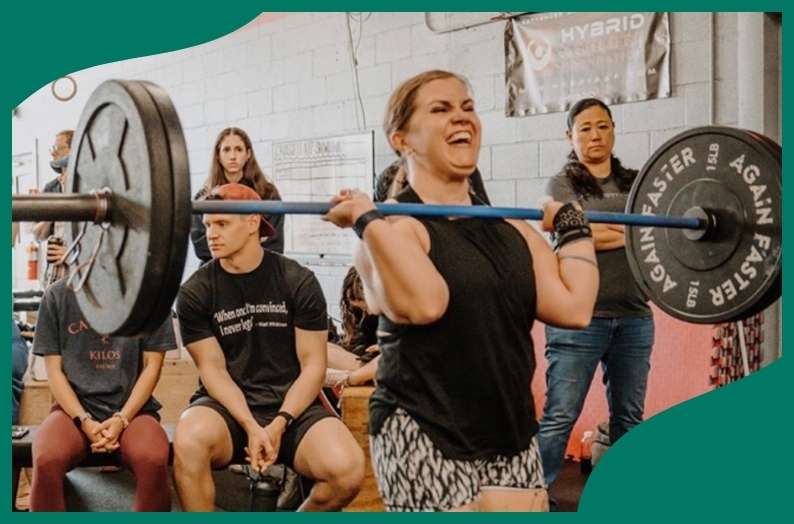
Jennifer compared it to CrossFit.
Specifically, she compared it to a workout called a “chipper,” where athletes work through large amounts of repetitions one piece at a time. “You just keep chipping away,” she said. Rather than focusing on everything at once, she breaks the work into smaller victories throughout the day. “I contacted this many people today. I completed two intakes. I got someone through eligibility,” she explained.
Those small wins matter. “Good job. Let’s keep going,” she tells herself.
That mindset has become one of the ways she manages the emotional and mental weight that comes with counseling work.
Finding CrossFit After COVID
CrossFit entered Jennifer’s life shortly after COVID. At first, she had no intention of becoming a Cross Fitter. “I was a never-Cross Fitter,” she joked.
But after experimenting with workouts during the pandemic, she decided to try a local gym. Her first workout happened while she was dealing with a double ear infection. “I couldn’t hear anything people were saying to me,” she laughed. “But I already had it scheduled, so I stuck with it.”
Over time, the challenge became addictive in the best possible way. “When I first started, I had an 85-pound deadlift,” she said. “Now I’m at 220.”
For Jennifer, CrossFit became something far more valuable than just exercise. It became a mindset shift that has affected every aspect of her life. She is now often finding herself asking “What can I do next?”
That mentality spilled into every part of her life, including counseling. “You just keep going,” she explained. “One step in front of the other.”
Why Counselors Need an Outlet
Jennifer was honest about how emotionally consuming counseling can become without balance. “This job would not be possible for me without CrossFit,” she admitted.
But later she emphasized that the answer is not necessarily CrossFit itself. The key is finding something that helps you move physically, mentally, and emotionally outside of work. “Find what makes you happy,” she said. Whether it is walking, Pilates, kickboxing, or simply being active, Jennifer believes movement is critical for mental wellness. “You have to take care of your whole self,” she urged.
She also described how accomplishing something difficult physically can shift your mindset for the rest of the day. “If you do something hard in the morning, then no matter what hard thing comes up at work, you know you can handle it,” she explained. That perspective has helped her continue showing up for the people she serves every day.
Helping People See What’s Possible
One of the strongest themes throughout our conversation was Jennifer’s belief in possibility. Especially for individuals experiencing vision loss. “When people lose vision, you’re trying to tell them there’s still so much possible,” she said.
She described how assistive technology, training, and support systems can completely reopen doors people thought had closed forever. That belief is one reason Jennifer is passionate about connecting consumers with programs like Ablr’s workforce development and accessibility training initiatives. Jennifer and her staff in Charlotte, North Carolina have partnered and worked closely with Ablr to help provide technical and career support training to multiple consumers in the Charlotte area with great success.
“If they have the technology, doors open,” she said. For Jennifer, the goal is never just employment. It is about helping people rediscover movement, confidence, purpose, and engagement in their lives. “The more you do, the more you can do,” she said.
Advice for New Counselors
When I asked Jennifer what advice she would give to younger counselors entering the field, her answer came quickly. “Curiosity is a huge strength,” she said. She encouraged new professionals to ask questions constantly and remain open to learning.
“I don’t think there’s any bad questions,” she explained.
In fact, she lights up when new staff members ask question after question. “I’m like, yes, they’re asking questions. I love it,” she laughed. That constant curiosity continues to shape her approach both personally and professionally. “The more you know,” she said, “the more you realize how much you still don’t know.”
A Bigger Mindset
Jennifer also shared advice for individuals opening a new vocational rehabilitation case. “Look at what’s possible versus what’s available,” she said. That mindset shift matters deeply, especially for individuals adjusting to vision loss or major life changes.
She explained her role is not to control someone’s life or make decisions for them. Instead, it is about wrapping support systems around the goals they choose for themselves. “I have so many options and paths,” she said. “But it’s really based on you and what you want to do.”
Final Thoughts
Jennifer Alexander’s story is about far more than counseling. It is about curiosity and resilience. It is about constantly moving forward even when the workload feels overwhelming. It is talking small things one after another until you realize how much work has been accomplished and the amazing things you can accomplish!
And perhaps most importantly, it is about helping people see possibility again when life feels uncertain. Whether she is helping someone navigate vision loss, balancing dozens of active cases, or pushing through another CrossFit workout, the philosophy stays the same.
“One step in front of the other,” she said. And then you keep going!