
 Risk Free Assessment
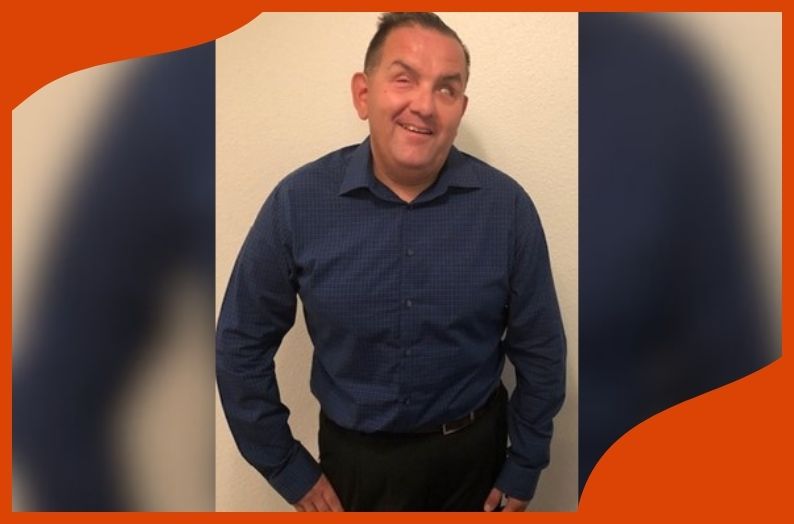
Richard Rueda has been a constant in our Guest Speaker Series here at Ablr. He has an amazing knowledge of what it takes to be successful in the workforce and is currently working in a role that promote advocacy for the Blind and Low vision community. I expected this call to be like those in the past. I expected Richard to share more about assistive technology, job searching, and the incredible resources available through the American Printing House for the Blind (APH). What I did not expect was the conversation to shift as we discussed pride, vulnerability, and the everyday moments where advocacy quietly shapes someone’s life.
Richard’s story is not just about blindness. It is about how accepting help does not mean losing independence. It is about finding confidence through uncomfortable moments. And perhaps most importantly, it is about realizing that advocacy is not always loud. Sometimes it is simply choosing to speak up one more time.
Learning to Accept the White Cane
Richard was born with congenital glaucoma and has been legally blind his entire life. Growing up, he had significantly more vision than he does today, attending mainstream schools and using bifocals for much of his childhood. For years, a white cane was something he wanted nothing to do with. “I had what we call cane shame,” Richard told the group.
Like many people experiencing progressive vision loss, accepting the cane felt like accepting something he was not yet ready to embrace. His orientation and mobility instructor introduced it during high school, but Richard remembers feeling uncomfortable practicing on campus where classmates might see him. Instead, they made a compromise.
“We went a few blocks away so I didn’t have that shame associated with it.” Richard mentioned.
At the time, he could still navigate without his cane. But as his vision continued to decline through retinal detachments and corneal transplants, avoiding the cane became more difficult.
Then came the moments that changed everything.
Walking into concrete bus benches that blended into the sidewalk. Accidentally bumping into people. Wondering if strangers thought he was intentionally walking into them. “I realized quickly that I really needed to learn this thing and learn it well.” Richard admitted. That was when the mindset shifted. It was never about giving something up. Rather, it was using the cane to gain more independence.
How Technology Has Changed the World for the Blind Community
Growing up in the 1980s and 1990s looked very different than it does today for someone who is blind. “There wasn’t cell phones and tech and all the crazy things we have now,” Richard said. Today, he travels constantly for work and uses tools like Aira, Be My Eyes, screen readers, and even AI-powered technology to navigate airports, meetings, and everyday life.
One story that Richard shared about tech and traveling during our Guest Speaker Series stood out to me. While traveling without his guide dog through Honolulu, Richard found himself dropped off at the wrong entrance of a busy airport. With luggage in one hand, his phone hanging from a lanyard, and one Air Pod in so he could still hear his surroundings, he connected to Aira. Within minutes, an agent was helping him navigate obstacles, avoid benches, and locate the correct entrance. “It was very, very helpful,” he said.
But what struck me most was not the technology itself. It was how naturally Richard talked about using it. Technology was not replacing independence but expanding it.
Advocacy Happens Every Day
One of the biggest themes throughout our conversation was advocacy. Not the kind that happens in courtrooms or legislation, but the kind that happens in everyday places like Uber, the grocery store, or during a meeting. Or while asking a coworker to send PowerPoint slides before a presentation. When I asked Richard how he manages those conversations without sounding frustrated, his answer stuck with me. “The correct type of confrontation is advocacy. “That sentence says a lot. Most people avoid confrontation because it feels uncomfortable. “I hate confrontation.” Richard admitted. But experience has taught him that confrontation does not mean coming from a place of yelling or anger, but from education.
When an Uber driver hesitates to accept his guide dog, Richard takes a breath before explaining the situation. “You have to be polite. You have to be charismatic because you want to win them over.” Rather than assuming bad intentions, he focuses on helping people understand. Sometimes that means explaining how his guide dog rides quietly on the floor instead of the seat. It also means reminding drivers that service animals are protected by law. Simply put, it means choosing patience over frustration which can be extremely difficult.
That approach carries into the workplace as well. Working remotely for APH, Richard regularly collaborates with sighted coworkers. He often asks presenters to share slides before meetings so he can review them ahead of time. “When you’re trying to read the slide with your screen reader while somebody is presenting, it’s sensory overload.”
Instead of waiting until he falls behind, he advocates before the meeting even starts. “I just have to be proactive.” It is a simple idea. But one that creates a more inclusive workplace for everyone.
Sometimes You Have to Become an Extrovert
One of my favorite moments from our conversation came when we talked about communication. Richard laughed before saying something I think many people can relate to. “Even if you’re an introvert, you may have to learn how to be an extrovert as a blind person.” People are naturally curious. Many have never interacted with someone who is blind before. That means simple conversations often become opportunities to educate, break stereotypes, and make the next interaction easier for someone else.
“The world sees a blind person and it’s like the first time they’ve ever interacted with someone like me.” Richard said. Rather than becoming frustrated by that reality, Richard chose to embrace it. Every conversation becomes an opportunity. More importantly, every question becomes an opportunity to teach.
Helping Others Find Their Careers
Today, Richard works with the American Printing House for the Blind, helping oversee Career Connect, a collection of free resources designed to help people who are blind or have low vision prepare for employment. From career exploration and interviewing to networking and maintaining employment, the platform walks job seekers through each stage of their career journey.
“We want to put out there as many resources and tools as possible.” Richard explained. One resource Richard is especially passionate about is the Job Seekers Toolkit, a free self-paced course that helps individuals build confidence before entering the workforce.
This platform has helped candidates going through the Ablr program continue to develop their job skills. Alongside their Job Developer, Ablr collaborates and promotes free resources such as the Job Seekers toolkit provided by APH. At the end of the day, finding employment is a journey and requires the support of a team. Ablr is proud of the work that APH has done to help the Blind community find meaningful employment.
Final Thoughts
Richard’s story reminded me that advocacy is rarely one defining moment. It is a collection of conversations that lead to educating others and advocating for an entire community. It is choosing to ask for accessible meeting materials. It is accepting a white cane after years of resisting it. Most importantly, it is helping the next generation realize they belong in the workforce.
Through every conversation, every resource, and every opportunity to educate others, Richard is helping create a future where blindness is no longer seen as a barrier, but simply another way of experiencing the world.