
 Risk Free Assessment
Related links
- Breaking Barriers: How Ablr is Creating Real Jobs for the Blind (redirects to The Blind Life YouTube)
- Ablr + The Blind Life – Learn more about our collaboration
Access Granted Episode 31 Transcript
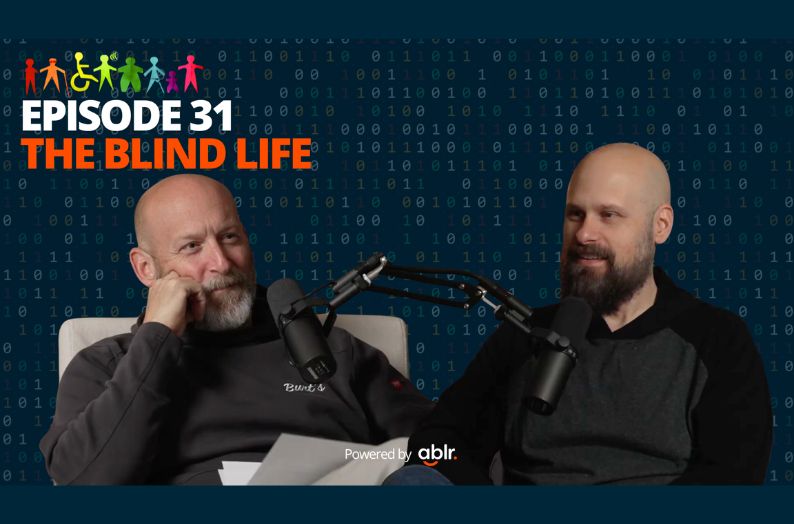
Mike: Welcome to Access Granted, the podcast where we explore stories of accessibility, opportunity, and the people helping to build a more inclusive world. I’m your host, Mike Iannelli. Today I’m joined by Sam Seavey, better known as The Blind Life, whose work has inspired thousands through his passion for assistive technology and accessibility. In this episode, we’ll talk about Sam’s journey with vision loss, the community he’s built online, and how technology can create more independence, confidence, and opportunity. First, let’s just kick it off with, I just love an introduction, so just tell me Sam, a little bit about yourself. It’s Seavey, right?
Sam: Seavey, yeah. Like the letter C and letter V, which I was an adult before I realized that the C and the V are actually right next to each other on the keyboard, and that like blew my mind for some reason. Hey, it’s like meant to be. The double rainbow.
Mike: We’re gonna get a long way too well, if this is how you’re starting. I love it, man.
Sam: Yeah.
Mike: Where are you from originally?
Sam: I’m actually from here, from Raleigh, North Carolina. I’ve lived here up until I was about 18, and then moved away to seek greener pastures.
Mike: Are they greener?
Sam: Well, they’re bluer. I’m in Kentucky now.
Mike: Oh, good.
Sam: It’s bluegrass.
Mike: I love Kentucky, man.
Sam: Yeah. Yeah.
Mike: I spent a lot of time in Lexington. Have you done the Bourbon Trail and all that stuff?
Sam: I have not. So, I’m actually in Lexington. That’s where I live. I’ve been there longer than I have not been there at this point, and I’ve never done the Bourbon Trail. I’m not a bourbon guy though. That’s probably why.
Mike: I wasn’t either until I went and then I had a few years of bad stuff happen. So, maybe you shouldn’t go.
Sam: Started a dark path for you? No, but it’s funny, my father-in-law a couple years ago, he was recently divorced and he was moving down, he’s from Indianapolis, he was moving down to Florida and he is like, “Do you mind if I stay with you guys for a little while? Just two, three months?” And I’m like, “Yeah, no problem.”
It ended up being a year and a half, but while he was there, he did the entire Bourbon Trail.
Mike: So, when I went. I’ll tell you just a quick story. A buddy of mine called me one day and he said, “Hey, I’m turning 40.” I didn’t know him super well, but it was a friend of a friend at the time.
Sam: Mm-hmm.
Mike: We became very close since then. But he said, “I’m gonna go to the Bourbon Trail.” We’ve got a wine sommelier guy going, and there’s this other guy. There’s four of us. We’re gonna cram into a, what are those little thing, a Prius?
Sam: Oh yeah.
Mike: And head down. And I’m like, “When you get an RV, call me back.”
Sam: Right, yeah.
Mike: So he calls up, says, “I got a 35 foot RV.” Four of us went down, it was a blizzard. I don’t remember what year it was, but we drove down in the blizzard to Kentucky, man. We drove straight through the night and we stopped at Maker’s Mark was the first run. And I gotta tell you, man, that was one of the most beautiful trips I ever had.
Sam: Yeah.
Mike: The mountain sides in Lexington and the natural rivers running through.
Sam: Horse farms.
Mike: Everything, I mean, it’s just.. I had an opportunity to go work with Valvoline there years ago.
Sam: Mm-hmm.
Mike: I don’t regret it ’cause I’m here today, but I wanted to move to Lexington so I just always felt connected there. That’s amazing. How long have you been there?
Sam: Well, it was 96′, so quite a while. And it’s very similar to Raleigh.
Mike: Mm-hmm.
Sam: ‘Cause it’s a college town, University of Kentucky. People are super, super friendly and you know that southern hospitality. So, yeah.
Mike: Yeah. I love getting off the plane there, man. And all those beautiful fields.
Sam: Mm-hmm. Yeah, you’re flying in, as you’re coming in. Yeah. Yeah. Yeah.
Mike: It’s just, it’s like so calming when you get off an airplane.
Sam: Yeah.
Mike: It’s just, anyway, so thanks for being here, by the way.
Sam: Yeah.
Mike: For those that don’t know, Sam’s been very helpful in a partnership that we have. We joined his podcast and we’re doing some cool stuff, and we’re gonna figure out some really cool stuff in the future. But, big fan of what you do, Sam, for the community and your YouTube channel’s amazing. We’ll get into that a little bit. But before, I really do wanna talk about why you’re here. ‘Cause you were just shooting the breeze.
You’re like, I lived here. You said you were born here. Why is this trip so special? ‘Cause I didn’t realize it was, it feels special to me.
Sam: So, I got invited to speak at a conference in Virginia, the Virginia AER Conference, which was in Danville, Virginia. And they said, there’s no airport in Danville, so you either have to fly into Greensboro or Raleigh. I was like, “Ooh, I’m gonna fly into Raleigh. And then maybe I can just stay a little later extra and do some sightseeing”, because I haven’t been here in 30 years.
Mike: That long?
Sam: Yeah. And everybody I talked to, talks about how much it’s changed in that time and Durham and Cary and everything.
Mike: Oh yeah.
Sam: It’s just blown up. And it’s crazy. I moved away my freshman year of high school, so I didn’t have that core friends, excuse me, core..
Mike: Group of folks or boys.
Sam: Yeah, that high school experience.
Mike: Yeah. Yeah.
Sam: Because when I moved away, I moved up north and then we actually moved back to Rocky Mount after that. That started..
Mike: What was North? Hold on. Where’s North?
Sam: Maryland.
Mike: Okay.
Sam: Bel Air, Maryland.
Mike: Okay.
Sam: Not the cool Bel Air. Like everybody talks about.
Mike: Wait, hold on. What’s that show, fresh prince?
Sam: French Prince of Bel Air. It wasn’t that kind of Bel Air.
Mike: No?
Sam: It was nice. But yeah, we weren’t living like that. But that started a four years of a different high school every year. Culminating with graduating from the Governor Morehead School for the blind here in Raleigh. So it came full circle. So I never had that core high school experience that a lot of people do.
Mike: Yeah.
Sam: Those pivotal moments in your life or memories and all that. My middle school was actually that for me. The middle school that I attended here in Raleigh, I reached out to them and I said, “Hey, random, super weird.
I don’t know if you guys do this, but I’m gonna be in Raleigh in like six months. Can I do a tour of the school?”
And they said, “Yeah!” They were super excited. So I’m doing that later today.
Mike: They know who you are from middle school?
Sam: No. No, they don’t.
Mike: Okay, so… Not know who you are like, but like they met you. I dunno if you know who I’m, but I get backstage here.
Sam: I’m kind of a big deal. No, not at all.
Mike: Do they remember you at all? Any teachers there like you remember, or anything that.
Sam: People have asked, you know, “Do you think any of your teachers will be there?” And I’m like, “Oh gosh, it’s been almost 40 years since I was there, so I doubt there’s anybody still there that was there when I was there.” Maybe. I don’t know.
Mike: And when you’re younger, you look at teachers and they’re so much older than you, right?
Sam: Yeah, I couldn’t even tell.
Mike: You’re like, they’re probably 150 now, right?
Sam: Exactly. And I don’t even know their names. I don’t remember any of ’em, unfortunately.
Mike: So what’s the walk? Sorry? What’s the walk down memory lane though? But you don’t know any of the teachers and are you gonna see any old students and friends?
Sam: No. No.
Mike: So you’re just going for a tour? So why?
Sam: I just going because a lot of stuff happened in my life at that school around that time, and I’m also gonna go walk around my old neighborhood, see my old house.
Mike: I love that man.
Sam: Yeah. I don’t know anybody that lives in the neighborhood. I’m just gonna take a lift there and like drop me off anywhere. I’m just gonna spend a couple hours walking around. ‘Cause I was at that house, I was at that school when I was diagnosed with my vision impairment at age 11, age 12, and that school was the first time I ever had a TVI.
That was really the first experiences of, and I’m sure listeners and people in the room could probably even relate to feeling different than everybody else because all of a sudden, you’re the blind kid and you’re different than everybody else. And you’re sitting in the front row with the large print books and the monocular and so a lot of feelings were felt at that school.
Mike: Is this like a little closure for you?
Sam: It might be. I told my wife, I was like, is this a midlife crisis? Is this what this is?
Mike: No, it’s great though man, it’s beautiful. I do these things, man.
Sam: Yeah. Yeah.
Mike: I think it’s amazing for closure. Tattoos is one of the things I do, unfortunately for closure.
Sam: No, I’ve got several of those myself.
Mike: Yeah, the same. And but each chapter, right? So..
Sam: Are we getting a tattoo later today?
Mike: Oh dude, I was gonna say earlier if you stay, I’ll take you around in the neighborhoods. I got nothing going on this afternoon. But you might have a little bit of a delay, so you could figure that out. And I would totally go get a tattoo, man. Like I’m dead serious. So if you wanna do that, we’ll figure that out. But it seems like it’s a big deal in your life, right?
Sam: It was yeah.
Mike: And now you’re back. So, you’re back after 30 years it’s been?
Sam: 30 years. Yeah. Yeah.
Mike: Are the emotions churning a little bit?
Sam: They’ll probably hit me when I’m walking around. Yeah. Yeah. And I was even thinking, do I need like, some kind of nostalgic playlist that I could listen to as I’m walking around that neighborhood?
Mike: Oh, you’re gonna cry a lot, dude.
Sam: I know. Well, and then I’m, I’m gonna be vlogging the whole thing. And so if you guys are watching this in the future. Check my channel because the video have been out.
Mike: Now your family, are they still here? Do you have any brothers or sisters?
Sam: No. No. Both parents unfortunately are gone now.
Mike: I’m sorry to hear that, man.
Sam: Yeah, and my sister, who also has Stargardt’s, we moved away from. North Carolina, we moved to Kentucky. It was just my sister and I were following my dad out there.
Mike: And just to see something new, new part of the country. Mm-hmm.
Sam: And then about a year later, my dad moved down to Florida, left his two blind kids, poor, blind kids, all alone, faced the big bad world. And then..
Mike: In Lexington?
Sam: In Lexington, yeah. And then as adults too.
Mike: Yeah.
Sam: We weren’t like infants or anything. And then about a year after that, she moved down to Alabama. And left me all by myself.
Mike: So, all by yourself, but now are you married with kids?
Sam: I am, yeah. So that’s the other reason why I’m kind of still in Lexington is we’ve got pretty deep roots at this point. Married with two kids? Yep.
Mike: Was it boys or girls?
Sam: I’ve got a son and a daughter. My son is, believe it or not, 28.
Mike: You have a 28-year-old son?
Sam: I know. It’s..
Mike: I’m thinking you’re like gonna say seven or eight.
Sam: No.
Mike: Literally 28?
Sam: I’m much older than I seem.
Mike: Yeah. Well I have a gray beard. Your beard’s what? Are you dying that, you can not die?
Sam: We’re not gonna talk about that on camera.
Mike: You should talk. Yeah, I think you need to talk about that. I think it’s time to be vulnerable in front of your audience.
Sam: I’ll tell you my secret, but it’s just for men. Boom dum chish. Can we put in a sound effect right there? I’ll tell you my secret, but it’s just for men.
Mike: You did not just do that. Just, that was good, man. Okay. Thank you. John didn’t tell you this, but I think I’m gonna let it grow until I get back from my trip. When I get back. It should be about that length, maybe longer, like three months from now.
Sam: Bald with beards, man. It’s a good one.
Mike: Dude, it’s a thing, bro.
Sam: Yeah.
Mike: We got our own little community, man.
Sam: Yeah. Yeah.
Mike: It’s a thing.
Sam: That’s the thing. There’s too many bald guys in here. I’m intimidated. Usually I’m the only bald guy in the room.
Mike: You feel like you’re the best in the room.
Sam: I know. Yeah. Yeah.
Mike: And then back in the day when you’re losing your hair, it was like a bad thing. You’re like, oh, that’s embarrassing. Oh my God. You’re never, you never.. And now it’s like, dude, come on. Alright so, I do wanna go back real quick. This is like a roller coaster ride when you’re with me, brother, so hang on.
Sam: Yeah, no worries.
Mike: The part of your childhood and the closure you’re talking about like, man being the odd ball out.
Sam: Mm-hmm.
Mike: Like, oh my God. Like, so what was your life like as a kid before? And then how did you start to know you were having challenges with your vision?
Sam: Obviously normal childhood, like everyone else. Then my sister, who is three years older than me, she was diagnosed first. We have Stargardt’s.
Mike: Yeah. I’m sorry. Just interrupt you before you go ahead.
Sam: Yeah.
Mike: Explain what that is like.
Sam: So it’s like Stargardt’s for anyone is not aware of it, it’s juvenile form of Macular degeneration and it’s a inherited retinal condition. It’s a recessive condition. So you know, two parents carry the recessive gene and then they come together and magic happens.
And even though there’s still only a one in four chance that that gene will become dominant in the child. So for both of us to manifest is not necessarily as common. ‘Cause we’re the only two kids. So, but we both have it. She was diagnosed first and so they thought, because you know of what it is, they’re like, we should keep an eye on Sam.
Mike: So your whole childhood is here, like really.
Sam: It is. Yeah. Yeah.
Mike: And so it’s kind of a big deal that you’re here.
Sam: Yeah.
Mike: So what does the schedule look like today? Tell me a little bit about your schedule today. You said earlier you wanna go to the house, but like, are you doing lunch? Are you gonna grab a coffee? Like are you gonna make this like a full day?
Sam: It is gonna be a full day. We’re wrapping up here at some point, and then I’m..
Mike: We’re gonna be here for all day. You’re not leaving.
Sam: No worries. Yeah. I’m gonna go right over there afterwards to the neighborhood and walk around. And then I’ve got a time at the school this afternoon that I’m meeting and then I’m doing dinner later with Heather.
Mike: Oh, that’d be great. Heather Buster, right?
Sam: Yep, yep.
Mike: She’s fantastic.
Sam: Yeah.
Mike: So, I gotta go down this path a little bit more. Are you anxious about this? How are you feeling emotionally when you’re getting ready to go into this? Because that’s a big deal. You’re nine years old, 10 years old.
Sam: Yeah.
Mike: But you kind of knew in some way, if your sister’s three years older or so, she was diagnosed.
Sam: Mm-hmm.
Mike: So you knew there’s a chance potentially could happen.
Sam: I’ve always been kind of an oblivious kid, just in my own world. If it wasn’t happening outside of my little bubble. Yeah, it didn’t really matter to me.
Mike: Yeah, fair.
Sam: As most kids are.
Mike: Yeah. Yeah, true.
Sam: So, I don’t even remember much. I remember the actual testing at the doctor’s office. I remember being scared and not understanding what was happening, really.
Because this was 80’s, right. The doctors didn’t explain anything to the kids. They barely explained it to the parents at that point. They were just like, shut up kid. Get in there and do this. You know. Nah, nah,
Mike: Nah, Nah, mate.
Sam: Yeah. With a cigar in their mouth, right?
Mike: Yeah, exactly. Yeah. Yeah. Is it the two finger roll?
Sam: Yeah, exactly.
Mike: So you’re 10 years old, you’re being diagnosed. What was your vision doing? Like, what was changing?
Sam: Well, I imagine same thing, I don’t really recall, but I imagine most of us with some type of retinal condition, there’s early warning signs. There’s distortion in your central vision. So probably, trying to read the chalkboard and some letters being wobbly or maybe even disappearing. Maybe noticing some difference in low light situations at night. Those are common early.
Mike: Mm-hmm
Sam: signs for retinal conditions. So I imagine it was something like that. It might have even been one of those annual eye tests they do in the cafeteria at school.
Mike: Yeah.
Sam: Maybe something popped up there. We ended up being at the doctors getting the tests and I remember there’s one test where they put die into your eye and in so they can look at it. And they put these contacts in your eye so that it can magnify the back of your eye and you have to sit in the dark and wait for this to kind of take effect and the dilation and all that.
And I can remember sitting in this doctor’s office alone, in the dark with these contacts in my eyes. And I distinctly remember that these lenses were so thick that I couldn’t even close my eyes. I couldn’t blink because they were so thick.
Mike: Hmm.
Sam: And in my 10, 11-year-old brain, I thought, well, surely if they’re in there and they’re not popping out, they must have glued them into my eyes. And I can remember distinct, this gritty feeling in my eye, thinking that’s the glue. Once again, being scared and not understanding and “Why can’t I close my eyes?” and all of this. And later on though, as an adult, I was presenting at the Ohio State University and the room was full of doctors and professors and stuff, and one of ’em is like shaking her head and she’s like, “No, they don’t glue those in.” She’s like, “I know exactly what you’re talking about. They don’t glue ’em in.” I’m like, “Are you sure?” because I distinctly remember glue. But you know, it just, the fear, the unknown, you know what’s happening to me.
Mike: Of course.
Sam: I don’t understand it.
Mike: So sports weren’t a thing I’m assuming? Or did you play sports growing up?
Sam: I tried. I was never a big sports person, rode my bike and skateboard and all that, but in school and then after this, obviously, and I’m sure people in here also can relate to this, the anxiety of getting picked in gym to play kickball or baseball or something and like, “Don’t pick me ’cause I’m gonna miss the ball.” Or you know, “I’m not gonna be able to do it.”
Mike: Yeah.
Sam: And having to sit out gym because you couldn’t do it.
Mike: What was that like?
Sam: It’s rough, man. It’s rough being visually impaired in school. I talk about all of this in my keynote presentation, which I just did like two days ago, I talk about how outside of school I was fine. I was like all the other kids on my bike, riding my skateboard, swimming, building forts.
I was just a normal kid. But in school it was much more difficult to hide the blindness and the vision impairment and like all of us, we wanted to hide it. We wanted to mask and try to pretend like we’re like everybody else. Once again, they’re putting you in that front row of the classroom.
Sometimes they would even push my desk up to the chalkboard to get me as close as I could be to the board. I mean, the teacher standing right next to me writing on the board. The only thing that did, it didn’t help me. The only thing it did is it further segregate me from the people behind me.
Mike: Yeah.
Sam: And separated me from them and made me more of an outcast.
Mike: That’s right.
Sam: And yeah, it was tough. It was tough.
Mike: Oh yeah.
Sam: People don’t want to hear that. Especially parents, I’ve told this story to parents, I’m like, ” I’m sorry, but I’m not gonna sugarcoat it. It was rough.”
Mike: No, you shouldn’t.
Sam: Yeah, this was the reality. Now I’ve always been a glass is half full kind of guy, and I don’t if you can tell, but a little bit of the class clown and sarcasm is my love language.
Mike: A little bit.
Sam: Yeah. So, I tried to not let it bother me and I tried to laugh through it and joke through it and all of that, but you know, it did.
Mike: I know John has gone through a lot.
Sam: Yeah.
Mike: So I’m just wondering from your perspective, have you sort of healed from that? Have you come to.. I mean obviously you’re doing great now. You’re married, I can’t believe you said you have a 28 year old, I wanna get back that. You look like you’re 28.
Sam: And my daughter’s 20. I should have mentioned that too.
Mike: I mean, that’s incredible. Yeah. So, but I mean, obviously that’s a journey, right? That you have to go through. So look, looking back now and saying, man, I’ve got this great show. I’m super well respected in the community. You’re always talking to people and helping people.
Sam: Mm-hmm.
Mike: And I’m so grateful you’re here for that. But at the same time, I mean, you’ve gotta go through a personal journey yourself to kind of accept that and embrace that. And then a lot of pain and healing.
Sam: Now, I am a child of the eighties, Generation X, so we push it all down.
Mike: Yeah.
Sam: Until it finally explodes sometime. No, but..
Mike: I’m a Gen Xer bro. Yeah, yeah, yeah. Wait you can’t, how, I can’t ask you your age right now.
Sam: I’m 50.
Mike: Dude, bro so am I.
Sam: Yeah.
Mike: Just turned 50. Dude, when did you turn 50?
Sam: October 24th.
Mike: Oh, dude. I knew I liked you, bro.
Sam: Yeah, yeah, yeah.
Mike: Bald, Beard and 50 Man.
Sam: Yeah. Yeah.
Mike: The Gen Xers Rock, dude. I mean these kids don’t get it.
Sam: It’s the best generation, I’m sorry. But it is. It really is.
Mike: I mean, you’re talking skateboarding, dude, and just hanging out in the parks, running around in the woods.
Sam: I had a Bony Tony sticker on my Tony Hawk skateboard.
Mike: My friend had a Tony Hawk skateboard, and I remember seeing it because I wasn’t allowed near it.
Sam: Yeah.
Mike: But like, and my brother had a Vision Gator, remember those?
Sam: Oh, yeah.
Mike: And I just, the artistic work on the skateboards were incredible. And Tony Hawk, I mean. Just growing up at that generation, the music man, the hairbands.
Come on. How funny ironic is this, the Hairband. So who was your band?
Sam: Metallica.
Mike: Why did I even ask? It’s so obvi, man.
Sam: Yeah, yeah, yeah. One of my first concerts was a Metallica. When I turned 18, actually, my first one was Olivia Newton John.
Mike: Oh, hey, hold on. Can we strike that?
Sam: We don’t talk about that.
Mike: Don’t talk about that.
Sam: I was taken to that concert that wasn’t a choice and Whitney Houston, I think, was on that same spot.
Mike: You saw Whitney Houston?
Sam: I think it was Olivia and Whitney. It was down in Florida, yeah.
Mike: Wow. See, I would’ve loved to have seen Whitney.
Sam: But Metallica was one of my first, like, I wanted to go to Metallica. It was awesome. To kind of expand on that.
Mike: Okay.
Sam: What we were talking about before that a lot of dealing with that stuff
Mike: Yeah.
Sam: Does come with acceptance. I was probably in my early thirties before I fully accepted that I’m visually impaired. It’s like an AA meeting. My name is Sam. I’m blind. I’m visually impaired. And accepting that, that’s okay.
Mike: Yeah.
Sam: And there’s nothing wrong with that, and it doesn’t make me less than the person standing next to me. For so many years, I put all of my self worth, I tied it all into these tiny little pieces of tissue in the back of my eye that didn’t work properly. I thought that was my entire being and my whole self-worth in this world was my vision impairment. And what made me different and separated me from everyone else. And once I finally realized that, that’s ridiculous.
Mike: Yeah.
Sam: That’s the dumbest thing ever. And I’m no different and I’m actually better than this guy next to me at some things. He’s better than me at some things, and that’s okay.
Mike: Yeah.
Sam: A weight was lifted off. I let go of all of that childhood trauma and everything, and realize that my role in life, my goal is to help others in that situation.
Mike: I love it. I love helping. I mean, I do because it’s, well, I love the sarcasm, but I also have a tendency of getting a deep and emotional. I don’t know why. Not trying to make this about me, but I get it, right. The healing. But you healed at 30, you said?
Sam: Yeah, it was probably in my early 30’s. It was really the tough love of my now wife as we were dating. And so we would be out to eat and I’d have the menu and I had my magnifier. I’m like looking around.
I’m like, okay. Nobody’s looking at my direction. And I’d look at my menu with my magnifier real quick, read a couple lines. I put it down. Okay, we’re cool. Nobody saw that. All right, all right, we’re good. We’re good. Do it again.
Mike: That didn’t last very long. There’s no way.
Sam: No, she’s like, “What are you doing? You’re being ridiculous. Knock it off.” And, so that tough love. And was like, you know what? I am being ridiculous. It’s so exhausting trying to pretend to be something that you’re not.
Mike: Oh, yeah.
Sam: And then it’s so liberating when you finally just, be yourself.
Mike: That’s a beautiful thing, man.
Sam: Mm-hmm.
Mike: I love hearing that for you. So when we talked last week or two weeks ago, or actually it might have been multiple times, and you’re like, I’m traveling.
Sam: Yeah.
Mike: I’m on the road. I’ve got this conference and I’m speaking here. It’s like, you’re slammed. So I want to slam Sam. Alright. I want to hear..
Sam: Garbage Pail.
Mike: Yeah. And this is good. I love do that. I love those things, man.
Sam: Yeah, me too. I still have all of mine.
Mike: Do you really?
Sam: Yeah, in a binder.
Mike: Oh my god.
Sam: I can’t see ’em anymore, but I still have ’em.
Mike: Oh my God. There’s gotta be worse.
Sam: I should have brought ’em. That would’ve been, I love true garbage nostalgia.
Mike: That was creative man. Whoever created that was so creative.
Sam: Yeah, so good.
Mike: Gory too, a little bit, little creepy in a lot of ways.
Sam: Yeah.
Mike: But very cool. So your world has evolved into this. I wanna know about the Blind Life podcast too. For those of you who don’t know, Sam is the, well, you’re the host and the creator of this great podcast.
Sam: Mm-hmm.
Mike: Before we get into like the end result, I want to hear about like, where did that start? Like what was the trigger?
Sam: You know, the YouTube came long before the podcast. In my twenties, I worked through restaurants and stuff like that, and as most people can relate with low vision, especially a progressive vision loss like I have, eventually you get to the point where you can’t do said job anymore for whatever reason. This was also before I was really an advocate and, you know, advocating for accommodations and that sort of thing.
Mike: Mm-hmm.
Sam: I didn’t have any kind of assistive technology or anything like that. Once it got to that point where I couldn’t do it anymore, I was just like, well, I guess we’re gonna find something else to do. Long story short, I ended up working for a company outta Texas, making videos on YouTube for their channel. It was called Mobile Tech Videos too. I made videos about Android systems.
Mike: Mm-hmm.
Sam: Android phones, tablets, teaching people how to quote unquote hack their Android.
Mike: How did you even get into something like that?
Sam: I’ve always had a love for technology and I’ve been using assistive technology since I was a kid, and so when smartphones kind of became a thing and I got my first Android, I was like, what can I do? You know, how can I, it’s that Gen X mentality.
Mike: Yeah.
Sam: We’re never satisfied. You want to know how you can we make it better?
Mike: Yeah. We didn’t have fidget spinners, bro.
Sam: No, no.
Mike: You know.
Sam: So we had to figure out other ways.
Mike: That’s exactly true.
Sam: I can’t tell you how many times I rearranged my bedroom growing up.
Mike: Oh, I love that.
Sam: I was never happy with it.
Mike: No, I love that, and the closets, yeah. I spent hours redoing my closets.
Sam: So I applied for this job. This guy was looking for someone to make the videos, and I’ve always had the mentality of, well, I’m gonna figure out a way that I can do it. I can make it work with my vision loss. And so I applied for the job, got the job, and so I made it, started making videos for him, and it was awesome. He would send me the latest Android phone or tablet at the time, and I get to make some videos and stuff. So it was a lot of fun. This was 2010. During this time, every now and then I would make a video about some type of accessible app or how to make the text on your Android larger. Bearing in mind that nobody knew I was visually impaired on these videos, I never mentioned it.
I didn’t talk about it. That’s not what it was about. When I would make those videos though. The community would come out and be like, “Oh, this is awesome.” “I have a hard time seeing my phone. Thank you so much. What else can it do?” And so that really got me thinking that, oh, maybe there’s a need for this on YouTube.
‘Cause YouTube was still relatively new in 2010, 2011. So one day, 2013, I was wrapping up working with this company. I knew I wasn’t gonna be doing it much longer. So I decided, well, let me look on YouTube for Stargardt’s Disease. Lemme just search for Stargardt’s Disease. And at the time there wasn’t much on there.
There were some doctors talking about it, but I was really looking for real life people living with it and hearing their stories of how they’re coping and that sort of thing. And there wasn’t anything on there. So I thought, you know what? I’ve been making videos for a couple years now I know how to do it.
I’ve got the equipment. I should just start my own channel. At the time it was called ‘The Blind Spot’ was created. Over time it really seemed to be picking up and getting more traction and more attention and so at some point along the way, I decided to kind of buckle down and see where we could take it and get on a schedule. And 2016 I started working as an assistive technology specialist at a low vision center, running an AT program.
Mike: Mm-hmm.
Sam: And that’s really where the channel turned to mostly being about assistive technology.
Mike: Are you a Droid user, or you have an iPhone?
Sam: I’m both. I’m an AT specialist, so I have to know how to use all the stuff. So I carry a Samsung Android phone. I carry an iPhone. I have a Mac, I have a Windows computer.
Mike: Okay.
Sam: But I primarily love Android. I see the benefit in both.
Mike: I think Android’s better, truthfully, It just, to me, they get you, right? Like I had the first iPhone that ever came out. Mm-hmm. I remember this. It was a coolest little thing ever. And, uh, we built this cool app for it. Do you remember Parquet the Butter thing?
Sam: Yeah.
Mike: Yeah. This agency, our word, we, we created this, uh, the first voice response app for the iPhone. So if you were sitting here. And I said butter. The phone would open up and it was this 3D that would say Parquet.
It was, it was cheesy, but we were in like some butter. One of these cool magazines. Butter. Yeah. Butter. Butter, yeah. Parque Butter. Yeah. Anyway, you guys, did you know that? You know what that is? So all of a sudden you start doing this and bam, like it matters, right? People are like. This is incredible. Like, you’re getting feedback. Like, what, what is that like?
Sam: it feels great. I mean, you know, humans, we, and, and you know this with, with what you guys are doing, we, we enjoy helping people. Mm-hmm. Unless you’re a horrible, horrible person, you, you should, you get gratification from helping others.
Mike: True.
Sam: And, uh, so the more you know that. I would hear from people through emails and comments of, of how helpful the videos have been. That encouraged me to make more and, and keep at it. Anybody that takes a swing at a full-time gig on YouTube knows how much work it is. It’s a, it is a full-time job. You have to be dedicated in order to stick with it, and I’ve been doing it now for 13 years.
Wow. Good for you. It’s crazy. I think also kind of going back to what we were talking about earlier, I think that was my therapy. Like I would hear from them and it is like, okay, uh, you know, I am helping, uh, what I’m doing matters. You know, not trying to sell, you know, sound like I’m bragging or anything.
But it, it made me feel good that I was able to help. Others. And it made me want to keep doing that.
Mike: Yeah. ’cause you’re a good person and, and there’s nothing wrong sometimes. Well, yeah, I can see a little bit, but we shouldn’t go out for drinks one night, but I know, but, but the truth of the matter is, yeah.
I mean, it, it, it does matter. Mm-hmm. What you do, it, it matters. Having purpose, I mean, as, as, especially, you know, as a, as well for all of us, but as, as a, growing up in the eighties as a man, like mm-hmm. I dunno about your childhood, but you had expectations. And it wasn’t easy. And so when you feel that you’re not appreciated and you’re not valued as a man, and I, and again, as a per any person, but whatever, you get the point.
Yeah, yeah, yeah. That’s devastating when you find it and that you realize that you’re doing good and because that’s what it’s all about, man. Mm-hmm. It’s all, it really is. Like, I mean, I spent a lot of time, my life being a total toolbox man. And when you find that peace and that acceptance man, like that’s when life begins, man.
Sam: It also goes. To the, the fact that blindness is, is extremely isolating, both emotionally, both physically. You know, we can’t drive. I’m in Kentucky where a lot of people are rural and they can’t just call an Uber to take ’em to the mall. You know, they’re stuck. They also much like me, I didn’t, other than my sister, I, I didn’t meet another blanket kid until I was in high school.
So they don’t know anybody else who’s like them. Mm-hmm. And so hearing that, oh, you know, I, I didn’t know anybody else had Stargardt’s out there. It’s so cool to see someone else with Stargardt’s. And that connection really also kind of drove me forward.
Mike: Man, that’s just such a great story. I’m so, I’m so glad to hear that you found your, your path. Yeah. What’s the most rewarding thing about having this channel, growing this channel, but to the other side of what you said, it’s like it matters. Like this is meaningful. This is my purpose, this is what I do now.
Sam: Yeah.
Mike: Like what’s the most rewarding thing and then I want to hear one of the most challenging things.
Sam: Yeah. I mean, working with the community and helping people is definitely the most rewarding. I said that I started. Running the AT program at the nonprofit. I still work there today in 2016, but in 2018 I left to help a European company launch a product in the US and Canada, and I was the product manager for all of us.
And Canada did that for about a year and a half and. In that time, I learned a lot about myself. I learned that I do not wanna be a salesman, but I also learned that I really missed working with clients. And so I went back to the the nonprofit because I missed helping the people missed sitting there one-on-one with them.
Mike: Yeah,
Sam: because a lot of my clients, I work a lot with seniors, and they come in. They’re new to vision loss. They’re losing vision later in life. They’re going through the grieving stages of grief because they’ve lost something and they think that their life is over. They’re never gonna be able to do the things they used to be able to do.
They love to sow and all this kind of stuff. Mm-hmm. And they can’t do that anymore. And I, I say, no, no, you can absolutely do that. We just have to teach you this new way to do it. And after that first appointment with me, their attitude has completely changed. They’re smiling, they’re optimistic about the future, and they’re excited.
You know, I’ve had people cry in my office and, and it’s like, that’s it, that’s why we do it, man. That’s why we keep keep doing it.
Mike: So you’re still doing that now?
Sam: Yeah. Yeah. I still run that. I work two days in the office with clients and then the other seven days a week I work doing YouTube, the podcast and TikTok and Instagram and
Mike: That’s amazing.
Sam: Yeah.
Mike: Alright, so, so some of the challenges
Sam: challenges is, is just the really, the, the logistics kind of stuff with creating content on a, a very visual platform. As a non-visual person, I’m not totally blind. I’m, I’m low vision. I’m way past legally blind, so I have to rely on my adaptive equipment. Um, my accessibility on my computer, I use a big 43 inch 4K monitor, and it’s about eight inches away from my face, and I’m zoomed in about 600 to 900%.
Wow. Um, I’m using a lot of audio cues, purposely record in a certain way that I can edit by audio. I have amazing equipment. Shout out to Sony. For their accessible cameras with the screen readers. I could not do my job without You tell,
Mike: how amazing is that?
Sam: Yeah, yeah. Super big fan of Sony and their dedication to making their products accessible.
Mike: That’s fantastic. So man, that sounds overwhelming, everything you just said, and if you said to me today, go start my channel, I, I, I would be so overwhelmed with that.
Sam: My whole philosophy when I’m working with clients is. It is overwhelming. Everything is overwhelming. If you try to look at the, at the, at the macro, let’s just try to solve this one problem.
What’s this one? Frustration? Let’s find a solution for that, and then we can move to the, the next one at a time, the next frustration, and we can build on that.
Mike: Well, it’s living one day at a time, but enjoying one moment at a time because it, it is such a big, such a big elephant to take on. You’re right. So many of your brain can only.
Literally handles so many things. Yeah. And so very important note. Sam has 92 followers on LinkedIn, so, um, that’s terrible on LinkedIn. I’m just saying I need to take some advice. I’m just saying, bro, I’ve got like way more than you, man. How’s that feel? It’s ’cause I don’t do anything on LinkedIn. Oh, Don, just, you couldn’t just me a compliment, bro.
You got, I was looking on there. I was like, wait, so I didn’t know all the things that you were doing, so Yeah. That is incredible. I love that. And then so do you ever take a day off?
Sam: No. And it drives my wife crazy. I’ve always been a very creative person. People are gonna laugh at this, but when I was in middle school, actually at this school I’m going to today, and then through high school, I really thought I was going to go into comic book art as a profession.
Because I am one of those that you want me to draw Superman fighting the Hulk? Yeah, I can bang that out, no problem. Oh, and it’s dynamic. So jealous and rippling muscles and bangs in
Mike: the arms. Will you draw? Can you draw right now?
Sam: I can. If I can do it big, I can still do it.
Mike: I would love for you to draw something for me. Right. I love, I went to school in middle school, in shop class with a kid who was super artistic and I would be in there cutting wood and he would in the corner, just draw. And I looked down one day. And it, it was unreal. Like it was unreal. I couldn’t believe like he was creating these characters that looked like in 3D like, like these professional people were doing.
Sam: Yeah.
Mike: It’s a God-given gift to be able to do that. So I would be honored. Seriously, if you would do one for me, I’d hang it in my house.
Sam: You have a whiteboard? I’m great on a whiteboard.
Mike: I have an idea. Maybe even a tattoo actually maybe even design a tattoo.
Sam: Oh, maybe.
Mike: Alright, we’ll get back into that. So,
Sam: but because of that, that. Lended itself really well into creating videos and creating podcasts and all of that TikToks and stuff, because I’ve always had a creative side to me and I’ve always had that need to get that creativity out. Much to the detriment though, uh, like I said, my wife, she’s, she’s like, you never stop. ‘Cause if I’m not doing something, if I have like, it’s a Sunday afternoon, I’m like. I could really be editing right now. You know, it’s like I’m never like idle hands. Right. Yeah.
Mike: You gotta find that. I know.
Sam: Do you
Mike: meditate?
Sam: No. No, I don’t. I’m not really a spiritual type person, but, um, I’m always like, there’s something I could be doing rather than just not doing anything or watching a movie. I’m always like. It’s probably emails I should be doing right now. And she’s like, oh gosh. She’s like, you do not get paid enough for all the work you do. And I’m like, that’s okay. We’re building. Right. That’s
Mike: how it’s supposed be. You’re
Sam: building when you’re building,
Mike: you’re building. So speaking of building, you, you were working with these great companies like Google and Apple and Microsoft and, and Sony.
And, and so what’s that like, I mean, talk, talk about a little bit about these relationships and what, how you got into these partnerships.
Sam: It just organically over the years, you know, once. I kind of became known as the assistive technology expert. These opportunities just kind of started falling into place, and a lot of it too, people said, you know, how do you work with these big companies and, and do they contact you?
And like, sometimes, sometimes I’ll go on the website and scroll all the way to the bottom and find the contact us button and click on it and, and just cold call and say, Hey, this is who I am. This is what I do. I’d love to work with you guys. And you’d be surprised how much of that works. It was super intimidating at first.
But then after you do it a couple times, and you can probably relate to this, you realize that we’re all just people.
Mike: We are all just people.
Sam: I’ve got a great friend, Matt Fiko, who works at Microsoft, and I’m like, dude, that’s so awesome working at Microsoft or my friend Lde that works at Sony and, and like, dude, that’s awesome.
And but then the more you get to know him, you’re like, you’re just a regular dude. Yeah. I should not be intimidated by you. You, yeah. You, you’re an awesome guy and I love that about you, but I shouldn’t intimidate me. I should, I should have no fear coming up and, and, hey, my name’s Sam. I wanna your friend and I wanna work with you.
Mike: That’s such a good point. I’ve met some people, some cool people, and you get, I still get a little nervous about it before, but at the same time, ’cause you know, you wanna make sure that. People listening have a great experience. But I, you’re absolutely right. Everyone is just a person trying to get through this crazy thing called life man.
Mm-hmm. And we all have this like outer shell that’s like this defensive shell. Like, we can’t let people in because we’re probably afraid. Right? Yeah. Or there’s being rejected. All the things. We all have it. But when you recognize that, like some of the greatest people that I know that are, you know, maybe they have millions of dollars, maybe they have multiple houses, maybe.
Yeah. All the material things, whatever. And then maybe even the personal things. It’s like at the end of the day you can aspire to be that or want to emulate, spend time with those people to emulate your life after, but to to look at them and compare and try to put yourself behind someone else without even knowing their story. Like, to me, that’s selfish, right? At the end of the day, everybody struggles. They’re all just human beings, man. So
Sam: yeah, we, and we get kind of, no pun intended, we get blinded by, you know, who they are and that sort of thing. Every year at the CSUN conference out in LA, which was just like three weeks ago, Stevie Wonder comes out and, oh, I’m jealous.
He, he walks around and he does all the stuff. I’ve met him several times. I did a demo for him a couple years ago. The nicest guy, you know, you would think, oh my gosh, I, I can’t go up and ask for a picture or, or something, or, or call him Mr. Wonder. And he’s like, no, call me Stevie. He’s the nicest guy. He loves taking photos with everybody. So it just further to the point that they’re just normal people. And
Mike: I love Stevie Wonder, man. Kim. Kim, our director of accessibility, amongst other things, she, she got to meet him one time too. Mm-hmm. But I didn’t know he was at CSUN, so That’s cool. Every year. So every year John says, we’re never going, but next year
Sam: it’s fun.
Mike: I think we might have to go.
Sam: Yeah. Yeah.
Mike: Yeah. John always tells me, I shouldn’t say this, but he just says, look, you’ve, it’s a big thing out there. ‘Cause when we first started in accessibility, I was like, oh, we’re the only ones doing this. I didn’t know anything about this. Yeah. Like when we started it. So I just met John and I was, I’m not gonna get into the story, but it was a special moment, all those things. And now we’re here, but he’s like, you have no idea man, like this. It’s massive.
Sam: Yeah,
Mike: you, I don’t, I don’t want it to intimidate you because in for what I do every day, it’s like I don’t, I don’t need to see that like, holy cow. ‘Cause there’s thousands of people doing the job that I do.
Sam: Yeah.
Mike: These massive companies, like if I thought about that, that would be so intimidating to me and overwhelming. Like how, how are we doing what we’re doing right now?
Sam: Yeah.
Mike: So I haven’t gone, but I think it might be a nice experience. So maybe next year, we’ll, we’ll, we’ll figure that out. I think
Sam: that was one of the first things I said to you guys when I first met you. I was like, you need to go out there. Represent,
Mike: which is great. So, I mean, God, working with these companies is amazing. So I want to hear a little bit about, you know, we talk about accessibility, but you said earlier I am known internationally as this guy to go to. So that’s like carrying what, two sides, right? Carrying this badge, but also there’s some pressure to make sure that you’re up to speed with everything, right?
Sam: Oh yeah.
Mike: So what’s that
Sam: like? Yeah, it’s difficult, but it’s not. Impossible. I try to stay up to date with all the latest technology. Luckily, because I have built this community around the, the channel and all that, a lot of this information gets sent to me. Now, you know, Hey, have you seen this, these glasses out of the Netherlands?
And I’m like, no, I have not. And I mean, click, click and go to the website. And, and then the international thing. So I, I, I do a lot of international speaking, but there’s also these at. Conferences internationally. There’s a huge one in Germany called Sight City, and it’s coming up in May and everybody’s always, are you gonna SIght City?
You gonna Sight City? I’m like, oh, I don’t think it’s gonna work out this year, but I do want to go maybe next year.
Mike: That’s a lot of travel.
Sam: It is. And and it’s like, no one’s paying me to go, so it’s all on my own dime. Which, which is fine, but you have to, you know, you know how it is when you run a business, 1500
Mike: flights. It’s
Sam: not Yeah. Return on
Mike: investment.
Sam: Like, is it gonna be worth Yeah, absolutely.
Mike: Absolutely.
Sam: So things you gotta think about when
Mike: the time is right.
Sam: It’ll be right. Are we going to Germany?
Mike: I mean, I would love to. I just got over my fear of flying last week, so,
Sam: oh, I counted it up Last year I was on 54 airplanes.
Mike: 54 airplanes.
Sam: Yeah.
Mike: So does your wife go with you
Sam: sometimes? So we’re going to Foundation Fighting Blindness Conference in, uh, Texas. She’s going with me to Boston. I’m MCing a, A race? A vision. A vision walk. Oh, nice. At the, for the Carroll Center of the Blind. Shout out to them in Newton. Massachusetts right outside of Boston.
They’re awesome. So she’s going with me to that. And then I’m going to London, England in November to speak at the Stargardt Connect conference. She’s going with, with me for that. ‘Cause it’s right around her birthday.
Mike: How many countries have you been to?
Sam: I’ve been to Prague. I did Australia. I did, uh, Iceland and Scotland last year. Oh, wow. I, I spoke at, at the Ice, um, Icelandic Association for the Blind. I’ve said this before, I’m not gonna offend anybody, but I was being brought out to Iceland to speak. I really had no desire to go to Iceland other than, you know, when the opportunity came up. I’m like, sure. But I’ve always wanted to go to Scotland.
Mm-hmm. So we went to Scotland as well, but I think we actually, Scotland was great, but I think we actually enjoyed Iceland even more. It’s just because it’s so foreign, it’s so alien of a landscape than anything we have here in the states.
Mike: Sounds amazing.
Sam: So many waterfalls and thermals and geysers and, and the people were so nice and the language is so bizarre. That just makes it fun, you know? And it’s like. I don’t even recognize some of those letters, you know?
Mike: How long were you there for?
Sam: A full week? We stayed in Kovic the whole week. Two of the days I was presenting.
Mike: How’s the food there?
Sam: Really, really good. If you like seafood,
Mike: I don’t know if I could eat seafood every day for a week, but, but,
Sam: or sheep. How do you feel about sheep?
Mike: Do they eat sheep out there?
Sam: Yeah, that’s, oh, do they
Mike: really?
Sam: Yeah. ’cause you know, cattle isn’t really a thing ’cause everything has to be brought in. There’s no natural resources there other than rocks.
Mike: Right. Really? You’re not selling it right now, bro. No.
Sam: Are you so amazing? I know if you are an outdoorsy person, there’s a a spot where the two continents, I think North American continent and the Asian continent, hopefully I’m correct about that. But the Continental divide is right there and you can walk between the two continents and reach out and touch two continental shelves.
Mike: That’s crazy.
Sam: Yeah, it’s insane.
Mike: A few more areas I just wanna tap into real quick. You’ve gone through a bunch right? Yeah. What are some advice that you have for maybe some younger folks
Sam: living with vision loss is literally just learning a skill. First of all, you have to have someone to show you how to do it unless you’re born blind, nobody knows how to be blind, right? It’s not something we’re taught. Like I said, when I’m working in with clients, usually they’re older, so it’s happening later in life. So they’ve lived this whole life one way, and all of a sudden now they’re navigating these different waters.
It’s literally a skill. You learn it from someone else. It’s like an apprenticeship. Once they teach you how to do it, it’s just about practice and. Building those systems and, and being, you know, repeatable systems that can mitigate all the daily frustrations and in learning how to do these things differently.
You know, you, you wanna read? Sure. We can, we can work with that. You’re not gonna be sitting in a comfy chair next to the fire holding, you know, a copy of Moby Dick and reading it. But you can definitely enjoy the story and maybe listening to it through an audio book. And then you get the experience of having somebody perform the story in different voices and sometimes sound effects.
And so it’s even better. I’ve got a friend named Charlie Collins and a friend named Kristen Smedley. Kristen Smedley is a, a, she’s got a Ted Talk. She’s amazing.
Mike: I’ve seen her, I’ve always wanted to meet her. I’ve, I follow her on, uh, LinkedIn
Sam: and I, I was just at this conference in Virginia with her. Oh, I can, I can introduce you. They have the Thriving Blind Academy and they, um. Charlie’s whole philosophy is that blindness isn’t a physical thing. It’s a mental thing. Once you shift the way you think about it, doors open up and possibilities open up and the weight is lifted, and, and life becomes easier. And, and, and then once it goes back, once again, it goes back to what we were talking about with acceptance and accepting that there’s nothing wrong with you.
Now with that being said, that’s easier said than done. And I, I realized that, and like I said, it took me a long time to get to that point too. And that’s one of the things. Kristen talks about in her TED talk is that it isn’t easy to get to that point, and that’s perfectly normal and everybody feels those feelings and has those emotions, and that’s just a natural process and progression. You have to go through that to come out on the other side.
Mike: Mm-hmm.
Sam: And Kristen, in her TED talk, she talks about when her son was born and she realized that all these. Plans that she had for her son all of a sudden weren’t gonna come to fruition because of this diagnosis. It took her to a dark place and she has this line where she talks about how she moved in, she unpacked her bags, and that’s where she lived for a long time. And we talk about it’s okay to stop. And stay for a little while, but you don’t wanna unpack your bags.
Mike: Mm-hmm.
Sam: You need to keep moving forward.
Mike: Not the funny thing about it, but I think that translates into every aspect of life.
Sam: Yeah. Yeah.
Mike: It’s does. It’s nothing. But, but that’s the, that’s the journey, that’s the hard part.
Sam: Mm-hmm.
Mike: Like we can, you can tell, like having kids, it’s the same thing. You can tell them, like, watch out for that pothole.
Sam: Mm-hmm.
Mike: But they’re still gonna walk in it, man. And you know it’s there and you don’t want to, because selfishly you don’t wanna deal with the pain of watching that other person get hurt.
Sam: Yeah.
Mike: And so. But that is the whole point.
Sam: It has to happen.
Mike: It has to happen, and you can’t become, like you said earlier, you can’t become the greatest version of yourself for this, this, this peace instilled peace in your life and this gratitude and everything you have by not dealing with the hardship.
Sam: Mm-hmm.
Mike: It took me 50 years. 50 years to even truly begin to actually like myself. Yeah. 50 man. Yeah. And that’s just recently. You gotta deal with it. You gotta work through it. And it’s hard, man. It’s really hard. But the other side is a beautiful place.
Sam: Yeah. Yeah.
Mike: It really is. I hope everybody gets to feel that, whether we have a blindness or not, or any disability or not. Every human being feels insecure about something.
Sam: Mm-hmm.
Mike: To take a visual impairment or disability, it makes it a hundred times worse as a child. So to be able to come through and recognize that and work through that, that’s incredible, man. Like, and that that’s what we all have to do.
Sam: Yeah.
Mike: How do you hope your work inspires others to live their best life?
Sam: I just hope it does. I see the comments, I get the emails. I, I meet the people at the conferences and it’s so rewarding to hear that the videos have helped people deal with some of these things and teaching them, you know, ways to cope and ways to, to manage and, and the systems and all of that. People always ask, what’s the future of the blind life and where, you know, where do you want to go from here?
And it’s just more of that, I, I hope it reaches more people. That’s, that’s the goal. I still run into people. It’s like, no, I’ve never heard of you. And it’s like. Then I need to work harder.
Mike: That’s fantastic. Especially with assistive tech, especially with ai, especially with the tools today. Like it feels to me there’s like an entirely new world of people out there ready to live. Do you feel that as well?
Sam: Oh yeah. Yeah. Yeah. I mean, it’s, it’s the best time in history to be visually impaired because of assistive technology, because of, uh, you know, accessibility and, and more companies. Doing the inclusion. Well, I’m not gonna get into, you know, the current state of all of that, but there’s a lot of hope.
Mike: Inclusion’s not a bad word, by the way. I don’t, I don’t care what anybody says. No, it’s not a bad word. And you can, that’s ridiculous.
Sam: I know. I agree with you. I agree with you.
Mike: So, and I’ll say it, inclusion, inclusion, inclusion. It matters, man. Forget about all the nonsense that culture created for us here and made a word a bad.
Sam: Yeah.
Mike: To be including someone or belonging and make that a negative, that’s ridiculous.
Sam: Yeah. And to shut it down
Mike: because Yeah. Shut it down. And we have to listen to that nonsense. Gimme a break.
Sam: I’m with you.
Mike: Inclusion matters and, and I think it’s super important, and it’s not in a, in a way of culturally driving this divisiveness. It’s about bringing us together and they’ve used a word that matters and they’ve turned it into a negative and it’s ridiculous.
Sam: Yeah. Inequality. Yeah.
Mike: Yeah. It’s ridiculous. When we started Ablr’s, I remember. DEI was everything, right? Mm-hmm. And regardless of what it meant and stood for and all their, all the things and all the drama and all the politics, at the end of the day, it became a business and it was what it was. And I remember saying to John like, why are we not included in this? Mm-hmm.
Mike: This is, this is crazy. Like you’ve got all these other. Populations where at the end of the day, we’re all people, so let’s just stop separating ourselves in these categories. We’re just humans. Yeah. But all of a sudden we keep the blind community.
The disabled community is on the outside looking into DEI. Right. So, and it was frustrating because we were trying to build this business and it was like. Why? Why is this community, which, which by the way, stretches across the entire spectrum of humanity.
Sam: Largest
Mike: Yep.
Sam: Minority group in the world.
Mike: Exactly. And yet that this group is, can’t be involved in all this other nonsense. Yeah. And so to me, that was the part that really frustrated me in that whole thing. And then we finally were like, and people were like, well, we’ll make it, we’ll make it belonging, you know, we’ll, or it’ll DEI plus a. And it’s like, you know, nonsense, right?
Yeah. And I’m, I’m being a little over the top serious about it, but I’ve, but I also have a, a voice and I like to share it too, when I get a, when I get a chance to. Mm-hmm. But we finally get involved, finally get the invite to the party, what happens, the election. And it’s eliminated. And what happens now, we’re, now we’re associated with DEI.
So for five years we, all we wanted to be was included. And then finally we’re included and now it’s bad to be included. Mm-hmm. And now we’re, we’re throwing out the baby with the bath water again.
Sam: Yeah.
Mike: It was the most difficult year of our business. I mean, for me it was very difficult.
Sam: Yeah, I can imagine.
Mike: You know, it was such a, such an important thing because now all that is gone and people care now. And when you find people that care and you find people that wanna do things that matter and, and like you.
Sam: Mm-hmm.
Mike: Uh, and like everyone in this room, it changes the game for, for everybody
Sam: Also because of the companies that are still. Like we’ve talked about earlier, Sony, you know, making these products for everyone and they realize that their products should be for everyone and everyone should have equal access to those products. So I’m really excited about stuff like that,
Mike: you know, where do you see yourself and you know, down the road?
Sam: Yeah. I mean, continuing to build the channel up. I’m not at the top. I wanna be at the top. I wanna be, I mean, I am. You’re competitive.
Mike: You’re competitive.
Sam: I, yeah, I am. I am at the top in, in a lot of things, but not in everything. And, and my wife is always like, you know. I have nice cameras and I have microphones and I have, you know, nice lights and everything, and I have a nice backdrop in my studio and she’s like, not just her, but I’ve heard other people, why do you care about that?
You’re making videos for blind people. And I was like, because I’m not satisfied unless it’s the best that I can make it.
Mike: I love that.
Sam: So I just need to keep on making it the best that I can.
Mike: And you are man. And I’ll say, we went on. Your podcast.
Sam: Mm-hmm.
Mike: And that was a lot of fun. 45 people reached out to us because they’re like, interested in what we do.
Sam: Oh, good, good.
Mike: And they’re like, wow, there’s an opportunity here for me to go back to school, me to get educated, for me to be in. Like, it’s, it’s crazy man. So. Nice. A, a personal thank you for that. Like, I had no expectations of anything and, and the, it was just so nice to connect with the community. It’s so, your, your channel is authentic man, and there’s a lot of channels out there that, that aren’t right.
Yeah. But yours is authentic and it’s really actually changing lives. And it’s beautiful because like people are coming to us now. Because they heard us talk on your show and we can genuinely help them and it’s so rewarding. So heart gratitude. Thank you man. I’m honored to meet you. I’m so glad, glad you were here.
I mean it. Sincerely, if you need some support this afternoon, let me know if you wanna meet up. I know you’re gonna meet up with Heather, but you’re doing great work. We are thrilled to be a partner of yours. Outside of my, my little bit of a diatribe, but thrilled. To be a partner of yours and excited to see where we go next together. And, and, uh, man, thank you for being here. I mean, I’m truly honored.
Sam: Yeah, no, thanks Mike. I appreciate it. Thanks for having me.
Mike: Thank you for listening to this episode of Access Granted. Sam’s story shows that accessibility isn’t just about tools and devices, it’s about people, innovation and the courage to share knowledge and lift others up. At Ablr’s, we believe in creating opportunities where everyone can thrive. And Sam’s work reminds us how impactful accessible technology and advocacy can be. We hope his story inspires you to think differently about what’s possible when expertise, experience, and passion come together to empower others.